

UK Officials Reaffirm Commitment to Economic Stability Amidst US Tariff Threats UK government representatives have reiterated their dedication to maintaining economic stability in the face of potential tariff challenges from the United States. This commitment reflects a proactive approach to safeguarding the UK economy and ensuring resilience against external pressures. As negotiations progress, UK officials are focused on fostering a robust economic environment that supports growth and...
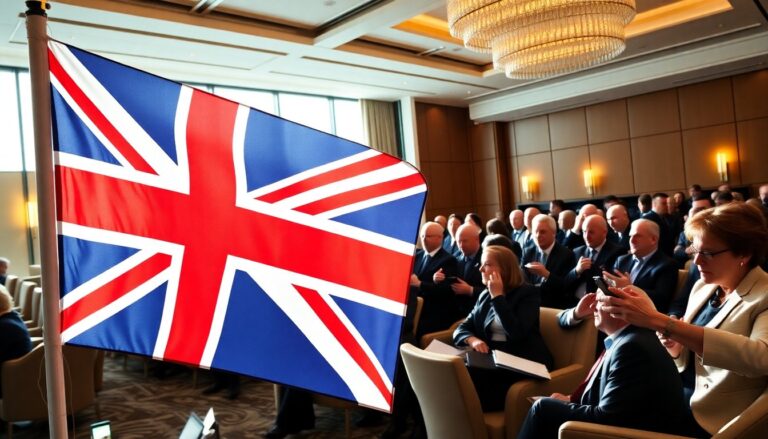
At the World Economic Forum in Davos, the UK government has reaffirmed its commitment to counter President Donald Trump’s recent tariff threats. Chancellor Rachel Reeves conveyed a message of resilience, asserting that the UK will not be easily influenced by external pressures.
The Trump administration has proposed a 10% tariff on imports from the UK and other European nations opposing his contentious plans regarding Greenland. This developing situation has prompted UK officials to emphasize their focus on promoting trade rather than yielding to intimidation.
Staying the course amidst international tensions
Reeves highlighted that the UK possesses a solid economic strategy capable of weathering challenging times. She stated, “If nations choose to raise trade barriers, that is their prerogative, but we are committed to reducing them.” This declaration underscores the UK’s intention to collaborate with international allies to bolster trade relations.
Upcoming meetings with European and Gulf partners aim to explore opportunities for enhanced trade facilitation. Reeves noted that a framework for a trade deal with the US was established last year, emphasizing that there is no reason for it to be undone. She referenced US Commerce Secretary Howard Lutnick, who expressed optimism regarding the resilience of the existing trade agreement.
Keir Starmer’s cautious strategy
While Prime Minister Sir Keir Starmer opted not to attend the forum, his approach has been marked by caution. He has consistently stressed the importance of sovereignty issues related to Greenland and Denmark, while also underscoring the significance of the transatlantic alliance. This careful strategy aims to mitigate potential repercussions from Trump’s aggressive posture.
Responses from UK leadership
In an effort to present a united front, Energy Secretary Ed Miliband defended Starmer’s absence from Davos, highlighting the various initiatives the Prime Minister is pursuing. He commended Starmer’s leadership style, which has been pivotal in securing the first trade agreement with the Trump administration for the UK. Miliband noted that Starmer is prepared to express disagreements with Trump, particularly concerning Greenland.
Reeves reiterated that, at present, no tariffs have been implemented. She praised the Prime Minister’s strategy to de-escalate tensions and achieve favorable outcomes for the UK. This diplomatic approach reflects a commitment to maintaining a stable economic environment despite looming tariff threats.
The international landscape
Trump’s statements regarding Greenland have elicited substantial reactions from European leaders. At the Davos summit, many leaders expressed concerns over the US President’s aggressive tactics. The threat of tariffs, especially a potential increase to 25% if an agreement is not reached by June, has alarmed several nations.
European leaders are working to formulate a cohesive response to Trump’s tactics. French President Emmanuel Macron has described the tariffs as “unacceptable” and called for a robust European reaction. This includes discussions about employing the Anti-Coercion Instrument, a measure designed to counter economic intimidation. However, this strategy faces obstacles, as member states have varying levels of dependence on the US.
The path ahead for the UK and Europe
The geopolitical landscape is filled with uncertainty as the UK continues to navigate its relationship with both the US and the European Union. The potential for escalating trade tensions, particularly regarding Greenland, raises questions about the future of transatlantic relations. European leaders may need to reassess their strategies in light of Trump’s unwavering stance.
The Trump administration has proposed a 10% tariff on imports from the UK and other European nations opposing his contentious plans regarding Greenland. This developing situation has prompted UK officials to emphasize their focus on promoting trade rather than yielding to intimidation.0
