

Military Buildup in the Gulf Region: A Strategic Response Amid Iran Tensions In response to rising tensions with Iran, President Trump has initiated a substantial military buildup in the Gulf region. This move not only indicates a readiness for potential conflict but also reflects the administration's commitment to exploring diplomatic solutions to de-escalate the situation.
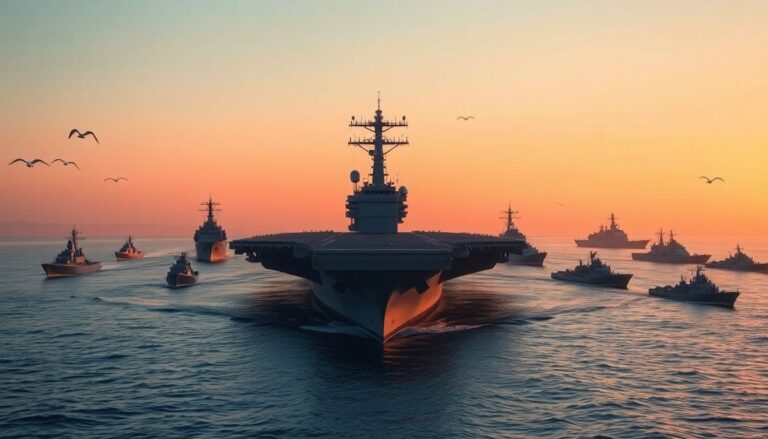
U.S. naval fleet heads to Gulf amid tensions with Iran
In a notable escalation of military presence in the Gulf, U.S. President Donald Trump has confirmed that a substantial naval fleet is en route to Iran. This announcement comes during a time of increased tensions, particularly following Iran’s crackdown on anti-government protests.
The deployment, which includes the USS Abraham Lincoln aircraft carrier strike group, aims to enhance U.S. military readiness in the region as officials closely monitor Iran’s actions.
Details of the naval deployment
While addressing reporters aboard Air Force One, President Trump stated, “We have a big force going towards Iran.” He emphasized a preference for a peaceful resolution, noting, “I’d rather not see anything happen, but we’re watching them very closely.” The president indicated that this military buildup aims to deter any potential aggression from Tehran.
Background on the tensions
The current military mobilization follows a series of violent protests in Iran that began in late December. These protests stem from widespread discontent over economic conditions and government repression. Reports indicate that over 800 protesters are facing potential execution, triggering international outcry and a strong response from the Trump administration.
Trump stated that his administration’s threats against Iran have led to a pause in these executions, highlighting the intricate relationship between military posturing and diplomatic negotiations.
Iran’s response and international implications
Iranian officials have denied any plans to execute protesters, yet the regime’s severe actions have sparked widespread global condemnation. In a recent article published in the Wall Street Journal, Iranian Foreign Minister Abbas Araghchi issued a stark warning regarding potential U.S. military action. He stated, “Tehran will be firing back with everything we have if attacked.” This bold rhetoric highlights the risk of escalating conflict in a region already characterized by instability.
Trump’s stance on military action
Despite ongoing military buildup, Trump has reiterated a preference for dialogue rather than military confrontation. In a recent interview with CNBC, he expressed hope that further military action could be avoided. However, he emphasized that the U.S. would respond decisively if Iran were to resume its nuclear program.
He referenced airstrikes on Iran’s nuclear facilities that occurred in, asserting that any nuclear ambitions would be met with force. This statement underscores the delicate balance between pursuing diplomatic solutions and the potential for military escalation in a tense geopolitical landscape.
The broader geopolitical landscape
The situation in the Middle East is influenced by various geopolitical factors. The U.S. maintains a significant military presence, which includes naval assets and air support. Recently, flights of F-15E Strike Eagles and KC-135 Stratotanker jets have been observed, enhancing the U.S. capability to respond to potential threats from Iran.
This military readiness aligns with ongoing diplomatic efforts. President Trump has expressed a willingness to engage in negotiations with Iran’s leadership, underscoring the delicate balance between pursuing diplomatic solutions and the potential for military escalation in a tense geopolitical landscape.
As the U.S. prepares for potential military engagement, Israel has reiterated its readiness to confront Iran in defense of its national security. Prime Minister Benjamin Netanyahu emphasized Israel’s vigilance in monitoring the ongoing protests in Iran and the regime’s violent repression. He stated that while the future remains uncertain, changes within Iran’s leadership could significantly reshape the regional landscape.
Implications of rising tensions
With tensions escalating in the Gulf, the U.S. military’s increased presence serves as both a deterrent and a signal to Iran regarding the seriousness of Washington’s stance. The balance between military readiness and diplomatic negotiation will be crucial in determining how the situation unfolds in the coming weeks. The international community is watching closely, recognizing that the implications of these developments extend far beyond Iran’s borders.
