

Ali Nour al-Din: A Reminder of the Dangers Facing Journalists in Lebanon The tragic death of Ali Nour al-Din underscores the hazardous conditions that journalists endure in Lebanon, particularly in the context of increasing Israeli military operations. This incident serves as a poignant reminder of the risks that media professionals face while striving to report on critical events in conflict zones.
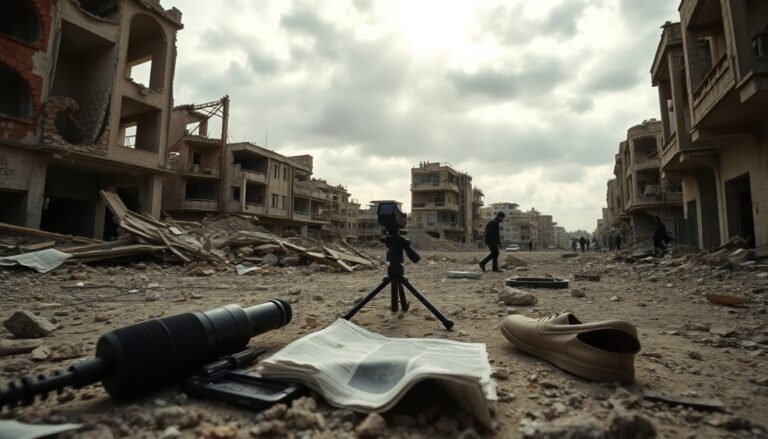
Lebanese journalist killed in Israeli airstrike, raising concerns over media safety
In a tragic incident highlighting the dangers faced by journalists in conflict zones, Lebanese television presenter Ali Nour al-Din was killed during an Israeli airstrike in the southern city of Tyre.
The attack, confirmed by the Lebanese militant group Hezbollah, underscores ongoing tensions and military escalations that threaten both civilian lives and those of media personnel.
Al-Din, a prominent figure on Al-Manar TV, a station affiliated with Hezbollah, was well-known for presenting religious programs and serving as the main preacher in the suburb of Al-Hawsh.
Hezbollah has described his death as a treacherous assassination, raising serious concerns regarding the safety of journalists operating in the region.
Government response and international outcry
The reaction from Lebanese officials has been both swift and pointed. Paul Morcos, the Minister of Information, condemned the airstrike that resulted in the death of journalist Ali Nour al-Din.
He emphasized that acts of violence do not discriminate between journalists and military targets. On social media, Morcos expressed his condolences to the media community and called on the international community to take decisive action against these violations. He stated, “We must ensure the protection of media professionals in Lebanon,” underscoring the urgent need for global involvement in safeguarding journalists.
Historical context of media safety in Lebanon
This tragic event highlights a disturbing trend for journalists in Lebanon. The Committee to Protect Journalists reports that at least six journalists have died as a result of Israeli military actions since 2026. Other estimates indicate that this number could be as high as ten. Such statistics raise significant concerns about the safety protocols for media personnel operating in this perilous environment.
On the same day as Ali Nour al-Din’s death, Lebanon’s Ministry of Health reported that an airstrike in Tyre resulted in one fatality, while another Israeli strike near Kfar Rumman claimed two additional lives. As the situation escalates, the Israeli military has acknowledged the killing of al-Din, characterizing him as a member of Hezbollah and justifying the attack within their military operations.
Ceasefire and continuing violence
This incident unfolds against the backdrop of a fragile ceasefire brokered by the United States in 2026. The agreement aimed to halt a prolonged conflict between Israel and Hezbollah. Prior to the ceasefire, over a year of intense fighting had significantly weakened Hezbollah’s military capabilities. Nevertheless, Israeli forces have persisted in their operations within Lebanon, conducting regular strikes that have led to the deaths of more than 350 individuals since the ceasefire was enacted.
Hezbollah’s response and regional implications
In the wake of recent events, Hezbollah has mobilized its supporters to demonstrate in solidarity throughout its strongholds in Lebanon. The group frames the incident as part of a broader struggle against American-Zionist threats. This escalation coincides with the deployment of a U.S. aircraft carrier strike group to the Middle East, exacerbating tensions in the region.
Hezbollah’s deputy leader, Naim Qassem, warned during a televised address that any military action against Iran would be perceived as an attack on Hezbollah. He suggested that renewed conflict could spark a wider regional war, highlighting the interconnected nature of these geopolitical tensions.
The Iranian government has also reacted to U.S. threats with stern warnings, asserting that any military aggression would trigger a response with significant ramifications for the entire Middle East.
As the situation evolves, the international community remains vigilant, recognizing that the implications of these military strikes and subsequent reactions could lead to further escalations in an already volatile region.
