

Headline: Protests Erupt in Australia Ahead of Israeli President Isaac Herzog's Visit Summary: Tensions rise across Australia as demonstrators prepare for protests in response to the anticipated visit of Israeli President Isaac Herzog. Key Points: Protests Organized: Various groups are mobilizing to voice their opinions and concerns regarding the implications of Herzog's visit. Community Response: Local communities are actively participating, showcasing a diverse range of perspectives on the...
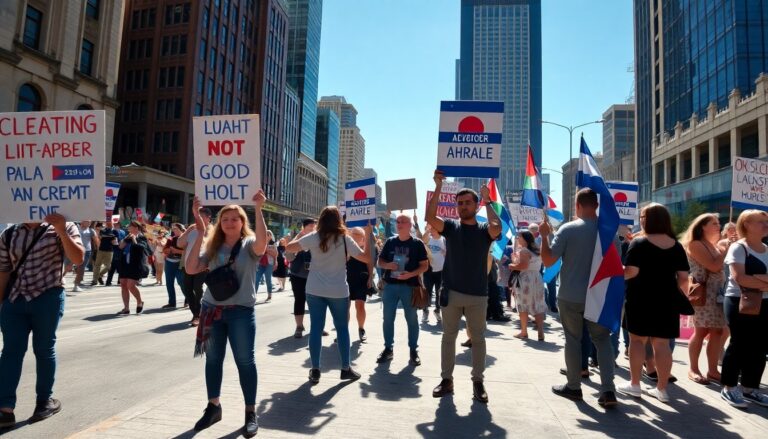
The anticipated visit of Israeli President Isaac Herzog to Australia has ignited significant public outcry, leading to planned protests nationwide. Scheduled to commence on February 8, Herzog’s visit follows a tragic incident at Bondi Beach where a terror attack during a Hanukkah celebration resulted in the loss of 15 lives.
This backdrop has prompted a complex mix of emotions and reactions within Australian society.
In preparation for the visit, the Australian Federal Police have already taken precautionary measures, charging a 19-year-old individual for allegedly issuing online threats directed at the Israeli president.
This charge underscores the heightened tensions surrounding the visit, reflecting the current political climate and ongoing controversy regarding Israel’s actions in Gaza.
Nationwide protests against Herzog’s visit
In light of Herzog’s trip, various advocacy groups have organized protests in over two dozen cities across Australia.
The Palestine Action Group, among others, is rallying supporters to demonstrate against what they perceive as complicity in war crimes and ongoing violence in Gaza. These protests are not merely a reaction to Herzog’s visit; they also serve as a broader commentary on Australia’s foreign policy regarding Israel.
Political reactions and calls for action
Political figures have voiced their concerns regarding Herzog’s invitation. David Shoebridge, a senator from the Greens party in New South Wales, has urged the Albanese government to reconsider its invitation. He stated, “The government should withdraw this invitation now,” citing Herzog’s involvement in Israel’s military policies and actions in Gaza. Shoebridge emphasized the need for Australia to uphold its moral responsibilities and refrain from supporting leaders accused of human rights violations.
Furthermore, the New South Wales Police Commissioner, Mal Lanyon, has acknowledged the potential for unrest during Herzog’s visit, indicating that a significant police presence will be mobilized to maintain peace. Lanyon noted the existing public sentiment of “significant animosity” towards the Israeli leader, which could escalate during the protests.
Legal challenges and public safety concerns
In anticipation of the protests, the New South Wales government has extended restrictions on public gatherings, citing safety concerns stemming from recent violent incidents. These measures have sparked debates about the balance between free speech rights and community safety. Activists argue that these restrictions are an attempt to silence dissent against the government’s decision to host Herzog, especially given the accusations of genocide against Israel.
International context and implications
The backdrop to Herzog’s visit is not merely a local issue; it reflects a larger international dilemma regarding Israel’s ongoing military actions in Gaza. A United Nations report has recently characterized Israel’s actions as committing genocide, a claim that has been firmly denied by Israeli officials, including Herzog. This international scrutiny complicates the narrative surrounding the visit and adds layers to the protests planned in Australia.
As Herzog is set to meet with leaders and victims of the Bondi Beach attack, the contrasts between solidarity for Jewish communities and opposition to Israeli state actions become starkly evident. Various Jewish organizations in Australia are divided on Herzog’s visit, with some supporting it as a necessary gesture of solidarity for grieving families, while others, like the Jewish Council of Australia, criticize Israel’s actions in Gaza and oppose Herzog’s presence.
Looking ahead: Australia’s evolving stance
The unfolding events surrounding Herzog’s visit reveal deep divisions within Australian society regarding foreign policy and human rights. The protests signify a broader movement calling for accountability and change in how Australia navigates its relationships with nations involved in conflict. As the date approaches, the situation remains fluid, with potential for significant public demonstrations that will resonate far beyond Australia’s borders.
As tensions rise and protests are organized, the visit of Israeli President Isaac Herzog serves as a flashpoint for discussions on international law, human rights, and the role of nations in responding to global conflicts. Australia stands at a crossroads, with its citizens poised to make their voices heard in the face of complex geopolitical realities.
