

Title: The Evolution of Political Debates in Northern Ireland: From Meaningful Discourse to Performance Art Abstract: This analysis explores the transformation of political debates in Northern Ireland, highlighting the shift from substantive discussions to a focus on performance art. It examines the implications of this shift on public engagement and political accountability. Introduction: The political landscape in Northern Ireland has undergone significant changes, particularly in the...
The facts
The political landscape in Northern Ireland is undergoing significant changes. Recent observations indicate that political discourse has transformed into a spectacle, prioritizing performance over substantial policy discussions. This shift is raising concerns among observers who fear it undermines the importance of serious deliberation on pressing issues.
What happened
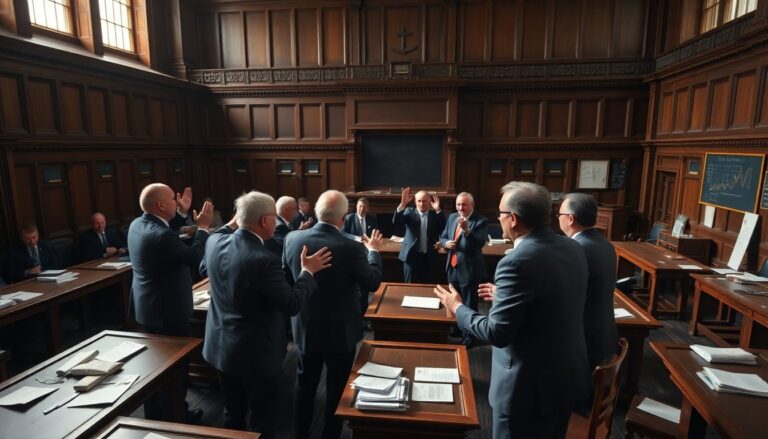
Debates within Northern Ireland’s political institutions increasingly resemble theatrical performances. This trend diminishes the quality of discussions, diverting attention from vital matters that require thoughtful engagement. Critics argue that such dramatization detracts from the essence of governance, compromising the integrity of political dialogue.
The decline of genuine political discourse
In recent exchanges among politicians, dialogue often resembles pantomime rather than constructive communication. One incident involved Timothy Gaston advising Paula Bradshaw to “breathe,” highlighting a tendency to portray dissenting voices in a villainous light.
While such moments may entertain, they underscore a troubling trend where meaningful political dialogue is overshadowed by theatrics. This shift raises concerns about the integrity of governance and the quality of discourse in the political arena.
The consequences of the pantomime approach
When politicians prioritize theatrics over substantive discussions, the legitimacy of their roles comes into question. The political climate should promote meaningful debates aimed at solving pressing issues. However, current exchanges often devolve into personal insults and serious inquiries are dismissed as childish taunts. This trend, moving away from serious engagement towards creating outrage, is not only disappointing but also poses a significant threat to the integrity of our democracy.
The role of media and public perception
The media landscape significantly influences public perception and political discourse. The continuous news cycle and social media algorithms often prioritize conflict over cooperation. As a result, politicians with well-reasoned arguments struggle to make their voices heard. Conversely, those who resort to inflammatory remarks quickly attract attention. This dynamic fosters a system that rewards sensationalism, undermining constructive dialogue.
The need for accountability and collaboration
In a media landscape that often prioritizes sensationalism, politicians risk becoming caricatures of themselves. The pressure to maintain public personas can lead to a disconnect between their private interactions and public representation. This gap may erode trust and credibility among constituents. Genuine collaboration in politics becomes increasingly rare as a result. It is crucial for both the electorate and the media to demand more than mere entertainment. They should pursue substantive discussions and hold elected officials accountable to higher standards.
The facts
Northern Ireland’s political landscape faces a critical need for authenticity. The absence of clear heroes or villains underscores the complexity of current issues. Political engagement requires cooperation from all parties to create a constructive environment for criticism and inquiry.
The consequences
Moving towards a more serious political approach may prioritize constituents’ needs over superficial theatrics. This shift could lead to a political discourse that strengthens democracy and fosters meaningful change within institutions. The ongoing challenge remains to cultivate an atmosphere conducive to accountability and collaboration among politicians.
