

a concise briefing on renewed attacks, confirmed strikes inside russia, updated military pledges and the fragile state of peace negotiations
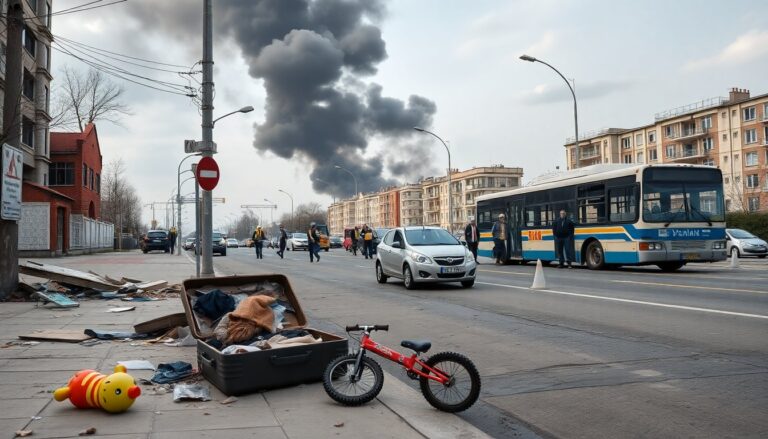
The conflict between Russia and Ukraine continues to evolve on multiple fronts. On Friday, day 1,450 of the war, Ukrainian and Russian officials reported a new wave of aerial assaults, cross-border strikes and strategic moves by Kyiv’s partners.
This update synthesizes the immediate effects on civilians and infrastructure, confirmed operations within Russian territory and parallel diplomatic and defence developments shaping the weeks ahead.
Across Ukrainian cities, emergency services and local authorities are coping with damage to energy systems and housing stock.
Government and allied officials disclosed fresh weapons deliveries and additional financial commitments. At the same time, negotiations aimed at ending the war remain strained by recent attacks and public statements from leaders in Moscow and Kyiv.
Overnight attacks and domestic impact
Officials in Kyiv and regional administrations reported multiple overnight strikes on critical infrastructure. Power facilities and residential blocks sustained damage, prompting emergency repairs and temporary blackouts. Local authorities described prioritising humanitarian corridors and shelter for displaced families.
Russian authorities confirmed cross-border incidents and limited operations on their territory. State statements characterised some strikes as defensive responses to perceived threats. Independent verification of specific claims remained limited in the first hours after the attacks.
Military sources in Kyiv acknowledged new munitions deliveries from partner states. Defence briefings indicated that equipment shipments will be allocated to air defences and logistics units. Western officials emphasised that continued assistance aims to shore up Ukraine’s capacity to protect civilians and maintain critical services.
The immediate civilian toll is concentrated on housing, power and transport links. Emergency responders reported injuries and isolated fatalities in several municipalities, while restoration teams worked to reconnect electricity and water. Relief agencies warned of heightened humanitarian needs if strikes persist.
The palate never lies, a phrase I use as a food writer, yet its lesson applies here: damage reveals the true state of supply and resilience. Behind every dish there’s a story of supply chains, and in wartime the same chains determine whether hospitals and shelters keep running. As a chef I learned that redundancy in the kitchen saves a service; redundancy in critical infrastructure can save lives.
Diplomatic channels remained active despite the violence. Envoys from allied capitals held consultations with Kyiv to coordinate further aid. Moscow reiterated its conditions for talks while accusing Western states of escalating military support. Analysts said these positions make near-term negotiations more complex.
Reporting continues as officials release verified updates. This article will be updated with confirmed casualty figures, target assessments and statements from independent observers when available.
Overview of the overnight strikes
Following the earlier note that casualty figures and target assessments are pending, Ukrainian authorities reported a concentrated campaign of assaults overnight on Thursday. Officials said the attacks combined a large number of ballistic missiles with a swarm of drones.
President Volodymyr Zelenskyy reported the barrage included 24 ballistic missiles and 219 drones. The strikes struck residential areas and critical systems in Kyiv, Odesa and Dnipro. Authorities said the attacks caused civilian casualties and damaged key energy infrastructure, leaving many households without power or heating.
Emergency services and local administrations deployed crews to assess damage and restore services. Hospital officials and municipal representatives provided preliminary accounts of casualties and infrastructure loss, which remain subject to independent verification.
Behind every strike there’s a story of disruption to daily life, officials said, as families faced outages in cold conditions and crews worked to repair networks. The details on military targets, weapon launch sites and confirmed casualty totals will be updated when verified by independent observers.
The details on military targets, weapon launch sites and confirmed casualty totals will be updated when verified by independent observers. Local prosecutors said a strike on Lozova, a key railway hub in the northeastern Kharkiv region, killed two people and injured six.
The mayor of Kyiv reported widespread losses of central heating in thousands of multi-storey apartment buildings. Officials warned the outages are especially serious given forecasts of temperatures falling well below freezing.
Emergency services in Odesa described multiple drone impacts on a residential tower, an outdoor market and a supermarket. The incidents sparked fires and caused further energy disruptions, they said.
As a former chef turned journalist, I note how basic infrastructure failures reshuffle everyday life. The palate never lies: when heating, food supply and markets falter, vulnerabilities become tangible.
Strikes inside Russian territory and occupied areas
Strikes reported inside Russia and occupied territories as Kyiv targets energy sites
The palate never lies: when heating, food supply and markets falter, vulnerabilities become tangible. Strikes inside Russian territory and occupied areas continued to be reported, raising fresh questions about logistics and morale.
On Feb. 11 the General Staff of Ukraine reported a drone strike and a subsequent fire at an oil refinery in Volgograd. Ukrainian and regional Russian sources confirmed the incident. Local authorities reported damage at the refinery and to nearby civilian structures.
Kyiv also said its forces struck an oil refinery in Ukhta, in Russia’s Komi Republic, roughly 1,750 km from the Ukrainian border. Ukraine additionally reported operations against military facilities in occupied Ukrainian regions.
Ukraine’s military messaging framed attacks on energy sites and logistics as intended to reduce the Kremlin’s capacity to sustain military operations. Officials described these as strategic efforts to disrupt fuel supplies and transport chains that support frontline operations.
Moscow countered with reports of multiple intercepted drones in several regions. Local emergency services continued debris searches and damage assessments at affected sites. Independent verification of all claims remains limited.
Implications for logistics and morale
Damage to refineries and fuel depots can have immediate effects on military mobility. Reduced fuel availability constrains vehicle and aviation operations. Supply convoys and repair cycles face delays.
Disruptions also ripple into civilian life. Fuel shortages affect heating, food distribution and local markets. As a chef I learned that logistics are as crucial in a kitchen as they are on the battlefield: when one link breaks, the whole service falters.
Strategically, attacks on energy infrastructure aim to raise the operational cost of sustaining forces. Politically, they may erode public confidence in the ability to protect critical assets. Emergency response and repair capacity will shape how long disruptions persist.
Verification from independent observers will be necessary to confirm the full scale and attribution of the incidents. Authorities and emergency services continue on-site assessments, and updates are expected as more information emerges.
Authorities and emergency services continue on-site assessments, and updates are expected as more information emerges. The palate never lies; when critical energy links break, the material consequences are immediate and the human impact becomes concrete.
Strikes on refineries, fuel depots and transport hubs directly degrade supply chains that sustain front-line operations. Kyiv contends these facilities constitute legitimate military objectives because they finance and enable hostile operations. The disruption reaches beyond lost materiel to affect public morale and political signaling. Large-scale interruptions increase pressure on domestic populations and on international partners to respond through aid, sanctions or strategic recalibration.
International military assistance and strategic moves
Allied states have resumed assessments of logistical routes and fuel stockpiles to determine immediate needs. Several partners report moving additional supplies and technical support to maintain operational tempo without creating new vulnerabilities in the distribution network. Military planners are prioritizing protected transport corridors and redundant storage to reduce single-point failures.
States supplying equipment say they are calibrating transfers to limit civilian harm and to comply with international humanitarian norms. Technical advisers are working alongside local logistics teams to improve fuel handling, depot hardening and rapid repair capabilities. These measures aim to shorten outage times and preserve momentum on priority operations.
Economic measures and diplomatic steps accompany military aid. Sanctions targeting entities that profit from or facilitate attacks on energy infrastructure are being reviewed by several capitals. At the same time, partners are expanding intelligence-sharing on supply-chain vulnerabilities and on the locations of critical nodes.
Analysts warn that continued targeting of energy and transport infrastructure could force a prolonged logistics contest, with implications for wider regional stability. Partners emphasize contingency planning for civilian energy needs and for maintaining humanitarian supply lines. Further operational updates are expected as assessments conclude and as international responses are coordinated.
Further operational updates are expected as assessments conclude and as international responses are coordinated. The palate never lies, and in geopolitics that means supply lines and munitions tell the tactical story.
Allied support for Ukraine continues to shift as partners redirect capabilities toward air defence and precision strike. British officials announced a package exceeding £500 million in air-defence missiles and systems aimed at protecting civilian infrastructure and energy facilities. Germany signalled readiness to add five PAC-3 interceptors if allied contributions meet a defined threshold. Norway disclosed it had purchased French glide bombs to bolster Ukraine’s precision-strike options.
A senior UK defence official summed allied military commitments to Kyiv this year at about $35bn, a total that mixes fresh pledges with previously announced packages. A separate research analysis reported a sharp reduction in US military aid flows for compared with earlier periods, while European assistance increased, underscoring a rebalancing of the supply picture.
Regional security and exports
Smaller NATO members are increasing contributions to collective deterrence. Estonia has agreed to expand its artillery inventory with additional Caesar self-propelled howitzers supplied by France. Kyiv signalled it expects to begin exporting certain weapons, including drones, within weeks, a development likely to reshape regional markets and allied supply chains. The palate never lies: in geopolitics as in the kitchen, supply and timing determine outcomes.
Diplomacy, politics and humanitarian notes
Diplomatic efforts to end hostilities remain fragile. Kremlin representatives said another round of negotiations could be possible soon. Ukrainian diplomats denounced recent strikes as undermining any realistic path to talks. European leaders are debating broader strategic responses, including economic restructuring and measures to increase resilience against hybrid threats. Behind every dish there’s a story, and behind each policy choice lies a chain of logistical and political decisions that will affect civilians and military planners alike.
Humanitarian, political and military dynamics continue to shape civilian outcomes
Humanitarian and political threads continue to intertwine with military events as negotiators pursue exchanges to reunify children taken from conflict zones. Officials report ongoing swaps intended to return some minors to family care. Diplomats have also entered cultural disputes that reverberate beyond sport, including public criticism by Kyiv’s leadership of an athlete’s disqualification at the Milano Cortina Olympics over helmet rules, which was framed as insensitive amid wartime losses.
Frontline operations, international aid flows and diplomatic initiatives remain tightly linked. Changes in supply lines and tactics on the ground will affect civilian suffering and prospects for de-escalation. Political actors are likely to intensify maneuvering to gain leverage in negotiations and to shape the humanitarian response.
As a former chef I learned that details matter: logistics and small procedural choices can determine outcomes. The palate never lies when reading public sentiment, and behind each policy choice there is a chain of logistical and political decisions that will shape both immediate relief and longer-term stability. Observers should expect further tactical adjustments and diplomatic activity as parties seek advantage and civilians bear the consequences.
