

Palmerston, the rescue cat who served as the Foreign Office's chief mouser and later as a Government House companion in Bermuda, has died peacefully on 12 February at the age of 13.
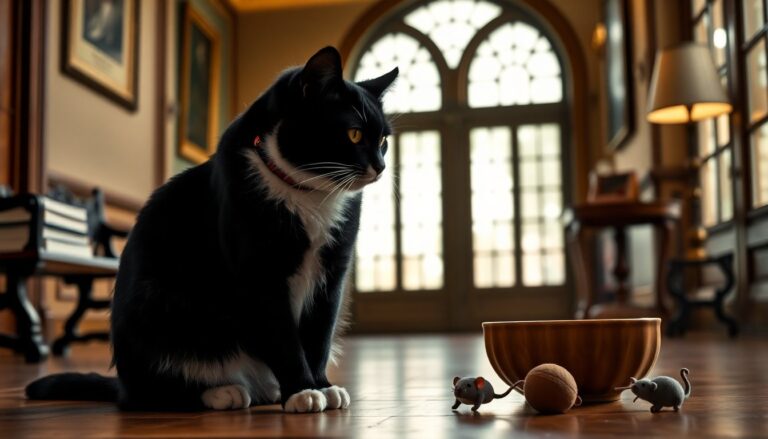
Palmerston, the black-and-white rescue cat known to many as the Foreign Office’s chief mouser, has died peacefully on 12 February at the age of 13. Adopted from Battersea Dogs and Cats Home, he spent years keeping Whitehall free of rodents and charming a wide public audience with his photographic cameos and pithy social-media updates.
From rescue to Whitehall
Palmerston arrived at the Foreign Office as a stray-turned-staff-member and quickly made himself indispensable. He patrolled corridors and cupboards with the no-nonsense efficiency of a working cat, but he also became a surprisingly effective public face for an old institution.
Official photos and light-hearted posts helped introduce people to the curious tradition of government animals while giving the Foreign Office a warmer, more relatable image.
A quieter life in Bermuda
After several busy years in London, Palmerston slowed down and moved into semi-retirement.
He accepted a post as a “feline relations consultant” to the Governor of Bermuda and settled into Government House with Governor Andrew Murdoch. There he traded the constant pace of Whitehall for a gentler routine: greeting staff, comforting visitors, and choosing exactly which meetings merited his attention. He even joined the Governor at public events, turning up as a low-key mascot at charity fundraisers and receptions.
Life around the house
At Government House, Palmerston’s presence was steady and domestic. Staff remember him as affectionate and confident — a cat who enjoyed being brushed, who purred loudly, and who made his weight known with heavy, familiar footfalls. Anecdotes circulated among colleagues: a slightly chewed toy or a mouse left “on loan” at a director’s desk, small reminders of the practical side of his role. Those everyday moments revealed why animals like Palmerston resonate so easily in high-pressure institutions: they ground people, lighten moods and make formal spaces feel human.
A digital diplomat
Palmerston’s appeal extended far beyond visitors to Government House. His social account — whose handle cleverly blended “diplomatic” and “moggie” — drew close to 100,000 followers, sharing snapshots and short updates from both London and Bermuda. The account functioned as a kind of soft diplomacy, offering an approachable glimpse behind official doors and sustaining public interest long after his active mouser days ended.
Thoughtful stewardship
His life also illustrates practical lessons for organisations that host animals. Staff at both the Foreign Office and Government House describe routine veterinary checks, structured rest periods and documented care arrangements — sensible measures that protect both the animal’s welfare and the institution’s reputation. When pets represent official places, clear guidance on care, public appearances and the management of social channels helps avoid misunderstandings and keeps the focus where it should be: on the animal’s well‑being.
A small creature with a big effect
Condolences have poured in from former rivals and colleagues alike; even Larry the Cat posted a short farewell. For many who worked alongside him, Palmerston was more than a mouser or a mascot — he was a comforting, familiar presence in the day-to-day life of public service. From a rescue centre in London to a beloved companion in Bermuda, his story is a reminder that animals can leave an outsized mark on institutional life and on the public imagination.
Palmerston’s passing closes a warm chapter that began with rescue, included a spell of public service, and ended with a well-earned retirement overseas. He will be remembered for both his practical work and the small, human moments he inspired.
