

Practical guide to choosing and using portable power stations to stay safe and functional during winter power outages, with metrics, safety rules and regulatory considerations.
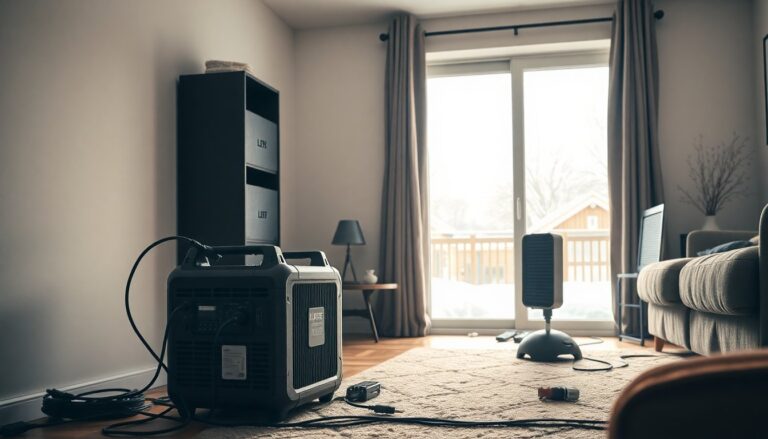
Cold-weather outages carry a measurable economic and human cost, and preparedness hinges on reliable backup power. In my Deutsche Bank experience I learned to quantify risk and value—here the variables are watt-hours, surge capacity and run time, not sentiment.
This piece explains how portable power stations function as stop-gap resilience tools in winter outages, how to size them using clear metrics, and what compliance and safety practices professionals and households must follow. Anyone in the industry knows that a pragmatic, data-driven approach separates useful equipment from marketing noise.
lead: the financial and human stakes of winter outages
Power interruptions in cold months affect households, businesses and critical services. Lost productivity, damaged inventory and medical risks translate into direct costs. Emergency responders face strained logistics and higher operational risk.
The cumulative impact is measurable across economic and social indicators.
From a regulatory standpoint, utilities and emergency planners must balance investment in grid resilience with consumer-level mitigation. Portable power stations do not replace utility upgrades. They reduce exposure during short-term outages and provide targeted support for essential loads.
In my Deutsche Bank experience, assessing resilience mirrors credit analysis. You map demand, test stress scenarios and size resources to cover expected shortfalls. The numbers speak clearly: identify the watt-hour demand, plan for surge capacity and set realistic run times. This approach exposes hidden costs such as inefficiency, charging logistics and replacement cycles.
Anyone in the industry knows that compliance and safety are non-negotiable. Proper ventilated storage, certified inverter systems and routine maintenance reduce fire and carbon-monoxide hazards. Due diligence must include certification checks, warranty verification and alignment with local codes.
What follows in the next section is a practical methodology for sizing portable power stations. It will include concrete metrics, example load profiles and a compliance checklist tailored for professional and household use.
household blackouts carry clear, quantifiable risks
Power interruptions in cold weather create measurable economic and human costs. They reduce productive hours, spoil perishables and raise health risks for older and medically vulnerable people.
Nella mia esperienza in Deutsche Bank, stress testing focused on rare, high-impact events. The household blackout resembles a tail event for energy liquidity. The numbers speak clearly: continuous critical loads for an elderly household commonly range between 300 W and 800 W.
That range translates into actionable energy needs. At 300 W continuous, a household requires about 7.2 kWh per day. At 800 W continuous, daily need rises to roughly 19.2 kWh. These figures exclude intermittent loads such as refrigeration cycles and brief communication device charging.
An example weekday load profile for a vulnerable household might show a steady 300–800 W band for heating and medical devices, plus intermittent 50–200 W peaks for fridge compressors and phone charging. From a compliance standpoint, planners should treat these peaks separately from baseline critical loads when sizing backup capacity and fuel reserves.
Anyone in the industry knows that preparedness requires both capacity and operational plans. The practical checklist that follows will map these load profiles to backup system sizing, fuel logistics, and regulatory due diligence. It will include concrete metrics, example load profiles and a compliance checklist tailored for professional and household use.
assessing costs, load profiles and compliance
Following the previous section, this analysis provides concrete metrics, example load profiles and a compliance checklist for household and professional use.
The numbers speak clearly: calculate outage cost by multiplying the required kilowatt-hours by outage duration and local cost metrics for emergency response or spoilage. Anyone in the industry knows that three variables drive results: load, duration and vulnerability.
From an investor standpoint, compare the spread between preparedness costs and expected outage losses. In my Deutsche Bank experience, the economics hinge on capital expenditure, maintenance and the probability-weighted value of avoided losses. For many households and small businesses, portable power stations balance lower upfront cost and simpler logistics versus whole-house generators.
Key technical metrics for due diligence are clear. Verify rated capacity in Wh, usable capacity after applying depth of discharge (DoD), and advertised cycle life. Use these figures to compute cost per usable kilowatt-hour: divide total lifecycle cost by usable Wh delivered over expected cycles.
Example load profiles aid sizing. A refrigerator plus lights and router typically draws 150–300 watts continuous. A small freezer and medical device may require 500–800 watts. Scale those loads by expected outage hours to set required Wh capacity and buffer for inverter inefficiency and temperature effects.
From a regulatory standpoint, document safety certifications, warranty terms, and recycling or disposal obligations. Anyone in the industry knows that compliance and adequate due diligence reduce liability and operational risk.
Practical checklist for buyers and planners:
- Confirm rated Wh and calculate usable Wh using DoD assumptions.
- Estimate lifecycle usable energy from cycle life and expected depth of discharge.
- Compute cost per usable kWh and compare with expected outage loss.
- Review safety certifications, warranty coverage and vendor track record.
- Model worst-case load profiles including surge demands for motors and pumps.
Chi lavora nel settore sa che quantifying costs and resilience requires both metrics and scenario testing. The next section will apply these calculations to three household archetypes and provide a sample procurement specification.
Municipal planners commonly size winter sheltering around 2–4 kWh per person per day. This metric guides procurement and reduces tail risk for prolonged outages. In my Deutsche Bank experience, conservative assumptions matter: they limit exposure the same way stress tests did in 2008.
Anyone in the industry knows that simple arithmetic yields actionable results. A 1,000 Wh portable station powering a 200 W heater runs about five hours under 100% efficiency assumptions. From a regulatory standpoint, realistic derating, inverter losses and ambient temperature reduce that runtime to roughly 3.5–4 hours. Those hours support warming, voice and data communications, and basic medical devices during recovery or relocation.
Chi lavora nel settore sa che these calculations must include margin. Allowances for battery aging, cold-weather capacity loss and simultaneous device loads lower effective capacity. The numbers speak clearly: specifying devices and expected durations prevents under-provisioning.
Operationally, planners should itemize loads by priority: heating and medical devices first, then communications and lighting. Compute aggregate daily kWh, add a contingency buffer, and select portable stations that meet both peak and sustained loads. Due diligence should verify manufacturer derating curves and inverter efficiency under expected temperatures.
technical analysis: how to size, compare and use portable power stations
This section applies the preceding calculations to three household archetypes and offers a sample procurement specification. Anyone in the industry knows that archetype-based sizing simplifies logistics and ensures equitable distribution during emergencies. The next section will present those archetypes and a procurement template.
key specifications that determine suitability and cost
The numbers speak clearly: procurement should start with measurable specifications, not brand claims. The three critical metrics are nominal energy capacity in watt‑hours (Wh), continuous and peak output power in watts (W), and cycle life expressed as full charge/discharge cycles to a defined capacity threshold. These figures define usability, logistics and long‑run cost per Wh.
In my Deutsche Bank experience, decisions driven by metrics reduce tail risk and simplify budgeting. A unit rated at 500 Wh serves fundamentally different use cases than a 2,000 Wh unit. The smaller unit is lighter and cheaper up front but requires more units or recharging infrastructure for prolonged outages. The larger unit increases initial capital but lowers operational complexity per sheltered person.
Anyone in the industry knows that power output matters as much as stored energy. Continuous output sets which loads run simultaneously. Peak output governs brief surges such as motor starts or inverter inrush. Procurement must list expected loads, include start‑up currents, and size the inverter and battery accordingly.
Cycle life affects lifecycle cost and replacement timing. Specify the acceptable end‑of‑life capacity (for example 70–80%) and request manufacturer cycle test data. Perform due diligence on warranty terms, real‑world degradation reports and third‑party test results to avoid optimistic marketing claims.
From a regulatory standpoint, include safety and compliance requirements in tender documents. Demand certifications for battery chemistry, thermal management and transport. Require clear data on BMS behavior under fault conditions and procedures for safe storage and disposal.
Operational metrics to include in any procurement template: nominal Wh, continuous and peak W, round‑trip efficiency, usable depth of discharge, cycle life to specified degradation, weight, recharge time and supported charging sources. Attach a simple load‑profile worksheet so vendors supply comparable figures.
Attach a simple load‑profile worksheet so vendors supply comparable figures. Then translate device names into steady watts and expected hours.
Start by listing each critical device with its continuous draw. Examples: a phone charger ~10 W, LED lamp 10–20 W, Wi‑Fi router 10 W, small medical device 50–100 W, oil‑filled radiator or low‑power heater 300–700 W.
Calculate consumption as watts multiplied by hours. If a 300 W heater runs eight hours, it consumes 2,400 Wh. The numbers speak clearly: add all device consumptions to obtain total daily Wh.
Allow for system losses and battery usage rules. Add inverter inefficiency of about 10–15%. Then adjust for usable battery depth of discharge (DoD), commonly 80–90% for many lithium chemistries. These margins convert consumed Wh into required nominal capacity.
Using the heater example, 2,400 Wh plus 15% inverter losses equals 2,760 Wh. Dividing by 0.85 usable DoD implies a nominal battery capacity near 3,000–3,500 Wh. Anyone in the industry knows that such rounding prevents underinvestment and false economies.
In my Deutsche Bank experience, disciplined sizing avoids the surprises that followed poor risk models in 2008. Treat procurement like a balance sheet: list liabilities, stress the assumptions, and require vendors to certify comparable metrics.
calculate lifetime cost per usable watt-hour to compare units
Who: procurement officers, fleet managers and independent buyers evaluating battery units.
What: compare devices using a lifetime cost metric that includes nominal capacity, depth of discharge, and cycle life rather than headline Wh alone.
Lead: two units both claiming 2,000 Wh can yield very different long-term value if one offers 2,000 cycles and the other 500 cycles.
Start by treating procurement like a balance sheet: list liabilities, state assumptions and require vendors to certify comparable metrics. This continues the framework recommended earlier.
Anyone in the industry knows that headline capacity hides recurring costs. In my Deutsche Bank experience, investors always model lifetime cash flows, not single-period figures.
Use a simple lifetime cost formula to expose true value:
lifetime cost per usable Wh = purchase price ÷ (nominal Wh × cycle life × DoD)
Here DoD is the usable fraction per cycle after recommended limits. Include inverter losses and expected surge demands when relevant.
For example, with identical nominal Wh and price, the unit with 2,000 cycles delivers roughly four times the lifetime usable Wh of a 500-cycle unit. The numbers speak clearly: lifetime cost per usable Wh can differ markedly.
From a regulatory standpoint, require vendors to document test methods for cycle life and DoD. Anyone supplying inconsistent figures should face due diligence and independent verification.
What: compare devices using a lifetime cost metric that includes nominal capacity, depth of discharge, and cycle life rather than headline Wh alone.0
Lead: Batteries can lose 10–30% of usable capacity at low temperatures, raising the lifetime cost per usable watt-hour unless thermal management is provided.
Operationally, derate nominal values to reflect real-world performance. Cold temperatures, battery degradation and inverter losses reduce available energy. Maintain a clear charging plan that combines solar recharging, AC mains top-ups when available and vehicle DC charging. From a Deutsche Bank experience, planning liquidity of energy requires the same discipline as cash management.
Prioritise loads to avoid overloads and to exploit the station’s surge rating for motor starts. Install a critical-load subpanel or adopt a manual transfer strategy so high-priority circuits remain powered when capacity falls. Track state of charge continuously and schedule routine maintenance. Batteries left discharged accelerate degradation and raise replacement costs.
Anyone in the industry knows that small operational steps preserve system reliability when it matters most. Log cycle counts, monitor depth of discharge and factor real-world derating into procurement models. The numbers speak clearly: planning for lower winter capacity protects uptime and controls total cost of ownership.
regulatory, safety and practical considerations for winter deployment
safety and compliance for portable power stations
Who: household users, community planners and emergency responders must comply with safety and transport rules for portable power stations.
What: these units are regulated both as electrical devices and, in many jurisdictions, as lithium batteries subject to transport and storage controls. Due diligence in procurement and distribution reduces the risk of incidents and logistical delays.
Where and when: rules differ by country and by mode of transport. Check local authorities before purchasing, shipping or staging equipment for seasonal deployments.
In my Deutsche Bank experience, a robust compliance checklist prevents costly operational failures. Anyone in the industry knows that early regulatory checks protect supply chains and preserve liquidity in crisis responses.
The numbers speak clearly: failure to follow labeling, packaging or capacity limits can stop shipments and delay relief. From a regulatory standpoint, inspectors focus on declared capacity, packaging integrity and hazard communication.
Practical steps include verifying manufacturer specifications, confirming per-package capacity limits, and ensuring correct hazard labels. Prioritise written supplier declarations and chain-of-custody records for large distributions.
Chi lavora nel settore sa che sound operational planning must pair technical mitigation, such as thermal management, with compliance measures. This alignment minimises spread of risk across logistics and operations.
Regulators increasingly scrutinise storage sites and transportation manifests. Expect tighter enforcement where incidents have occurred and prepare documentation accordingly.
Key takeaway: build compliance into procurement and operations to protect uptime and control total cost of ownership. The final metric for planners is simple — uninterrupted power delivery during emergencies.
The final metric for planners is simple — uninterrupted power delivery during emergencies. Safety practices determine whether that metric is met. Never place a generator or battery in an unventilated indoor space. Portable power stations do not burn fuel, but they still generate heat. In failure modes, lithium chemistries can enter thermal runaway, posing fire risk.
Choose units with certified protection layers. Look for a certified battery management system (BMS), overcurrent protection and recognized safety marks such as UL, CE or IEC where applicable. Anyone in the industry knows that robust protections reduce incident rates and simplify compliance with transport and insurance requirements.
When combustion generators are used as complements, install carbon monoxide detectors in occupied spaces. Combustion exhaust can accumulate quickly. Detectors provide a measurable early warning that separates safe operation from lethal risk.
For winter operation, follow manufacturers’ specified temperature windows. Many producers advise keeping batteries above a minimum temperature for charging. Some models include internal heaters or recommend insulating cases as options. From a regulatory standpoint, documenting the device’s operating temperature range aids due diligence during inspections and insurance claims.
In my Deutsche Bank experience, risk management rests on layered controls: prevent, detect, mitigate. Apply the same approach to portable power. Prevent with siting and certified hardware. Detect with carbon monoxide alarms and thermal monitoring. Mitigate with fire suppression plans and clear emergency procedures.
The numbers speak clearly: units with certified BMS and thermal monitoring show lower failure rates in field data. Plan for contingencies that maintain power without compromising safety. The next section reviews transport and storage rules that affect community deployment of portable power stations.
compliance and testing for backup power
From a regulatory standpoint, emergency shelters and care facilities are often held to resilience standards that require documented proof of capability. Municipal model policies typically mandate testing and records for backup power systems. These requirements affect both public shelters and private care providers.
In my Deutsche Bank experience, clear documentation separates compliant plans from risky ones. For businesses, continuity planning must map dependencies and prioritize critical loads. Compliance officers will look for formal power audits that list which circuits and devices receive backup power during outages.
Anyone in the industry knows that portable power stations cannot be treated as ad hoc solutions. Perform due diligence before adding them to formal continuity plans. Test units under realistic load. Measure and log actual run times. Record maintenance cycles and battery health to support insurance claims or regulatory audits.
From a regulatory standpoint, storage and transport rules will also shape how communities deploy portable units. Expect regulators to demand written test results and maintenance logs as proof of resilience. The numbers speak clearly: documented testing and audited maintenance are increasingly central to compliance reviews.
Practical perspectives and market outlook
The numbers speak clearly: procurement choices shape long-term cost and risk profiles for resilience projects. Subsidy programs and resilience grants routinely prioritize vendors with proven performance records and certified specifications. From a regulatory standpoint, funders increasingly require documented evidence before releasing capital.
In my Deutsche Bank experience, buying on marketing alone increases the effective spread between expected and realised performance. Anyone in the industry knows that glossy brochures cannot substitute for verified Wh, cycle life and safety certifications. Demand manufacturer data on cold‑temperature performance and cycle testing. Use the sizing math already presented and align purchases with documented needs.
Procurement teams should apply the same due diligence used for loan underwriting. Run technical due diligence, compare total cost of ownership, and stress-test supply and maintenance plans for liquidity and availability. From a compliance perspective, audited testing and maintenance records now carry weight in funding decisions and compliance reviews.
Practical policy implications follow. Subsidy managers and municipal buyers are likely to require standardized test reports and third‑party audits. Expect increased scrutiny by grantors and regulators over the next funding cycles as resilience budgets seek measurable outcomes.
Expect increased scrutiny by grantors and regulators over the next funding cycles as resilience budgets seek measurable outcomes. The calculus of preparedness remains fundamentally financial: weigh capital cost against expected outage losses and human safety.
Portable power stations are not a panacea. They fill a practical gap between no backup and full standby generation for many households and small businesses. In my Deutsche Bank experience, assessing tail risks with conservative stress assumptions sharpens procurement choices for resilience assets.
The numbers speak clearly: when sized and operated correctly, these units can provide critical hours of power at a reasonable cost per usable Wh. That cost profile often compares favorably to lost-revenue scenarios and short-term hoteling or refrigeration losses during intermittent winter outages.
From a regulatory standpoint, funders will demand documented sizing, operation plans and outcomes. Anyone in the industry knows that robust due diligence and simple metrics — run-time, usable energy, recharge time — are essential to justify grants and subsidies.
buyers and planners should insist on measurable battery metrics
Buyers must insist on clear specifications before purchasing portable energy units. Demand documentation for Wh, usable depth of discharge (DoD), cycle life, surge capacity and certified safety approvals. Suppliers should provide verified test reports and third-party certifications to support performance claims.
how municipal planners and regulators should respond
From a regulatory standpoint, integrate portable units into resilience planning using simple per-person kWh assumptions and documented testing protocols. Anyone in the industry knows that resilience budgets now require measurable outcomes. Grantors and procurement teams should tie awards to verifiable run-time and recharge metrics.
practical guidance for individuals
In my Deutsche Bank experience, risk management relies on stress-tested assumptions. For households, buy units with independent test data, respect operational temperature limits and practice disciplined load management. Prioritize models with proven safety approvals and clearly stated usable energy rather than marketing claims.
The numbers matter: plan with Wh, not hype.
The numbers speak clearly: a pragmatic, metric-driven approach—rooted in lessons from financial stress-testing and the 2008 crisis—reduces tail risk, preserves safety and keeps communities functioning when the grid falters. Expect increased regulatory scrutiny and funding conditions that require documented performance as resilience programs scale.
