

Community activists have begun rewilding a 25-acre former industrial site in west Belfast to pressure authorities to rezone land and build social homes, while schools and residents create a new community green space.
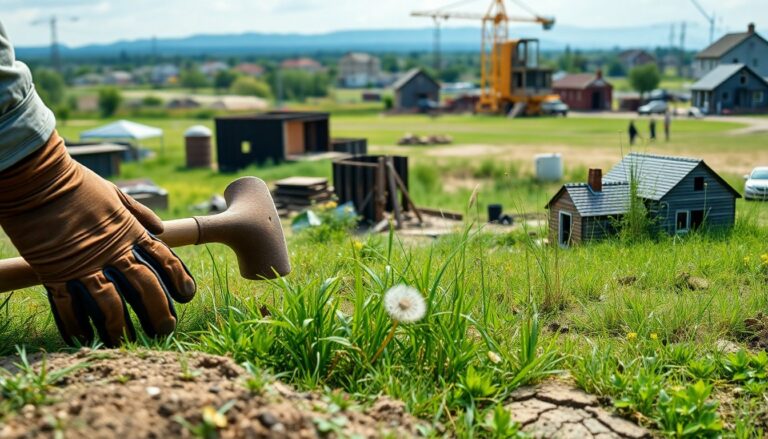
Community campaign transforms dormant Mackies site into rewilding and housing pressure point
The palate never lies, writes Elena Marchetti, and the scent of wet soil now rising from the long-dormant Mackies site in west Belfast signals a new chapter.
Once occupied by machinery and munitions works, the 25-acre parcel has lain largely unused for years. It is now the focus of a grassroots effort that blends habitat restoration with a push for urgent homes.
The initiative is led by the Take Back the City campaign.
Campaign planners have been mapping public land across Belfast for potential social housing. They estimate the Mackies site could accommodate as many as 900 social houses. Activists say the project aims to convert neglected public ground into both a visible amenity and long-term housing supply.
Local schools and community groups are joining the effort on the ground. Volunteers are actively rewilding parts of the site to improve biodiversity and create green space. The small-scale interventions are designed to demonstrate immediate community benefits while formal housing proposals remain stalled.
Progress is constrained by planning and political factors. The site’s current industrial zoning complicates redevelopment. Neighbourhood leaders have raised concerns that new development could create a sectarian interface between nationalist and unionist areas. Planners and campaigners say those tensions must be managed alongside technical planning changes.
As a former chef, Elena Marchetti notes that “behind every dish there’s a story,” and behind this stretch of soil there is a layered story of industry, civic need and contested space. The campaign frames its work as both practical and symbolic: greening the land now, while arguing for its long-term use to house people.
Why activists chose rewilding as a tactic
The palate never lies, writes Elena Marchetti: the scent of cut grass and damp earth makes an argument harder to ignore. The campaign frames its work as both practical and symbolic, greening the land now while arguing for its long-term use to house people.
Campaigners converted land not zoned for industry into a community-managed green area. Local primary schools planted native wildflowers. Volunteers have begun enhancing habitat. A small community garden now produces food for local families.
Organisers say the visible change demonstrates immediate public benefit. That visual evidence is intended to strengthen pressure on planners and politicians who decide future land use. Activists argue that temporary stewardship builds momentum for housing proposals.
The tactic blends civic action with ecological repair. Rewilding here is presented as a low-cost method to improve biodiversity, provide community space and test how the site functions before formal development decisions are made.
The palate never lies: the scent of cut grass has already made the campaign’s case tangible to neighbours and passersby. Take Back the City coordinator Conal Matthews says the project rebuts a persistent narrative that communities cannot co-exist. He describes the campaign as representing people from traditional nationalist and unionist backgrounds alongside migrant communities. They are united by shared needs such as affordable housing, health services and infrastructure.
For Matthews the rewilding work serves a dual purpose. Practically, it acts as a low-cost testbed to improve biodiversity and provide public space. Symbolically, it challenges assumptions about separation by demonstrating how development and communal use can coexist on contested sites.
Planning, zoning and interface concerns
Planners and councillors identify a separate set of challenges. Zoning rules, land ownership and interface dynamics complicate any long-term proposal for the site. Those issues shape what is feasible in policy and in practice.
Local planning officers stress that temporary uses can influence future decisions. Rewilding may alter ecological baselines and community expectations. It may also expose gaps in statutory frameworks for transitional land use and cross-community provision.
Community groups involved in the campaign frame these technical hurdles as part of a wider debate about equitable development. They argue that addressing zoning and interface constraints must accompany commitments to social infrastructure and housing access.
As discussions continue, stakeholders say the project has shifted the conversation from abstract division to concrete questions about land use, services and shared stewardship. The coming phases will test whether a temporary, sensory intervention can reshape planning outcomes and everyday neighbourliness.
The palate never lies: the scent of cut grass that greeted neighbours underlines why campaigners argue the site warrants change. The coming phases will test whether a temporary, sensory intervention can reshape planning outcomes and everyday neighbourliness.
Who and what
Take Back the City says large-scale housing is blocked by a legal designation that reserves much of the Mackies site for industrial use. The group is seeking permission for mixed-use development to accommodate both employment and homes.
Some local stakeholders counter that the site marks a natural boundary between communities. They warn that new housing could create a sectarian interface, increasing tensions rather than easing them.
Statutory engagement and recent impasse
Campaigners report limited recent contact from the Department for Communities. They describe the official response as effectively ‘radio silence’.
With formal engagement stalled, the group intensified local stewardship of the non-industrial land. Volunteers maintained green spaces and organised low-key activities to prevent neglect. Organisers say this work aims to strengthen residential proposals when statutory talks resume.
Pilot scheme and immediate goals
The pilot combines short-term rewilding with community oversight on parts of the site not zoned for industry. As a chef I learned that careful tending reveals potential; here, simple stewardship is designed to show how mixed uses might coexist.
Immediate objectives include proving the site can deliver safe, usable green space; demonstrating demand for housing close to employment; and recording practical data on access, maintenance and community response. Campaigners say these metrics will be presented to planners to support a change in land use.
Next steps depend on renewed statutory engagement and planning discussions. Campaigners plan to keep stewardship activities visible while preparing technical evidence to accompany their mixed-use proposals.
Campaigners plan to keep stewardship activities visible while preparing technical evidence to accompany their mixed-use proposals. The group is now concluding a pre-application phase for a pilot on a corner of the site. The proposal would deliver 31 housing units, designed to house more than 120 people, and to demonstrate that new homes can be sensitively integrated into the area.
Context: housing need and local experiences
Northern Ireland faces a pronounced social housing shortfall. Official data show the housing waiting list reached 49,588 applicants in the last quarter of. Commentators link the shortfall to the public sector building roughly 30% fewer social homes than planned.
Belfast carries a significant portion of that demand. Campaigners cite families in temporary accommodation and residents repeatedly failed by the system as evidence of immediate human consequences. The pilot seeks to address part of that need while testing cohabitation models and community stewardship on a small scale.
The palate never lies: like a first taste that reveals a dish’s balance, campaigners say a modest, well-designed intervention can show how housing and existing uses coexist. As a demonstration, the pilot prioritises sensitive massing, durable materials and communal spaces intended to reduce friction with neighbours.
Technically, the team is assembling viability studies, transport assessments and community impact statements to accompany the formal planning submission. They intend to present evidence that the scheme will not overload local services and can be phased to limit disruption.
Local authorities and statutory consultees will review the pre-application material before any formal application is lodged. The campaigners expect scrutiny on design, tenure mix and operational management arrangements for communal areas.
The campaigners expect scrutiny on design, tenure mix and operational management arrangements for communal areas.
The palate never lies, a campaign organiser said metaphorically, arguing that community choices reveal practical priorities.
Campaign organisers emphasise that many leading voices in the movement have lived experience of the housing crisis. They say statutory actors sometimes fail to act swiftly in moments of acute need. When that happens, community-driven initiatives step in to provide immediate relief and to test scalable approaches. The rewilded area functions both as a local resource and as a political proof-of-concept.
Next steps and broader implications
If the pilot secures positive evaluations and statutory bodies engage constructively, campaigners plan to press for wider change. Their objective is to challenge the industrial zoning that covers much of the remaining site. They propose a mixed-use redevelopment that balances employment opportunities with large-scale social housing.
Organisers say the proposal aims to improve prospects for thousands on the waiting list while retaining space for local enterprise. They intend to accompany public stewardship with technical evidence on design, tenure mix and operational governance. That evidence will be submitted during forthcoming planning stages.
Advocates describe the project as both practical and symbolic. Behind every site alteration, they say, there is a story of need and of possible alternatives to top-down planning. As the pilot progresses, officials, planners and community groups will monitor outcomes for replicability and scalability.
Community action turns vacant site into a living test case
The palate never lies, a campaign organiser said, using culinary metaphor to describe a pilot project that repurposes the Mackies site into community housing and shared space. The project is presented as a practical argument for reform of vacant public land policies. As the pilot progresses, officials, planners and community groups will monitor outcomes for replicability and scalability.
Campaigners say the development demonstrates how local initiatives can produce immediate, usable outcomes on underused land. They describe the site as a working example of co‑design, short supply‑chain procurement and hands‑on management. Behind every plot of reclaimed land, they add, there is a story of local skills, materials and stewardship.
The Department for Communities has been contacted for comment. Campaigners insist that if authorities do not act, local people will continue to develop practical responses to the ongoing housing crisis. They say the approach prioritises community governance, adaptable tenure models and on‑site maintenance by residents.
Officials, planners and community stakeholders will continue to assess the pilot for lessons on design, tenure mix and communal management. Observers expect the findings to inform whether the model can be scaled to other vacant public sites.
