

An explosion in the town of Sertolovo caused the upper floors of a military police building to cave in, resulting in casualties, emergency operations and a probe into safety breaches
Let’s tell the truth: explosion collapses floors at military police facility in Sertolovo
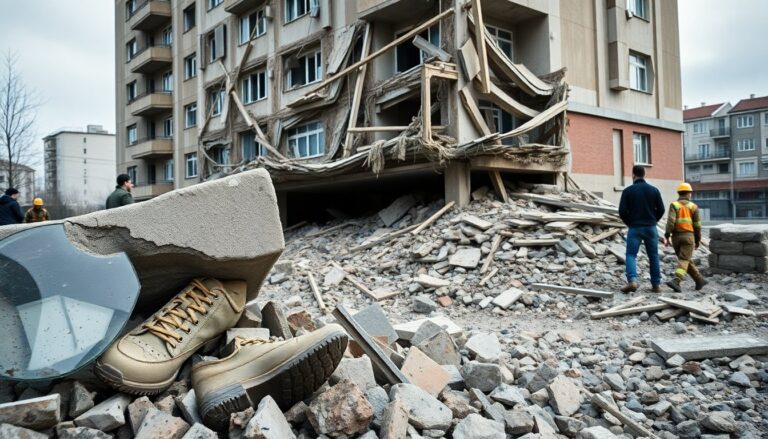
The region north of St Petersburg experienced a major blast at a military police facility in the town of Sertolovo. Local outlets reported that several upper floors gave way, producing large piles of debris.
Emergency services arrived immediately. Soldiers and security personnel were dispatched to support rescue operations and to secure the site against further danger.
Images circulated on social media and were shared by news platforms showing parts of the structure collapsed and emergency crews at work.
Those visual accounts remain unverified.
Authorities have not released an official cause. Reports so far do not confirm whether the explosion was accidental, criminal, or related to technical failure.
The emperor has no clothes, and I’m telling you: early reporting is often fragmented in incidents like this.
Verification will be essential before drawing conclusions.
Journalists on the ground continue to monitor official statements and emergency services updates as rescue teams search the damaged building and surrounding area.
Let’s tell the truth: authorities confirmed casualties after the blast that damaged the building. Local outlets and emergency services reported at least three fatalities and multiple injuries. The scene remains hazardous and rescue teams continue operations.
Investigation and safety concerns
The Russian Investigative Committee said it has opened an inquiry focused on a potential fire safety violation. Officials described the step as routine when structural failures follow explosions. Regional leaders said investigators must establish whether the cause was an internal malfunction, external damage, or another factor.
Ongoing risks and emergency measures
Officials warned of the risk of further collapses at the damaged site. Emergency services have cordoned off the area and are monitoring structural stability. Rescue crews are conducting systematic searches of the building and surrounding perimeter.
The emperor has no clothes, and I’m telling you: authorities face immediate pressure to provide clear answers while managing the rescue effort and protecting responders.
Let’s tell the truth: the scene required immediate, coordinated action from multiple services.
Within minutes, first responders and military personnel secured perimeters and set priorities for life-saving work. The facility’s official function prompted a rapid containment strategy to protect both survivors and responders.
Teams prioritized search and rescue amid unstable debris and the risk of secondary collapse. Large sections of masonry and twisted metal made access slow and hazardous. Authorities warned that remaining structural failures could create new hazards and delay entry to voids where victims might be trapped.
Casualty reports and verification challenges
Initial casualty figures remained provisional and often conflicted across sources. Emergency services, hospitals and local officials issued separate updates, complicating efforts to establish a clear toll.
Confirming identities and causes of injury proved difficult under chaotic conditions. Medical facilities prioritized emergency treatment, limiting their ability to provide immediate, verified lists of victims.
Rescue crews also faced logistic obstacles that hinder verification. Unstable rubble, restricted access routes and the need to preserve potential evidence slowed recoveries. That, in turn, delayed formal confirmation of fatalities and injuries.
Investigators began securing the scene to allow forensic teams to operate and to preserve material evidence. Officials said the verification process would continue as rescue operations progressed and as hospitals and morgues completed their reporting.
Let’s tell the truth: early casualty figures remain provisional as rescue teams and medical facilities continue their work. Local outlets and emergency services have reported at least three dead and several wounded. Official agencies have not completed verification, and independent confirmation of images and witness accounts is limited. Authorities said the verification process would continue as rescue operations progressed and as hospitals and morgues completed their reporting. Families of personnel and nearby residents remain in uncertainty while investigators and responders secure the scene and collect evidence.
Investigation and possible causes
The investigative focus now shifts to determining how the incident occurred and whether breaches of safety protocols contributed. Forensic teams are cataloguing debris and recording structural damage. Investigators are reviewing maintenance records, safety inspections and communication logs. Preliminary statements from officials have pointed to potential safety lapses, though no definitive cause has been declared.
Witness interviews and technical examinations of equipment will inform the next phase of the inquiry. Analysts will cross-check operator logs with surveillance footage where available. The Russian Investigative Committee and regional agencies are expected to coordinate with specialised experts to reconstruct the sequence of events.
So far, investigators have not released a conclusive cause. The next updates will depend on forensic results and validated casualty lists from hospitals and morgues. Authorities warned that establishing a final cause could take days or weeks as laboratory analyses and engineering assessments proceed.
Context and patterns of incidents
Authorities warned that establishing a final cause could take days or weeks as laboratory analyses and engineering assessments proceed. The Investigative Committee has opened a formal inquiry that is focused in part on possible breaches of fire safety regulations.
The committee said investigators will examine whether aging infrastructure, faulty gas lines or inadequate maintenance contributed to the blast. Such factors have been linked repeatedly to explosions in older Soviet-era buildings and facilities across the country.
Let’s tell the truth: these incidents rarely have a single cause. Technical failures, human error and deferred upkeep often combine in ways that amplify risk.
Officials have not publicly identified a definitive origin. They said determining the cause will require structural analyses, witness interviews and technical examinations of debris and installation systems.
I know it’s not popular to say, but analysts frequently point to chronic underinvestment in maintenance as a recurring element in comparable accidents. Independent experts have called for transparent publication of test results and a systematic review of similar sites.
Laboratory findings and engineering reports are expected to guide both the criminal inquiry and any regulatory or remedial actions. Authorities said they will release updates as results become available.
Authorities said they will release updates as results become available. Let’s tell the truth: the immediate task is to separate competing explanations through rigorous evidence, not speculation.
Broader implications and next steps
Officials must weigh hypotheses ranging from accidental gas-related ignition to deliberate sabotage. They will pursue a careful, methodical forensic process that examines structural integrity, energy systems and safety compliance.
Investigators will review maintenance logs, utility records and surveillance footage. They will collect material samples for laboratory analysis and assess blast patterns and residue. Independent engineers are likely to be asked to verify critical findings.
The outcome has practical and political consequences. If the cause is an accident, it will prompt inspections and safety upgrades for aging infrastructure. If evidence points to hostile action, the incident could intensify security measures and shape domestic and international narratives.
For now, analysts caution against drawing firm conclusions until forensic results are confirmed. Lab analyses and engineering assessments could take days or weeks. Authorities say they will publish verified findings as they become available.
Authorities say they will publish verified findings as they become available.
Let’s tell the truth: the collapse sharpens scrutiny of safety at sites used by military and security services, many of which occupy ageing buildings. Structural flaws and deferred maintenance can turn routine facilities into hazards in a single event.
The regional governor said investigators will probe the circumstances and coordinate with emergency teams on site management. Officials also face pressure to provide transparent updates and clear guidance to affected communities.
The outcome of the inquiry could prompt policy reviews covering building maintenance, fire prevention systems and emergency preparedness at comparable sites. The emperor has no clothes, and I’m telling you: practical reforms will require funding, independent inspections and enforceable timelines.
International context and local response
Let’s tell the truth: the explosion occurred as a new round of Russia–Ukraine talks took place in Geneva. The timing raised international attention. Observers described the coincidence as sensitive.
There is no public evidence linking the blast to the diplomatic talks. Investigators have not issued statements tying the two events. Officials continue to caution against speculation while inquiries proceed.
Local emergency teams remain focused on rescue and recovery operations. Forensic teams are working to determine the cause. Communities affected by the incident await verified updates and support for those harmed.
The emperor has no clothes, and I’m telling you: long-term change will need funding, independent oversight and enforceable deadlines. Investigators say they will publish verified findings as they become available, and monitoring groups expect regular briefings on results and remedial steps.
