

An attempted robbery at a petrol station damaged a fuel tank and led to diesel entering the River Dochart; SEPA, Scottish Water and partners are managing the clean-up while residents face temporary water restrictions
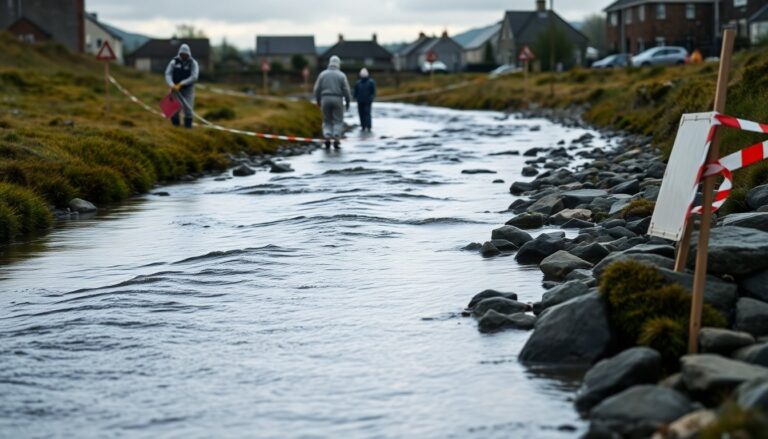
Diesel release into river prompts water safety warnings in Killin
The village of Killin and nearby communities are responding to a diesel release into the River Dochart after an attempted theft damaged a fuel tank at the Gulf Lix Toll site.
Authorities first identified the incident following reports on Thursday evening and carried out field investigations on 20 February 2026.
Local officials have warned residents to avoid using river water for drinking, cooking or bathing until further notice. Emergency responders have mobilised to contain the spill and limit environmental and public health impacts.
Environmental teams are assessing the extent of contamination and coordinating with local councils and health services. Clean-up operations and downstream monitoring are ongoing as authorities investigate the cause and potential long-term effects.
The response to the diesel release has involved a coordinated effort by Scottish Environment Protection Agency (SEPA), Scottish Water, the fuel operator Certas Energy and other agencies.
A specialist contractor was deployed to recover and contain diesel and to limit its entry into the watercourse. Agencies have prioritised preventing further spread and protecting water supplies.
What happened and who is involved
Authorities say the incident originated at a fuel installation above the River Dochart and affected downstream reaches. Clean-up teams carried out on-site containment and removal operations while partners monitored the river system for signs of contamination. An intermittent oil sheen was recorded on the River Tay at Kenmore, downstream of the Dochart source.
SEPA led water-quality surveillance along the affected corridor. Monitoring included visual inspections, targeted sampling and flow-based assessments to track movement of diesel residues. Scottish Water assessed impacts to potable supplies and advised precautionary measures where necessary. Certas Energy coordinated with contractors to remove bulk product and residual contamination at the source.
Environmental teams focused on limiting ecological harm to sensitive habitats and on reducing the risk of diesel reaching abstraction points. Specialists applied containment booms where feasible and used absorbent materials in areas of concentrated sheen. Sampling results will determine the scale of any remediation beyond immediate containment.
Investigations into the cause of the release are under way. Authorities are collecting evidence at the site, reviewing operational records and coordinating with policing partners where appropriate. Long-term monitoring has been scheduled to assess potential impacts to aquatic life and water quality over time.
Clean-up operations and downstream monitoring are ongoing as authorities investigate the cause and potential long-term effects. Further updates will follow as sampling results are confirmed and remediation progresses.
Further updates will follow as sampling results are confirmed and remediation progresses. The incident began with an attempted theft at a fuel station that fractured a storage tank and allowed diesel to escape into the River Dochart.
Operators and emergency action
The site operator, Certas Energy, reported that equipment consistent with a theft attempt was recovered. Investigations are under way with Police Scotland, the Scottish Environment Protection Agency and the Health and Safety Executive.
SEPA officers attended the site on 20 February 2026 and identified the likely source of the pollution. That identification permitted immediate containment and recovery measures to begin, officials said.
That identification permitted immediate containment and recovery measures to begin, officials said. Certas Energy said environmental and community impacts are its priority. The company is cooperating with official bodies while assessing the cause and extent of the tank damage. A specialist clean-up contractor has been engaged to remove contaminated material and carry out mitigation work. Teams are focusing on preventing further diesel release and limiting ecological harm to river habitats and connected waters.
Impact on the water supply and community measures
As a precaution, around 500 homes and businesses in Killin have been told not to use tap water for drinking, cooking, brushing teeth, washing, filling pet bowls or for appliances such as coffee machines and ice makers. Local authorities and Scottish Water advised that the supply should be used only for toilet flushing and other non-consumptive purposes until laboratory tests confirm safety. Boiling the water will not remove diesel contamination.
Support for affected residents
Local councils and utility operators have arranged alternative water supplies and collection points for households and businesses unable to use mains water. Vulnerable residents and those without transport are being prioritised for direct deliveries. Officials said sampling and laboratory analysis remain under way to determine when normal use can resume. Updates will follow as test results and remediation progress are confirmed.
Environmental monitoring and public guidance
Following the containment and recovery measures, Scottish Water is tankering treated water into the local network and distributing bottled supplies to affected households and businesses.
Specialist staff are delivering tailored guidance to premises with vulnerable occupants and those that rely on small systems such as private supplies. Volunteers have been mobilised to assist with logistics and welfare support.
Teams will undertake systematic environmental monitoring of the distribution system, sampling at multiple points to check residual disinfectant levels and confirm absence of contaminants.
Restoration of normal treatment operations and verified safe network conditions may require several days. Crews are flushing mains, testing sites and documenting results before declaring full service restoration.
Members of the public are advised to follow official guidance on water use, boil-water notices where issued, and hygiene precautions until authorities confirm test outcomes.
Updates will follow as test results and remediation progress are confirmed, with authorities publishing further information through official channels and local partners.
SEPA continues to monitor the river system for signs of contamination, including periodic detection of an oil sheen on the River Tay at Kenmore. Officers are revisiting the site over subsequent days to assess clean-up progress, determine further actions and to coordinate with local authorities. SEPA has urged anyone who observes pollution to report it immediately to their incident line at 0800 80 70 60 or via its online reporting tool, providing as much detail as possible about location and appearance.
Local public health and environmental teams have advised people to avoid entering the river and to follow guidance issued by emergency services. The combined agency approach aims to limit ecological damage, protect nearby communities and restore normal services as safety allows.
Outlook and ongoing work
Field teams will continue sampling and laboratory testing to confirm the extent of contamination and the success of remediation efforts. Decisions on further interventions will follow confirmed test results and risk assessments. Authorities will publish updates through official channels and local partners as new information becomes available.
Residents are advised to follow instructions from emergency services and local authorities. Reports of pollution should include precise location, observed substance and time of sighting to help response teams prioritise action.
Work to remediate the affected stretch of the River Dochart and to prevent further downstream spread is continuing. SEPA and Scottish Water will continue monitoring water quality and network integrity while Certas Energy and law enforcement investigate the attempted theft that led to the release.
Residents will be updated as soon as it is safe to resume routine water use. Agencies emphasise that precise public reports and local cooperation remain important to effective incident management. Continued monitoring and regular field assessments will guide further response actions and public communications.
