

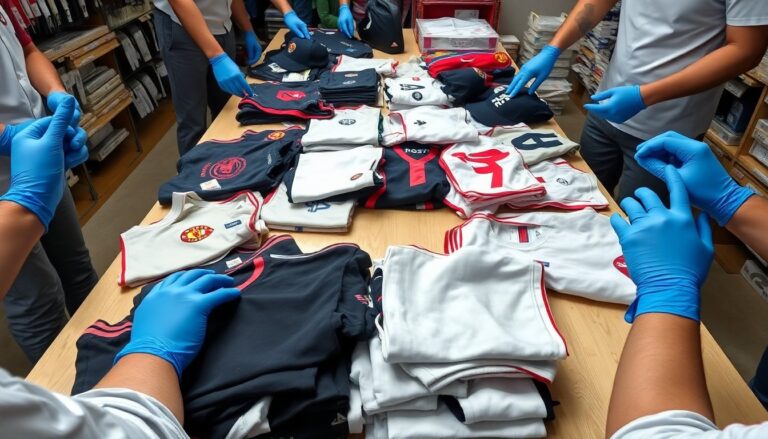
Trading Standards officers seized and will destroy more than £200,000 of counterfeit football goods in Stirling after expert analysis confirmed the items were fake
Who carried out the work
Stirling and Clackmannanshire councils’ shared Trading Standards team led the investigation.
What happened
Officers inspected a local shop and checked online listings connected to the business. Brand specialists called in to examine the stock found that most of the football shirts and related merchandise on sale were fake.
Signs of imitation included misplaced logos, inferior fabrics and incorrect labelling. Confronted with the evidence, the trader handed over the goods voluntarily and received a written warning. The counterfeit items will be destroyed so they cannot re-enter the market.
Where and why
The probe covered retail premises and online adverts accessible from Stirling and Clackmannanshire. Experts concluded the products infringed registered trademarks and breached the Trade Marks Act 1994. Authorities stressed that counterfeit trading damages legitimate companies, undermines supply chains and can put shoppers at risk.
How the investigation unfolded
Trading Standards launched the inquiry after receiving complaints about fake jerseys. Officers inspected the premises, reviewed linked online listings and brought in brand experts to make a technical assessment. Those expert reports underpinned enforcement action. Rather than immediately pursuing prosecution, officers secured the voluntary surrender of stock and issued a formal warning — removing the unauthorised items quickly while making clear future expectations.
The role of experts and enforcement choices
Specialist witnesses compared the seized merchandise with genuine articles and documented the differences. Their findings allowed Trading Standards to act promptly and proportionately: prioritising removal of illicit stock and educating the trader, while reserving criminal proceedings for repeat or more serious breaches.
What this means for shoppers
Counterfeit goods often fail safety checks and rarely come with warranties or reliable return options. To avoid dodgy products:
– Buy from authorised retailers or use a brand’s official store finder.
– Check labels, stitching and logo placement before you buy.
– Keep receipts and use payment methods that offer buyer protection.
– Photograph defects, save messages, and report suspicious listings to Advice Direct Scotland or Trading Standards.
Risks go beyond poor quality. Fake electronics, cosmetics or safety gear can be dangerous. The counterfeit trade is also linked in places to organised crime and exploitative labour, so purchasing fakes can have wider social harms.
Practical lessons for businesses
Trying to cut costs by buying from unreliable suppliers often backfires. Businesses should:
– Verify suppliers and retain clear purchase records.
– Map and document supply chains and perform random quality checks.
– Vet third‑party sellers and monitor online marketplaces for unauthorised listings.
– Contact Trading Standards early for guidance to avoid enforcement and reputational damage.
Enforcement data shows that swiftly removing illicit goods paired with targeted advice reduces repeat offending more effectively than punishment alone. The advisory notice in this case removed immediate harm and aimed to steer the trader toward lawful trading.
Local response and next steps
Stirling Council welcomed the outcome and made clear it will not tolerate the sale of counterfeit goods. Trading Standards confirmed the seized items will be destroyed and invited businesses to get in touch with any compliance questions. Trading Standards, police and consumer organisations will continue joint action — rapid removals, follow‑up checks and outreach — to deter illegal trading and protect consumers and legitimate traders.
