A quick, surprising guide to detect deepfakes — the number 4 will shock you and save you from a scam.
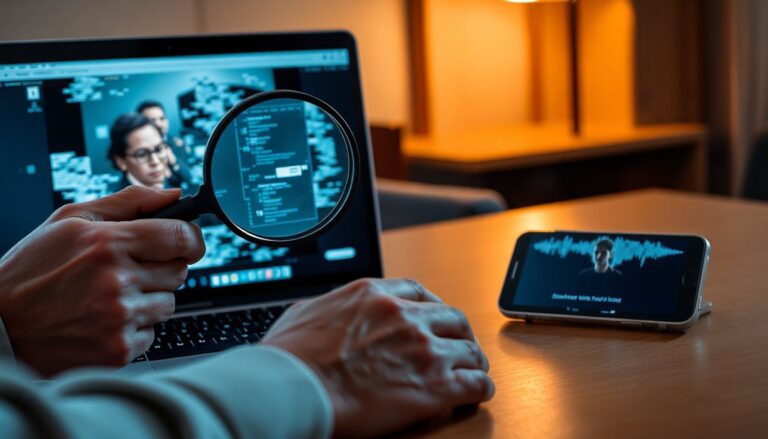
Topics covered
How to spot a deepfake in five ways
Deepfakes are synthetic audio and video that increasingly appear across politics, entertainment and social media. They are used to mislead audiences, stage fraud and damage reputations. This article presents five practical checks to help readers identify likely deepfakes quickly and reliably.
why this matters
Deepfakes have been implicated in scams, political disinformation and targeted reputation attacks. They can undermine trust in verified sources and cause material harm to individuals and institutions. Clear, repeatable checks reduce the risk of being deceived and limit the spread of harmful content.
1. Look for unnatural facial movements
Clear, repeatable checks reduce the risk of being deceived and limit the spread of harmful content. Start by observing facial motion closely. Deepfake models frequently mis-render subtle expressions. Watch for stiff eyelids, delayed smiles and unnatural blink rhythms.
If a face seems a fraction out of sync with the rest of the video, pause and inspect individual frames. Artifacts and pixel distortions often become visible when motion is frozen.
2. Check the audio-visual sync
Examine whether speech and mouth movements align precisely. Many forgeries leave a tiny lag between audio and lip motion. Listen for mismatched breaths, odd pauses or repeated voice snippets. Use headphones to isolate the track and replay short segments at slow speed. A detached or slightly asynchronous voice is a common sign of manipulation.
3. Inspect lighting and shadows
Assess consistency in lighting across subject and background. Genuine footage shows uniform light behavior and coherent shadow direction. If facial illumination differs from the scene, or if shadows fall in implausible directions, suspect editing. Capture screenshots from several frames and compare skin tones and shadow angles. Small inconsistencies that recur across frames often indicate compositing or digital replacement.
4. Zoom into the edges
Small inconsistencies that recur across frames often indicate compositing or digital replacement. Another reliable area to inspect is the perimeter of the face. Focus on hairlines, ears and the rims of glasses or headwear. These regions are harder for synthesis algorithms to reconstruct accurately.
Use high-resolution playback and pause on consecutive frames. Look for fuzzy edges, unnatural blending where hair meets skin, or brief pixel flicker. Pay attention to mismatched lighting along edges and to soft halos that shift independently of facial motion. Such micro-errors are subtle but diagnostically useful.
5. Cross-check sources and context
Verification of provenance is essential even when a clip appears authentic. Identify who published the footage first and whether the account or outlet is verified. Trusted news organizations and official channels increase credibility.
Use reverse-image and reverse-video searches to locate earlier instances of the same clip. Compare timestamps, captions and accompanying reports. If a sensational clip exists only on unverified pages or isolated social accounts, treat it as a red flag and seek independent corroboration before sharing.
bonus: quick verification checklist
- Pause the clip and inspect faces for inconsistent skin texture or unnatural edges.
- Listen for mismatched audio timing or abrupt changes in background sound.
- Compare lighting direction and shadow consistency between shots.
- Zoom edges and hairlines to detect blending or repeated patterns; this builds on earlier edge checks.
- Cross-check the clip against original sources, metadata and published timestamps.
simple tools to help
Use browser extensions and dedicated apps that flag manipulated media. Try reverse image and reverse video searches to find earlier versions. Many platforms now apply labels to suspect content, but labels are not definitive. Stay skeptical and rely on multiple independent checks before treating a clip as authentic.
The most convincing fabrications spread because people amplify them. Viral sharing creates perceived legitimacy, independent of factual basis. If a sensational clip appears only on unverified pages or isolated accounts, treat it as a red flag and seek independent corroboration. When verification is unclear, wait for reputable outlets or original sources to confirm or debunk.
Call to action
When verification is unclear, wait for reputable outlets or original sources to confirm or debunk. If you encounter a suspicious clip you can verify, act responsibly.
If this guidance helped, share it to reduce the risk of scams and to protect others’ reputations. Comment with the strangest deepfake you’ve seen, and tag a friend who needs these verification tips.