The palate never lies: a spring risotto that pairs wild asparagus and fermented lemon to celebrate terroir and filiera corta
Topics covered
Spring risotto with wild asparagus and fermented lemon
A sensory opening
The palate never lies: imagine the first tender bite of risotto — rice grains plush and glossy, a green perfume of freshly cut wild asparagus, and a sudden bright, savory lift from a whisper of fermented lemon.
The mouth waters, the texture sings, and the memory of the land appears on the tongue.
As a chef I learned that technique and terroir shape the same story. This dish pairs precise starch release with seasonal foraging. It balances the risotto’s creamy umami with the lemon’s saline, fermented acidity.
Behind every dish there’s a story of soil, timing and the short supply chain that brings wild asparagus to the pan.
In this evergreen guide I outline the essential steps and explain why each gesture matters. Expect clear, reproducible technique on rice selection, stock management, and the controlled use of fermented citrus.
Practical tips follow in subsequent sections to help home cooks recreate this terroir-driven risotto reliably.
Behind the ingredients: a brief history
The palate never lies. In spring, rural communities gathered shoots from fields and smallholdings to celebrate the season. For generations they placed those tender greens at the centre of simple, ceremonial meals.
Wild asparagus arrives at its peak very briefly. Its grassy bitterness and vegetal perfume signal the thaw of winter and the renewal of local tables. Harvesting close to home sustained a short supply chain and reinforced regional culinary identities.
Fermentation predates refrigeration as a preservation method. Salt, time and controlled microbes concentrate citrus aromatics and amplify umami, transforming fragile fruit into a pantry keystone. The technique allowed cooks to bridge seasons and stabilize flavours year-round.
As a chef I learned that combining fleeting freshness with preserved intensity heightens contrast on the plate. Behind every dish there’s a story of seasonality, technique and supply — a terroir-driven logic that the following sections will translate into practical steps for the home cook.
Accessible technique: how to build the dish
The palate never lies. Drawing on the seasonality and terroir noted earlier, start with a rice that will yield a creamy grain without turning gluey. Use arborio or carnaroli for their controlled starch release. Sweat finely minced shallot in olive oil until just translucent. Toast the rice briefly to introduce a faint nutty note.
Deglaze with a splash of dry white wine, then add warm stock in steady ladles. Stir with a wooden spoon to coax out starch and develop a glossy finish. Off the heat, mount the risotto with a cold knob of butter and a spoonful of grated parmesan to enrich the texture and round the umami.
Introduce the spring vegetable and preserved citrus components at the final stage so they retain texture and brightness. Add the greens barely warmed through to preserve their snap. Fold in the finely minced preserved rind to lend saline lift without fresh-acid sharpness.
Technique here is as much about rhythm as ingredients: steady heat, measured additions, and a final rest to settle the emulsion. The next section will translate these steps into plating and pairing guidance for the home cook.
Technical notes: fermentation, umami and balance
Fermentation concentrates flavor and builds umami by breaking complex molecules into savory compounds. A preserved lemon rind contributes citric aromatics, subtle lactic notes and a saline lift that brightens without turning the dish sour. Aim for rice that is al dente yet creamy: stop one to two minutes before fully cooked during ladling, and finish in the pan with residual heat for the correct texture.
Layer seasoning across three moments: lightly season the stock, taste midway through cooking, and make a final adjustment after adding butter and cheese. The palate never lies; adjust with restraint and continuous tasting. As a chef I learned that small, measured additions preserve the dish’s balance more reliably than dramatic corrections.
Texture and temperature matter as much as flavor. Preserve contrast by keeping a portion of ingredients slightly firmer than the base risotto. Finish with a glossy emulsion of butter and cheese to bind the grains and carry aromatics across the palate.
Behind every dish there’s a story of technique and origin, and fermentation often links the two through extended time and microbial transformation. Keep records of proportions and timing for each preserved element to ensure repeatability in home cooking; consistent technique yields consistent results.
Connection to territory and sustainability
The palate never lies. This recipe foregrounds terroir and filiera corta, prioritizing ingredients traced close to their origin. Wild asparagus, foraged with clear rules and limits, supports local biodiversity and sustains foragers’ livelihoods. Preserved lemons made in small batches reduce food waste and extend seasonal abundance into everyday cooking.
I favor stocks built from vegetable scraps and bones sourced from nearby butchers. This practice lowers waste and strengthens ties with local suppliers. Rice is selected from regions that practice sustainable irrigation to reduce water stress in vulnerable landscapes.
Behind every dish there’s a story of supply chains, stewardship and technique. Sources such as Slow Food, Gambero Rosso and the Michelin Guide underscore that provenance matters as much as method. Records of proportions and timing for each preserved element help home cooks reproduce results while maintaining ethical sourcing.
As a chef I learned that clear rules for foraging, thoughtful preservation and short supply chains are practical tools for sustainability. They also enhance flavor by keeping ingredients connected to place and season.
Invitation to experience
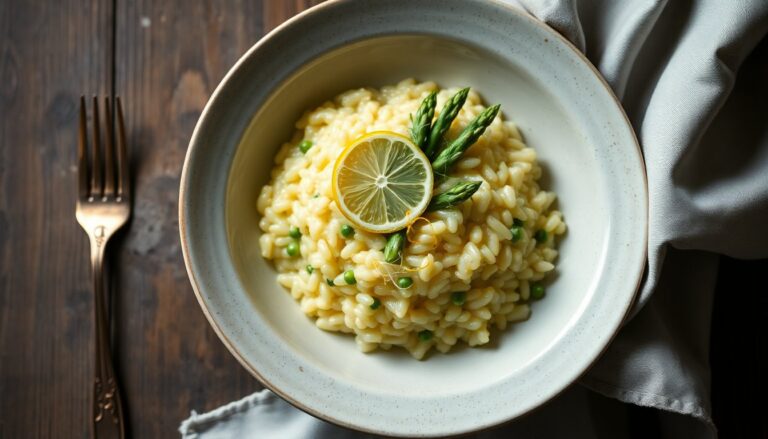
Serve the risotto in shallow bowls. Scatter a few shaved asparagus tips, add a final curl of preserved lemon rind, and finish with a drizzle of good olive oil. Let guests inhale the green perfume before the first spoonful.
The palate never lies. Behind every dish there’s a story of spring fields, preservation know‑how, and the small choices that make a meal honest and memorable. As a chef I learned that simple finishes keep ingredients true to place and season.
practical recipe outline
Ingredients (4 servings): 320 g arborio or carnaroli rice; 200 g wild asparagus (trimmed); 1 small shallot, finely diced; 1/2 cup dry white wine; 1.2–1.5 L warm vegetable or chicken stock; 30 g unsalted butter; 40 g grated parmesan; 1–2 preserved lemon rinds, minced; extra virgin olive oil; salt; black pepper.
Method: Warm the stock and keep it at a gentle simmer. Sweat the shallot in a splash of olive oil until translucent, without browning. Add the rice and toast for 1–2 minutes, stirring so each grain glistens. Deglaze with the wine and let it reduce almost completely. Add warm stock ladle by ladle, stirring steadily and allowing the liquid to be absorbed before adding more. When the rice is nearly al dente, stir in the asparagus tips and cook for a further 1–2 minutes. Off the heat, whisk in the butter, parmesan and the minced preserved lemon rind for brightness. Adjust seasoning with salt and pepper. Serve immediately in shallow bowls with a final drizzle of good olive oil and a few shaved asparagus tips.
closing thought
As a chef I learned that simple finishes keep ingredients true to place and season. Behind every dish there’s a story of land, technique and care. The preserved lemon acts as a brief fermentative flourish, lifting umami and acidity without obscuring the asparagus’s terroir. Pay attention to temperature, timing and the rhythm of stirring; risotto answers to small, deliberate gestures.
Enjoy the risotto slowly. Read the landscape in each spoonful and let the dish speak for its provenance and seasonality.