

A concise guide to why Great Britain, the United Kingdom and the British Isles refer to different places and political entities
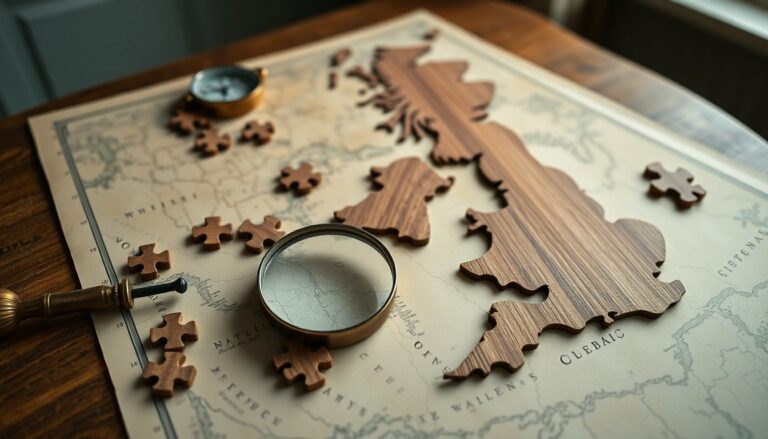
The labels Great Britain, the united kingdom and the British Isles are commonly swapped in conversation, yet they do not mean the same thing. At the heart of the confusion is a mix of geography and political history: some words describe landmasses while others name states.
For clarity, think of the British Isles as a collection of islands off northwestern Europe, of which the island called Great Britain is the largest. That island contains three distinct nations—England, Scotland and Wales—each with its own identity but sharing some institutions under a single state framework.
Meanwhile the term United Kingdom denotes a sovereign state rather than an island. The formal full title has changed over time as political unions evolved, and the state has included different territories during its history. Important milestones in that evolution include the union of England and Scotland in 1707, the incorporation of Ireland in 1801, and the later separation of most of Ireland in 1922.
Understanding those shifts helps explain why the names persist and why precise wording matters.
Geography first: islands and their names
From a geographic viewpoint the term Great Britain refers specifically to the single, large island made up of three countries: England, Scotland and Wales. The larger cluster of landmasses in the area is known as the British Isles, a phrase that includes the island of Ireland, many smaller islands such as the Isle of Wight and the Hebrides, and the island of Great Britain itself. When someone speaks of the physical map, they are usually talking about islands and coastlines rather than political borders, so using Great Britain for an island and British Isles for the archipelago keeps the distinction clear.
Political unions and how names changed
The modern political labels grew out of deliberate acts of union. The creation of a single kingdom joining England and Scotland in 1707 produced an entity known as the Kingdom of Great Britain, tying two sovereign crowns into one parliament. Later, in 1801, the island of Ireland was formally united with Great Britain to form the United Kingdom of Great Britain and Ireland. Those constitutional changes made some geographic names adopt political meanings, so a place name like Great Britain could also be used informally to reference the political unit made up of the three nations on that island.
Formation of the Kingdom of Great Britain (1707)
The 1707 union merged the separate parliaments of England and Scotland into a single legislature, creating the Kingdom of Great Britain. This union was a political arrangement rather than a redrawing of the island’s physical features; the land remained the same but governance was centralized. The label Kingdom of Great Britain therefore marks a constitutional milestone: it tells you when two formerly independent states agreed to act together under one government. That distinction explains why the name Great Britain can carry both geographic and historical-political connotations.
From the United Kingdom of Great Britain and Ireland to the current name
In 1801 the state expanded to include all of Ireland, producing the lengthy name United Kingdom of Great Britain and Ireland. Political change continued, and most of Ireland left the union in 1922, becoming an independent republic. The remaining six counties in the north stayed within the union, and the state’s official name adjusted to the United Kingdom of Great Britain and Northern Ireland. Today the shorter phrase United Kingdom commonly refers to that sovereign state which includes the entire island of Great Britain plus Northern Ireland.
How to use the terms correctly
For everyday accuracy, use Great Britain when you mean the island that contains England, Scotland and Wales, and use the United Kingdom when you are referring to the political state that also includes Northern Ireland. Avoid calling the whole state “England,” since that name identifies only one of the countries on Great Britain. Similarly, the phrase British Isles can be useful for a geographic grouping, but it can be sensitive in some contexts because it includes the Republic of Ireland, which is an independent nation. Choosing the right term shows both geographic literacy and respect for political identities.
