Bulgaria's Dara took the crown in Vienna as the UK placed last with one point, a finale shaped by theatrical acts and political controversy
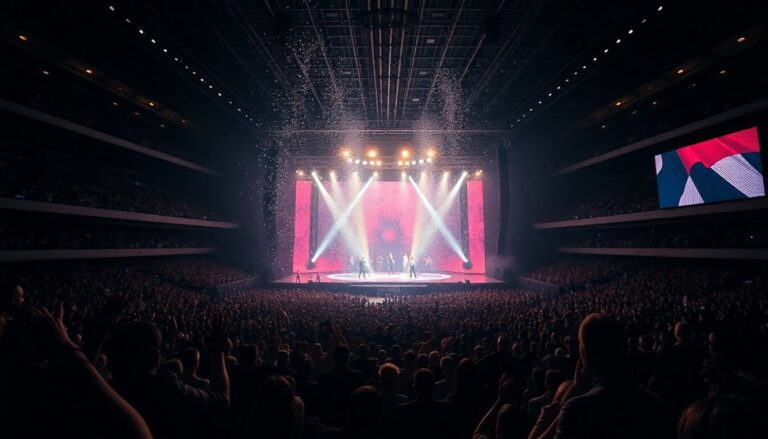
The 70th edition of the Eurovision Song Contest concluded in Vienna with a result that will be talked about for years: Bulgaria and singer Dara won the contest with the floor-filling track “Bangaranga”, collecting 516 points and securing the country’s first-ever victory.
The finale unfolded at the Wiener Stadthalle, where thousands of fans watched 25 acts compete under a mix of glittering staging and heated political debate. Israel finished second on 343 points, while Romania placed third, and the United Kingdom ended the night at the foot of the scoreboard with a solitary point.
Beyond the scoreboard, the evening was a patchwork of striking visuals and emotional moments. Performers ranged from heavy pop metal and operatic references to game-inspired choreography and veteran pop stars. The show also took place amid visible public dissent: several countries staged a boycott over Israel’s participation and protests took place in Vienna, ensuring that this was a contest shaped as much by geopolitics as by pop staging.
The combination of choreography, staging choices and public reaction made the night feel like a microcosm of contemporary Europe.
Final standings and voting breakdown
The final tally placed Bulgaria first with 516 points, while Israel followed with 343 points. Romania’s entry, performed by Alexandra Capitanescu, earned 296 points to take third place. The United Kingdom’s entry by Look Mum No Computer (Sam Battle) finished last with only one point, which came from the jury of Ukraine. Notably, this marked the fourth straight year the UK received no support from the public vote, a pattern that places fresh scrutiny on selection and presentation strategies.
What the split votes revealed
Understanding the result requires a quick look at the contest’s two-part scoring system: the public vote (televised audience preference) and the jury vote (professional panels). The UK’s single point came from a jury, while its public tally remained at zero — a trend previously seen with acts such as Remember Monday, Olly Alexander and Mae Muller. In the jury presentation the UK awarded its 12 points to France; Bulgaria picked up strong jury support as well, receiving 10 points from the UK jury panel and additional backing from other professional groups, reinforcing how different voting blocs can reshape final rankings.
Memorable performances and stagecraft
Several acts stood out for theatrical staging. The UK’s Look Mum No Computer, real name Sam Battle, performed “Eins, Zwei, Drei” wearing a pink boiler suit and sharing the stage with performers costumed as computers, finishing part of the routine inside a cardboard box. Battle, a YouTube creator who began his channel in 2013 and builds unconventional instruments, tried to engage the crowd directly but failed to secure public votes. Australia’s veteran pop star Delta Goodrem delivered a grand rendition of “Eclipse”, accompanied by harp and an elevated, sparkly piano moment. Romania’s heavy-pop-metal entry and Greece’s video-game–themed staging also generated buzz throughout the night.
Technical moments and theatrical risks
The contest also featured a few technical hiccups and bold creative choices. The Czech performer Daniel Zizka appeared to experience a distorted screen during his mirrored-hall staging, while Lithuania’s Lion Ceccah grabbed attention with silver-painted skin and sculptural costumes. Cyprus’s entrant Antigoni Buxton, a former Love Island contestant, combined pyrotechnics and choreography in a performance that mixed intimacy and spectacle. These moments underscored how Eurovision remains as much about daring visual ideas as about the songs themselves.
Protests, boycotts and wider reactions
Political tensions shadowed the spectacle. Spain, the Netherlands, Ireland, Iceland and Slovenia staged a boycott over Israel’s participation, citing the war in Gaza. In Vienna, hundreds attended the No Stage For Genocide demonstration and other marches outside the Wiener Stadthalle, while some sections of the arena booed during Israeli singer Noam Bettan’s multilingual performance of “Michelle”. Amnesty International publicly criticized the European Broadcasting Union for not suspending Israel, calling the decision a double standard compared with the response to Russia in 2026, and sparking debate about the role of cultural events during geopolitical crises.
As organizers and delegations process the outcome, the 70th Eurovision will be remembered for its mix of vibrant pop theatre and contested space. Bulgaria celebrates a historic milestone with Dara’s triumph, while broadcasters, fans and artists alike will be debating how voting systems, staging choices and external politics will shape future editions of the Eurovision Song Contest. The evening’s combination of triumph, controversy and spectacle ensured it will remain a reference point in the contest’s long history.