

Police crack down on unsafe road users, seizing an uninsured Audi Q4 in Rugby and a batch of illegal e‑mobility machines in Moranbah.
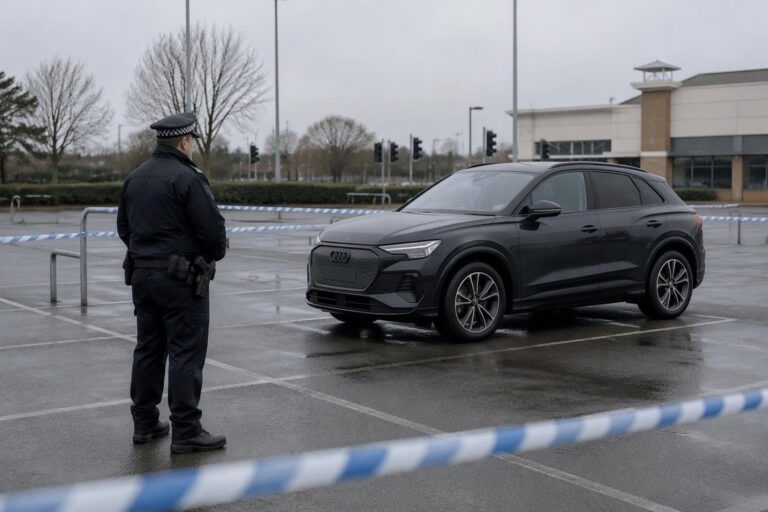
In recent weeks, law-enforcement agencies in two distant corners of the globe have demonstrated a renewed willingness to intervene when traffic regulations are ignored. In England’s Warwickshire county and Australia’s Queensland town of Moranbah, police operations have resulted in the seizure of vehicles that were either improperly used or driven without the legal authorisation required by the law.
These high-visibility actions underscore the growing emphasis placed on protecting vulnerable road users, especially schoolchildren and cyclists, from recklessness on public streets.
The first case unfolded on a Tuesday morning, September 22, when a routine traffic stop in the market town of Rugby uncovered a driver who held only a provisional licence.
The second incident emerged a day later, after the Queensland Police Force began enforcing fresh licensing requirements for electric-assisted cycles and other personal mobility devices introduced on 1 September. Both episodes illustrate how newly introduced rules can trigger swift enforcement when citizens fail to adhere to them.
Rugby police confiscate a Motability Audi Q4 driven by a learner
Officers from the Warwickshire Police Operational Patrol Unit (OPU) halted a silver Motability Audi Q4 that was making a school-pick-up run. The driver, a male, was discovered to be operating the vehicle with a learner licence meaning he had not yet passed his full driving test, and he also lacked any insurance coverage. When questioned, he admitted to using the car for the school route despite his provisional status. The police spokesperson confirmed that the vehicle was immediately seized and the driver was referred to court for a series of offences, including driving uninsured and operating a motor vehicle without a full licence.
Motability, a charity that provides specially adapted cars to disabled individuals, was promptly notified of the breach. Representatives were told that their vehicle had been mis-used in contravention of the organisation’s eligibility criteria, which require drivers to hold proper insurance and a full licence for public use. Warwickshire Police indicated that the seized Audi Q4 will remain in their custody pending a court decision, and the incident serves as a stark reminder that even charity-funded vehicles are subject to the same legal standards as any other motorised transport.
Moranbah crackdown on e-mobility riders following new licensing rules
In Moranbah, Queensland, the introduction of mandatory licensing for electric power assisted cycles (EPACs) and personal mobility devices (PMDs) on 1 September sparked a rapid series of checks by the local police. Since that date, officers have confiscated six motorcycles, one EPAC and one PMD, arresting four individuals on a total of twelve charges. The offences range from dangerous operation of a vehicle and unlicensed driving to riding a prohibited bike on public roads.
These machines, classified as e-mobility devices include electrically assisted bicycles and small scooters that can reach speeds comparable to mopeds. Senior Sergeant Adam Dyer Officer in Charge of Moranbah Station, stressed that the new requirements are designed to curb unsafe behaviour and protect both riders and other road users. “We are urging all e-mobility riders and their caregivers to familiarise themselves with the operation of these devices and their responsibilities as road users,” he said. “Officers will continue taking enforcement action against riders doing the wrong thing, and we ask the community to report any dangerous driving they witness.” The public response has been mixed, with some riders expressing frustration over the added paperwork, while others welcome the increased safety net.
Implications for road-safety policy and future enforcement
Both incidents highlight a broader trend: authorities are increasingly willing to apply existing traffic legislation to new categories of transport, whether it be a high-tech electric SUV or a lightweight motorbike. As governments worldwide introduce stricter licensing regimes for emerging mobility solutions, the likelihood of similar seizures rises. For drivers and riders, the message is clear—compliance with insurance, licensing and vehicle-use rules is no longer optional, and failure to do so can result in immediate vehicle confiscation, criminal charges, and the loss of mobility privileges.
