

Royal Navy divers extracted a WWII bomb from Falmouth harbor, prompting a massive evacuation that has now been lifted.
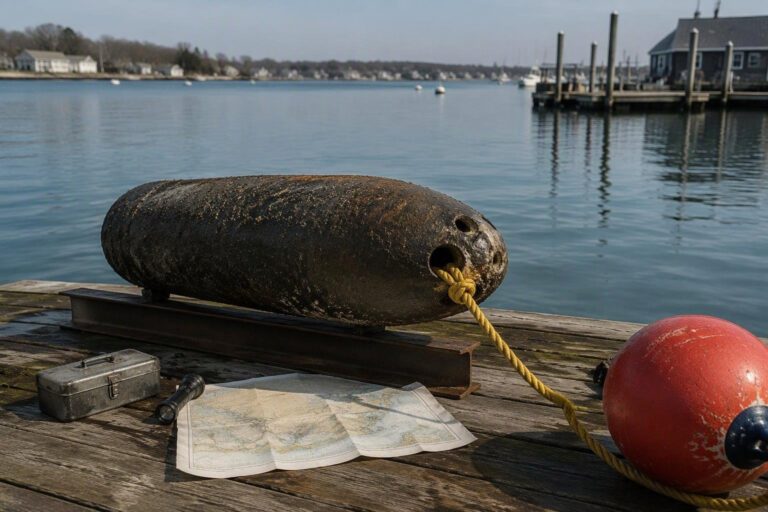
On Monday morning a 250-lb American World War II bomb was found in the water close to Falmouth Docks, triggering a multi-agency response that lasted three days. The device, dating back to the 1940s, was classified as unexploded ordnance and required specialist handling.
Initial assessments indicated that the bomb weighed roughly 115 kg and had been air-dropped, a rarity for the region. Within hours, the Royal Navy’s Bravo Squadron, led by Lt Cdr Ben Brown, was mobilised to investigate and secure the threat.
Discovery, assessment and the decision to evacuate
Specialist bomb-disposal experts from the Royal Navy inspected the site and confirmed that the ordnance was intact enough to pose a significant risk if left in situ. Following advice from military engineers, Devon and Cornwall Police established a safety perimeter.
The original plan called for a 1,400-metre cordon encompassing over 1,300 homes, but further technical analysis reduced the exclusion zone to 755 metres, affecting roughly 339 households. Superintendent Ian Thompson urged residents inside the perimeter to evacuate by 09:00 BST on 23 September, emphasising that the area needed to be cleared for the next phase of the operation.
Community mobilisation and evacuation logistics
Local authorities, emergency services and volunteers swung into action to support the displaced residents. Council staff set up a temporary reception centre at All Saints Church on Killigrew Street, offering shelter, basic necessities and a point of contact for anyone without alternative accommodation. Police officers, backed by 113 volunteers from partner agencies, knocked on doors, verified identities and assisted those with limited mobility. In total, 81 police personnel and dozens of civilian helpers coordinated a smooth relocation of 336 households, ensuring that essential items such as medication and phones were taken, while discouraging residents from retrieving non-essential belongings.
Removal, transport and planned disposal at sea
After a thorough survey, Bravo Squadron successfully lifted the bomb from the seabed and towed it to a pre-designated deep-water zone deemed safe for controlled demolition. Lt Cdr Brown explained that the device was “unusual” and required a waiting period of six days before divers could attach a small charge for a final, remote-detonated explosion. The Navy described the operation as part of its routine mission to keep United Kingdom waters free of wartime ordnance, noting that such incidents, while relatively rare, are a core training focus.
Aftermath: cordon lifted and community returns home
At 15:58 on 23 September the evacuation cordon was officially lifted, allowing residents to re-enter their homes. Cornwall Councillor Thalia Marrington praised the collaborative effort of military specialists, emergency crews, council teams and volunteers, calling the news “the announcement everyone wanted to hear.” Superintendent Thompson echoed the sentiment, highlighting that the operation had involved coordinated efforts from police, the military and civilian volunteers, all working “long shifts and flexibility” to protect public safety. Transportation services gradually resumed, with Great Western Railway restoring services between Truro and Falmouth Town while the short-haul link between Falmouth Town and Falmouth Docks remained suspended until the area was fully cleared.
Finally, the bomb will be detonated in deep water well beyond the coast, meaning there will be no visible or audible impact for the town. Authorities have asked the public to continue following any instructions issued by police or emergency services until the controlled explosion is completed and the site is declared safe.
