

Britain’s lone Voyager tanker joins Saudi air defences, extending jet endurance as Houthi strikes rise and energy markets feel the strain.
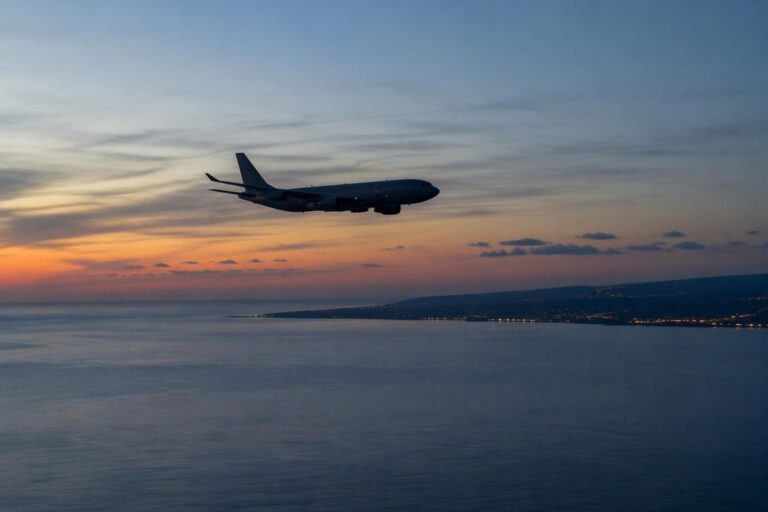
In response to a formal request from Riyadh, the United Kingdom has agreed to station a single RAF Voyager aircraft in the eastern Mediterranean to provide air-to-air refuelling for Saudi fighter jets engaged in defensive operations against the Iran-backed Houthis.
The move comes after a series of missile and drone attacks launched from Yemen that targeted the Saudi capital, Riyadh, and several energy installations along the Red Sea coast. While the deployment is described as a temporary measure lasting “weeks rather than days”, it signals a deepening of the existing security partnership between London and the Kingdom of Saudi Arabia.
Details of the British contribution
The Voyager will operate out of a United Kingdom base in Cyprus, where it can rendezvous with Saudi aircraft returning from patrols over the Red Sea corridor. Defence Minister Luke Pollard explained that the aircraft will enable Saudi jets to stay airborne longer, thereby increasing the likelihood of intercepting hostile drones and ballistic missiles before they reach populated areas.
He stressed that the support is “purely defensive” and fully compliant with international humanitarian law. The RAF’s fleet includes nine Voyager air-refuelers— eight registered for military use and one civilian-registered— with an additional five aircraft on standby for rapid recall if the situation escalates.
Operational scope and limitations
According to officials, the British contribution supplements a broader British presence that already includes air-defence systems and personnel assisting Saudi forces in counter-missile and counter-drone tasks. The single Voyager is therefore a force multiplier rather than a standalone combat asset. The United Kingdom stresses that the arrangement will be reviewed regularly and that any extension beyond the initial timeframe would require a fresh diplomatic mandate.
Strategic motivations behind the deployment
London’s decision is framed as a safeguard for both regional stability and British national interests. Disruption in the Gulf threatens global oil flows and can translate into higher fuel prices for British consumers. In fact, the Office for National Statistics reported that petrol prices reached their highest level in nearly four years during the summer, while diesel followed a similar upward trajectory. By helping Saudi Arabia maintain air superiority over the Red Sea, the United Kingdom hopes to keep the vital shipping lane open, mitigating the risk of further spikes in energy costs at home.
Economic ripple effects and domestic pressure
Energy Minister Martin McCluskey linked the deployment directly to the government’s effort to curb cost-of-living pressures across the country. He argued that a stable Red Sea route is essential for the uninterrupted flow of oil and gas to Europe, and that any escalation could exacerbate the already fragile price environment in the United Kingdom. The British Treasury, therefore, views the short-term military aid as a preventive measure to protect the domestic economy.
Broader geopolitical context
The Houthi militia, which controls large swaths of Yemen’s coast, has recently seized the strategic port city of Mokha and the adjacent Perim Island—both gateways to the Red Sea. Their expanding Arsenal of drones and missiles has forced regional actors, including Saudi Arabia, to adopt a more robust defensive posture. The United Kingdom’s involvement aligns with statements from other Western partners; NATO officials have hinted at possible further European assistance, underscoring a collective concern over the security of maritime trade routes.
Earlier in the year, the United Kingdom joined the United States in conducting targeted air strikes against Houthi positions in Yemen, a campaign that Prime minister Rishi Sunak characterised as an act of self-defence following attacks on commercial vessels and a Royal Navy warship. Those strikes were described as “necessary, proportionate and targeted”, aiming to protect civilian lives and the integrity of international shipping. The current Voyager deployment can be seen as a continuation of that policy, albeit with a narrower, defensive focus.
