

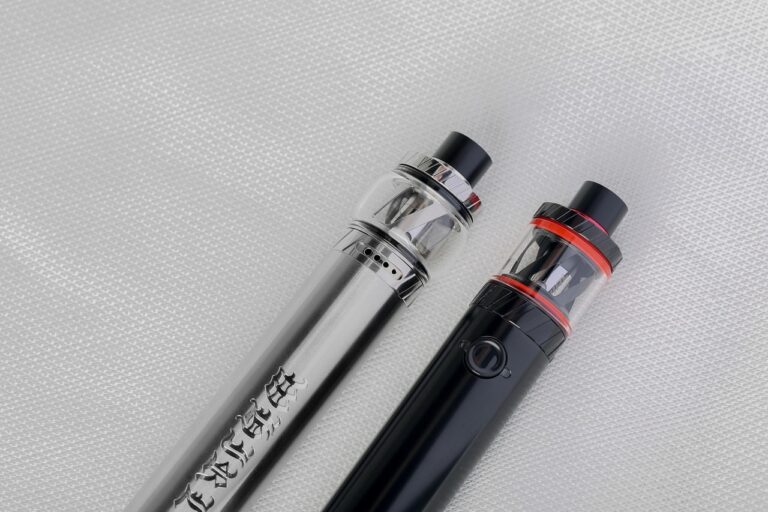
In recent weeks, raids across the UK have thrown the country’s soaring illicit vaping market into sharp relief. On 4 September, Wales Online reported on a Swansea Council investigation that dismantled a multi-million-pound network supplying illegal vapes nation-wide on a “staggering” scale, with 120,000 devices seized in a London raid. Just days earlier, the BBC spotlighted a Wolverhampton raid that uncovered hundreds of illegal vapes and over 13,000 illicit cigarettes and tobacco products concealed in a local shop.
Hardly an isolated problem, BBC analysis last month showed a dramatic surge in illegal vape seizures by local authorities in southeast England: Sussex went from zero in 2020 to more than 21,000 confiscations this year, while Surrey’s tally has risen nearly thirty-fold. While the UK Government is rightly pursuing a track-and-trace scheme to tackle illicit vaping, it must crucially avoid the pitfalls of its existing tobacco traceability system – shaped by Big Tobacco and ineffective in curbing public health and tax losses – by opting for a truly independent model.
Inside Britain’s newest black market
Unfortunately, these recent raids represent just the tip of Britain’s illicit vape iceberg. Last November, new data released from National Trading Standards (NTS) and the Department of Health and Social Care (DHSC) under “Operation Joseph” revealed that more than 1.19 million illicit vapes were seized in 2023/24 – a staggering 59% increase on the previous year. What’s more, most of these products failed to meet even the UK’s basic safety standards, often carrying dangerously high nicotine levels, while almost one-quarter of the investigation’s test purchases revealed sales to minors.
While such operations are an important part of the anti-smuggling response, health campaigners are rightly arguing that the UK’s soaring illicit vape market figures reveal a major policy gap. With limited staff and resources, local enforcement agencies cannot realistically keep pace with a booming black market whose unregulated vapes not only target children but also mislead adult smokers into believing they are consuming a less harmful alternative to cigarettes.
Recognising this mounting threat to both public health and the Treasury’s tax revenues, UK authorities have turned to structural reform, with the support of the International Tax Stamp Association. In June, the Government announced the launch of a public tender for the Vaping Duty Stamps (VDS) traceability system to be implemented alongside the new Vaping Products Duty from October 2026. Under the VDS scheme, HMRC will appoint a concession supplier to provide physical duty stamps embedded with digital identifiers, enabling reliable traceability and authentication of products throughout the supply chain.
Learning lessons of failed tobacco scheme
Encouragingly, UK authorities are opting for a newly-designed, industry-independent traceability scheme for vaping products combining both digital and physical security components, rather than extending the existing, ineffective system for tobacco products – which has allowed illicit trade to follow the very trajectory now emerging in vaping.
Under “Operation CeCe,” a joint initiative between National Trading Standards and HMRC in place since 2021, authorities seized more than 19 million illicit cigarettes and over 5,100 kilograms of hand-rolling tobacco worth £11.7 million in 2023-24 alone. Since its launch, the operation has seized some 46 million cigarettes and 12,600 kilograms of hand-rolling tobacco, underscoring the severity of the problem.
As Richard Las, Director of HMRC’s Fraud Investigation Service, recently warned, “illicit tobacco …harms public health while depriving our vital public services of around £2.2 billion a year.” HMRC figures reveal that legal tobacco sales have nearly halved since 2021, even though smoking rates have not declined, offering clear evidence of a growing illicit market. This finding is also backed by a recent Philip Morris International (PMI)-commissioned study showing that the UK’s consumption of illicit tobacco jumped by more than 20% in between 2022 and 2023.
Britain’s surging illicit trade has been overseen by the country’s failed, digital-only tobacco traceability system, operated since 2022 by Swiss firm Dentsu Tracking – a company whose deep tobacco industry links should have ruled it out from the start. Dentsu Tracking’s ties to the PMI-developed Codentify system – which has been widely denounced by public health and tobacco control experts – stem from its 2017 acquisition of Blue Infinity, one of Codentify’s co-creators. This connection places the UK system in direct violation of the WHO Illicit Trade Protocol and its Article 8 requirement that traceability systems remain free from tobacco industry influence.
Breaking from EU’s industry-aligned model
The UK Government’s decision to launch a new system with WHO-aligned criteria effectively disqualifying Dentsu marks another major blow to the company, which is facing rising scrutiny over its controversial role in the EU’s virtually identical track-and-trace system.
Crucially, Dentsu was awarded its European Commission contract without a competitive public tender and failed to register in the EU Transparency Register during its years of lobbying activities backed by Big Tobacco. This transparency scandal only intensified when Jan Hoffman, a Commission official directly involved in tobacco traceability, moved swiftly into a senior regulatory post at Dentsu soon after the firm clinched its role in the EU system.
The Dentsu-Hoffman revolving door saga has drawn strong condemnation from MEPs and civil society leaders, who have repeatedly called for the EU’s WHO-violating system to be scrapped in favour of an independent solution. Their case is strengthened by the EU scheme’s dismal results: since its roll-out in 2019, illicit tobacco consumption has risen every year. Mirroring HMRC’s UK findings, even the Commission’s DG TAXUD has conceded the EU system’s inability to safeguard supply chains or prevent the bloc’s enormous illicit trade tax losses. This poor performance has put the scheme at risk of being replaced during the upcoming revision of the EU’s Tobacco Products Directive, with Dentsu’s conflict-of-interest and transparency breaches only increasing the probability of this long-overdue outcome.
Yet, Dentsu’s corruption problems extend well beyond Europe. In Brazil, a leaked conversation from last year involving CEO Philippe Castella revealed the company’s efforts to manipulate public officials to secure a lucrative beverage marking tender as a gateway to controlling the country’s tobacco scheme – notably in line with PMI’s interests. More recently, an August decision by a Tokyo court confirmed the ruling on Dentsu’s bid-rigging of Tokyo 2020 Olympic contracts that imposed fines of 300 million yen and prison terms for several senior executives.
Time for fresh start
Given Dentsu’s governance and performance issues, authorities are now moving to relegate EU and UK-style tobacco traceability systems to the past. Moving forward, the rise of illicit vaping represents a major opportunity for the UK Government to safeguard both public health and fiscal integrity and rectify past mistakes.
By breaking from Big Tobacco and embracing an independent model, the UK can act as an innovative model for the EU and other actors exploring traceability solutions to confront this rapidly-emerging illicit trade.
