

Thousands of Arsenal supporters turned out in north London to celebrate the club's Premier League title with a trophy parade near the Emirates, balancing joy over a long-awaited domestic triumph with the sting of a narrow Champions League final loss.
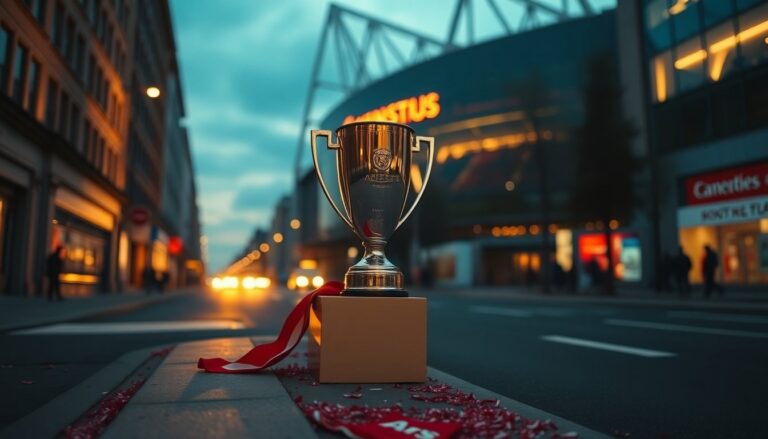
The streets of north London were awash in red as thousands of supporters gathered to salute Arsenal’s return to the top of English football. The club organized a trophy parade that wound past the Emirates Stadium, with team buses making their way along familiar arteries including Essex Road, Upper Street and Holloway Road.
Despite the recent and painful defeat in the Champions League final, the mood among many fans was celebratory: a long-awaited domestic crown provided reason enough to fill the streets and cheer.
Onlookers saw a procession full of color and noise: flares and red smoke filled the air, confetti and fireworks punctuated the route, and vocal crowds created a sustained roar as the buses passed.
The day also featured the club’s women’s team on the same parade, acknowledging their European and world honours from recent seasons. Players and staff took time to connect with supporters, chanting and waving trophies, even as the shadow of the Budapest final lingered in conversations and reactions.
Route and atmosphere
The parade began with the buses moving along Essex Road and turning up Upper Street, progressing towards the Emirates before heading east on Seven Sisters Road towards Finsbury Park. Large tifo displays and banners greeted the convoy; one prominent mural read, “These streets are our own.” Fans lined the sidewalks in dense clusters, then briefly dispersed and regrouped further along the route to keep pace with the moving procession. The noise level was constant and intense, illustrating the expansive nature of Arsenal’s support beyond the 60,000 who attend home matches.
Players, reactions and small moments
On the open-top buses the squad mixed celebration with reflection. Striker Kai Havertz was captured grabbing an interviewer’s microphone and leading chants of “Arsenal, Arsenal!” while midfielders and defenders waved to the crowds. Young defender Myles Lewis-Skelly described the mood as proud but resolute, saying the Champions League defeat had “added fuel to the fire” and that the squad would use the disappointment as motivation. Declan Rice, noticeably hoarse from recent fixtures and festivities, told supporters, “We’re coming back for more,” signaling that the club’s ambitions remain undimmed.
Individual moments matter
There were lighter scenes amid the emotion: players singing, supporters lifting banners, and heartfelt interactions between club legends and the fanbase. The presence of the women’s team on the same buses was a reminder of Arsenal’s broader success; their recent Champions League and world club triumphs were celebrated side by side with the men’s Premier League achievement. For many in the crowd this confluence of honours reinforced a narrative of a club on the rise across multiple competitions.
After Budapest: pain and perspective
Only a day before the parade the men’s first team experienced a narrow champions league final loss in Budapest, settled on penalties after extra time. Gabriel Magalhães missed a decisive spot-kick, sending his effort over the bar in a tense shootout that finished 4-3 in favour of Paris Saint-Germain. That result left a clear mix of pride and ruefulness among players and supporters: pride in the domestic title and the campaign that produced it, but a recognition of how fine the margins are at the highest level.
Lessons and future focus
Coaching staff and players are likely to view the final as both a measuring stick and a source of motivation. The team displayed strong performances throughout the campaign, and the narrow defeat offers specific insights into where marginal gains could be found. For fans the parade was therefore a collective moment to celebrate what has been achieved while acknowledging the work still required to convert near-misses into more trophies.
Logistics and wider context
Organizers timed the parade to accommodate players’ impending international commitments: many squad members were due to join national teams shortly after the celebrations, with some set to travel the next day. That partly explains the decision to hold the event quickly after the European final. Public safety measures and crowd control were in place as thousands packed key junctions such as Holloway Road; the aerial perspective during the procession highlighted the scale of turnout and the passion on display.
What the day signified
Ultimately, the parade functioned as a communal release for a fanbase that has followed the club through highs and lows. The city’s north London neighbourhoods transformed into a festival of red smoke, songs and banners, providing a vivid counterpoint to the recent disappointment in Budapest. For Arsenal, the day reaffirmed the club’s connection to its supporters and offered a public moment to both celebrate a first domestic success in decades and to steel itself for the competitions ahead.
