

Acura dealers have started offering a full catalog of factory‑reproduced components for the original NSX, reviving a legend for owners and restorers.
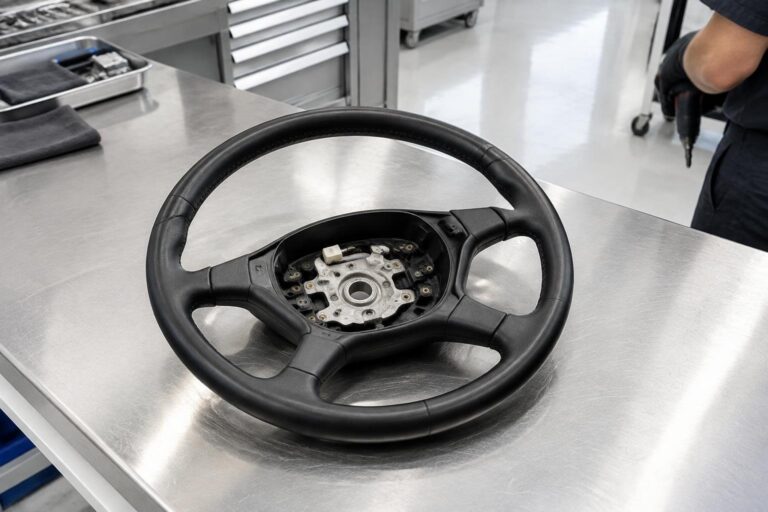
The automotive world has long awaited a reliable source of factory-spec parts for the first-generation Acura NSX. After a brief trial in Japan earlier this year, Honda’s Heritage Parts program has crossed the Pacific, making more than 3,000 Genuine Honda Reproduction Parts available to U.S.
customers. The items can be purchased at any Acura dealership nationwide or ordered through the official Honda DreamShop. Executive vice-president Mamadou Diallo highlighted the effort as a way to keep classic performance models alive, emphasizing that the NSX was the logical first candidate for the U.S.
rollout.
Heritage program arrives in the United States
Officially announced on Monday, the U.S. rollout mirrors the Japanese launch that began in April, but with a broader distribution network that includes over 600 Acura dealer locations. The catalog spans every major subsystem of the 1991-2005 NSX, from the aluminum chassis to the mid-mounted V6 powerplant.
Acura describes the initiative as a response to the dwindling supply of “new old stock” and the inconsistent quality of aftermarket alternatives. By using the same materials and production techniques as the original components, the program aims to deliver parts that are indistinguishable from those that rolled off the factory line three decades ago.
What’s inside the catalog
The inventory is remarkably comprehensive. Buyers can order a brand-new camshaft for roughly $850, a complete accelerator-pedal assembly for about $340, or even the entire V6 cylinder block at a price near $6,300. Interior accessories are also covered: a brushed-metal arm-rest emblem stamped with “NSX DOHC VTEC” sells for $40, while a replica of the original Japanese owner’s manual is listed at $60. Beyond these headline items, the catalog includes chassis bolts, electrical connectors, fuel-pump assemblies, and a full set of suspension components, ensuring that restorers can replace virtually any worn element with a genuine-grade substitute.
Impact on owners and future prospects
For the growing community of NSX collectors, the program eliminates the frantic search through e-bay listings and salvage yards. Having a factory-backed supply chain reduces restoration time, stabilizes resale values, and gives prospective buyers confidence that long-term maintenance will remain feasible. Diallo hinted that the launch is only the beginning; the “Heritage Parts” label intentionally excludes the model name, signalling that other classic Honda and Acura platforms—such as the 2004 S2000—will likely receive similar treatment in the coming years. Enthusiasts can therefore expect a cascade of new part lines that will keep the marque’s performance heritage vibrant for decades to come.
While the current offering focuses exclusively on the original NSX, the catalog’s structure allows Honda to add new items without retooling the entire distribution system. Dealers receive regular updates, and the DreamShop interface lets owners check real-time availability, place orders, and schedule pickup or delivery. This seamless integration of heritage support into the modern sales network demonstrates how a legacy brand can leverage contemporary logistics to preserve its history. As the oldest NSXs approach the 35-year mark, the availability of Genuine Honda Reproduction Parts may prove decisive in keeping these engineering icons on the road.
