

Learn how the Creative People and Places programme uses participatory methods and action research to increase cultural participation and build local creative leadership
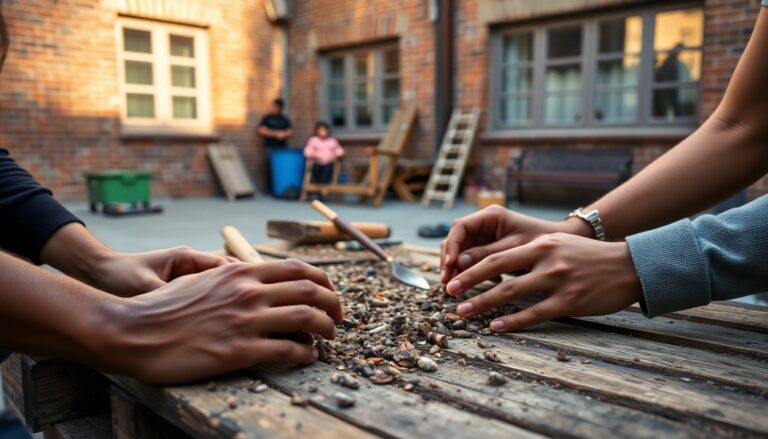
Creative People and Places aims to build lasting cultural engagement
The palate never lies. Like a well-crafted menu, the most effective cultural programmes balance local taste, access and time. The Creative People and Places initiative was created to tackle unequal access to culture in areas that consistently record the lowest participation levels.
Who: the programme supports local consortia made up of arts organisations, voluntary groups, public bodies and local businesses. What: it prioritises local leadership, co-design and long-term relationships over one-off events. When: the programme has operated since 2012.
Where: it targets communities identified by the Active Lives Survey as being in the bottom third for arts and culture engagement. Why: to make arts activities more relevant, resilient and sustainable for communities with persistently low participation.
At its heart, this approach treats engagement as a continuous process rather than a one-off metric.
The scheme funds experimentation and learning. Local partners design activities that reflect community priorities and everyday life.
The programme documents experimentation through an Action Research framework. That framework captures lessons and supports sharing of practice across places. As a chef I learned that small, iterative adjustments often transform a dish; the same principle guides these cultural experiments.
Behind every dish there’s a story, and behind every successful project there is time, trust and local knowledge. The initiative focuses on building those elements so participation grows from lived relevance rather than top-down provision.
Goals and principles
The initiative builds on the earlier assertion that participation must grow from lived relevance rather than top-down provision. Increase participation remains a core aim. The programme seeks to widen access to cultural activity across ages and backgrounds by offering diverse experiences that resonate locally. It also aims to empower communities so residents influence both content and delivery. A third principle values artistic ambition that is directly responsive to local needs.
Projects are expected to develop cross-sector partnerships. Public bodies, voluntary organisations, amateur groups and commercial partners are invited to pool resources and skills. These hybrid models spread risk, sustain momentum and embed cultural activity in daily life. Collaboration with local institutions and grassroots groups helps distribute responsibility and build long-term capacity.
Methods: co-design and action research
The programme favours iterative, evidence-led approaches. Co-design places residents and practitioners at the centre of planning. Action research then tests ideas in short cycles, gathering feedback and adjusting delivery. This method produces practical learning and keeps projects adaptable to changing local conditions.
The palate never lies: as with a well-tuned recipe, small adjustments reveal what communities value most. Practical techniques include community workshops, pilot events, resident advisory panels and rapid evaluation tools. Findings feed back into programme design to improve relevance and reach.
Technical support and capacity building are part of the delivery model. Training in project management, audience development and monitoring strengthens local ownership. Funding is structured to reward tested outcomes and sustainable practice rather than one-off activity.
Funding is structured to reward tested outcomes and sustainable practice rather than one-off activity. Building on that approach, the initiative favours co-design over imposing ready-made programmes. Local people identify priorities, test ideas and lead activity. This participatory route produces outcomes that resonate locally and draws in people who often do not engage with traditional arts offers. Co-design also strengthens community ownership and improves the odds of long-term sustainability.
Action research as a learning tool
Projects use Action Research to gather evidence on what attracts, engages and retains participants. Practitioners pair practical activity with short reflective cycles: try an approach, gather feedback, adjust and repeat. Each cycle yields concrete data on what works and why. Over time, this process builds a nuanced picture of local dynamics and generates practical guidance for others working in similar contexts. As a chef I learned that the palate never lies; here, iterative tasting of ideas reveals which initiatives truly satisfy community needs.
Partnership models
Partnerships combine arts organisations, local groups and civic bodies with clearly defined roles. Lead partners provide coordination and specialist skills. Local partners supply knowledge of place and trusted relationships. Funding and decision-making are structured to reward shared responsibility and measurable outcomes. This model reduces duplication and helps scale successful approaches across different neighbourhoods. Behind every project there is a story of collaboration, supply chains and local know-how that shapes what reaches participants.
Behind every project there is a story of collaboration, supply chains and local know-how that shapes what reaches participants. The palate never lies: the textures of partnership and the flavour of place determine how cultural offers are received.
Successful programmes combine the energy of grassroots groups with the capacity of established cultural organisations. Local authorities, funders, artists and community leaders contribute complementary skills and resources. The outcome is a resilient local ecosystem where artistic ambition and community priorities reinforce one another.
Impact and examples of change
Evaluations of these initiatives report measurable shifts in cultural life. Communities record increased cultural activity and more first-time participants. People express a stronger sense of ownership over local cultural provision.
Activities take many forms—street festivals, participatory theatre, co-designed exhibitions, youth-led workshops—but they share two constants: local relevance and sustained engagement. Projects that align programming with local needs maintain participation over time and deepen civic ties.
The palate never lies: projects that align programming with local needs sustain participation and deepen civic ties. Beyond head counts, organisers report tangible shifts in community life. Residents gain new leadership skills and form stronger social bonds. Networks between voluntary groups and institutions become more resilient. These changes often spill into volunteering, community organising and local decision-making.
Sharing learning and building capacity
One of the programme’s core commitments is to surface and share learning. Participating teams document methods through case studies and open resources. Peer networks support real-time problem solving and exchange. Together they build a growing body of practical knowledge on reaching audiences historically excluded from the arts. That collective knowledge helps new projects avoid common pitfalls and adapt proven approaches to different contexts.
The palate never lies: ideas that sit well with communities are more likely to endure.
Capacity building remains central. Projects train local leaders, sharpen organisational practice and help sketch sustainable funding routes. When communities can commission, produce and manage cultural activity themselves, programmes are less likely to fade after initial investment.
Practical skills—financial planning, governance and audience development—translate into autonomy. Documented templates and peer learning reduce repeated mistakes. That continuity lets teams refocus on programming quality rather than survival.
Looking ahead
As the cultural sector addresses unequal access, the Creative People and Places approach offers an evidence-based alternative to one-way delivery. Its track record shows how partnership, iterative learning and grassroots stewardship can embed culture in under-served places.
By elevating local leadership and recording what works, the programme creates pathways to more inclusive and resilient cultural ecosystems. Future efforts should prioritise transferable tools, long-term funding and networks that sustain local capability.
Behind every project there is a local story; supporting that story with skills and resources increases the chances that it will be told for years to come.
How to make cultural projects stick
The palate never lies: communities favour initiatives that taste familiar and nourish everyday life. Behind every project there is a local story; supporting that story with skills and resources increases the chances that it will be told for years to come.
Artists, funders and organisers should prioritise long-term relationships with residents. Work with people as co-creators rather than as passive audiences. This shifts cultural activity from an event to a sustained community practice.
Use actionable research to test and refine approaches. Collect small-scale evidence, iterate quickly, and share findings with participants. That cycle builds trust and improves relevance.
As a chef I learned that technique and terroir matter equally. Translate that lesson to programming by combining technical support, local knowledge and accessible resources. Offer skills, not just funding.
Focus on supply chains and local partners to strengthen the filiera corta. Investing in local venues, facilitators and makers helps communities retain ownership of their cultural life.
Practical steps include co-design workshops, transparent budgeting, and regular feedback loops with residents. These measures increase participation and ensure projects adapt to changing needs.
Lasting cultural participation depends on relationships, shared authorship and evidence-led practice. Expect slower growth, but greater resilience and ownership over time.
