A landmark once home to the Greater London Authority is being transformed into a mixed-use complex designed to attract locals and visitors alike
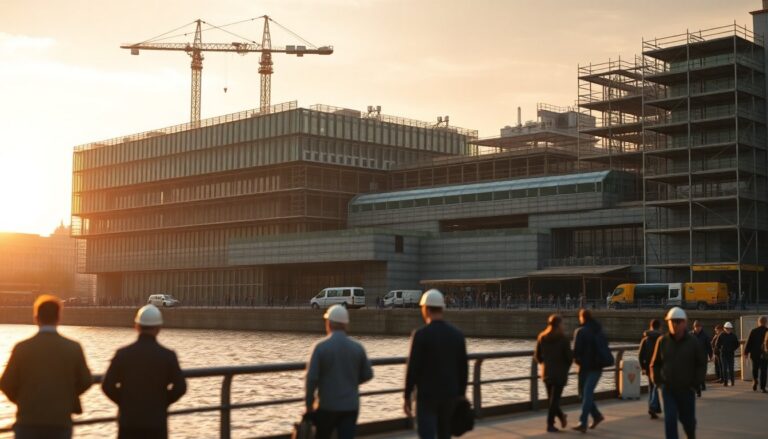
The transformation of the south bank building that used to house the Greater London Authority is advancing on site, with visible changes to its external skin as work progresses. Construction crews have removed the distinctive outer glass panels and a crane stands above the skeleton of the structure, signalling a major reconfiguration.
When complete, the building is planned to offer a combination of offices, shops and restaurants, plus open terraces that will frame views across the Thames toward Tower Bridge. The scheme aims to make the former civic headquarters a daily destination for employees and visitors rather than a single-use public institution.
The building has a well-documented past: designed by Norman Foster and commonly nicknamed “The Onion”, it opened as the Greater London Authority headquarters in July 2002. That ten-storey landmark served as the capital’s mayoral base until 2026, when the office of the mayor moved to a smaller site, formerly called The Crystal, in the Royal Docks.
The change of address was driven by a desire to reduce running costs. The mayoralty itself, created under Tony Blair, has been held by Ken Livingstone (the first officeholder after its 2000 inception), followed by Boris Johnson and now Sir Sadiq Khan.
Project vision and public offer
The redevelopment is being promoted as a forward-looking, mixed-use destination intended to increase activity in the London Bridge City area. The term mixed-use here refers to an integrated programme combining commercial workspace, retail outlets and food and beverage operators under one roof to create sustained footfall throughout the day and evening. Plans include ground-floor cafés, a variety of shops and a market hall adjacent to the sunken amphitheatre known locally as the Scoop, which will remain a focal point for gatherings and events. Developers say the aim is not only to generate employment but also to boost tourism and local leisure options.
Design approach and adaptive reuse
The conversion emphasises reuse rather than demolition, with architects and planners seeking to retain structural elements while stripping and reconfiguring envelopes and interiors. New design proposals include open-plan garden terraces that will give tenants and visitors panoramic vistas over the river and the nearby historic landmarks. The visible removal of the building’s external glazing is part of that process, creating a blank canvas for the next layer of architectural work. Owners envisage a blend of contemporary interventions and retained forms that respect the site’s civic heritage while reshaping it for modern commercial use.
Architects and ownership
Gensler has been appointed to lead the redesign for the building now marketed as 110 The Queen’s Walk, while ownership sits with Kuwaiti-owned St Martins Property Investments. The change of hands from a civic authority to a private developer reflects a wider trend in urban regeneration: repurposing public buildings to support new economic uses. The team intends to preserve key sightlines and to rework interiors to deliver flexible office floors, hospitality spaces and retail units. This transition from municipal offices to a mixed commercial scheme aims to welcome both Londoners and visitors.
Sustainability and design principles
A stated focus of the project is environmental performance: proposals highlight principles such as material circularity, passive design measures and biodiversity improvements. The term material circularity denotes strategies for reusing components and reducing waste by keeping materials in use for as long as possible, while passive design refers to measures that reduce energy demand through orientation, insulation and natural ventilation. Together with accessibility and inclusivity commitments, these drivers are presented as central to creating a resilient destination that supports broader sustainability goals for the city.
Public access, culture and the riverside legacy
Beyond commercial aims, the redevelopment is pitched as a catalyst for cultural life along the south bank: restaurants and cafés will occupy the ground level and a market hall will animate the space beside the amphitheatre seating. The project team says the scheme will complement the surrounding landmarks—such as the Tower of London and Tower Bridge—and seeks to combine historic continuity with contemporary uses. By converting a former seat of government into a place for work, trade and leisure, the scheme aspires to reintroduce the building to the public as an everyday civic asset rather than a single-purpose headquarters.