President Donald Trump's decision to attend the White House Correspondents' Dinner has divided journalists and advocacy groups and reignited debates about press freedom
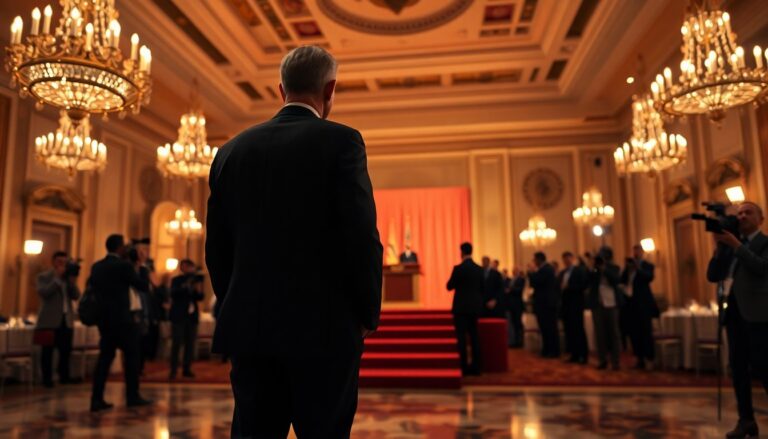
The arrival of President Donald Trump at the annual White House Correspondents’ Dinner marked a contentious moment in the relationship between the administration and the media. Historically a black-tie event that blends ceremony with comedy, this year’s gathering has become a focal point for discussions about press freedom, access and the boundaries between journalists and the people they cover.
Critics and supporters alike framed the appearance as more than a photo opportunity: it was treated as a statement about how the White House and the press interact in a polarized political climate.
Voices from across the media landscape reacted strongly.
Some attendees emphasized that the dinner funds awards and scholarships that support reporting, while advocacy groups argued the invitation risked normalizing a presidency that has repeatedly attacked journalists. The debate intensified in public letters, social-media posts and editorial commentary, illustrating how a single event can serve as a flashpoint for broader worries about democratic norms and institutional trust.
Why the invitation matters
The White House Correspondents’ Association extended the invite to the president, a decision that many saw as routine but others interpreted as consequential. Supporters argued the dinner’s proceeds underwrite important journalism prizes and educational programs, tying the gala to the practical support of the profession. Opponents countered that welcoming a leader who has frequently labeled mainstream coverage as “fake news” risks eroding the public’s confidence in reporters who are meant to hold power to account. That tension—between fundraising and firm public stance—has animated the conversation about whether attendance implies endorsement.
Sources of the protest
Several journalism organizations and hundreds of individuals produced a detailed list of grievances describing what they call a sustained assault on press independence. Complaints included alleged attempts to restrict what reporters can publish about national security matters, public threats and lawsuits aimed at newsrooms, and moves to defund public broadcasters. Those actions were cited as background for letters urging the association to use the event to deliver a clear defense of the First Amendment and a forceful rebuke of tactics they say intimidate reporters.
Boycotts and public statements
Some journalists chose to stay away, while others attended but planned public demonstrations or moments to reaffirm the value of investigative work. High-profile signatories included retired anchors and long-time reporters who framed their resistance as a principled stand. Organizers of the protest letters asked the association to ensure that the program included an explicit defense of the principle of a free press, arguing that silence would be read by audiences as complicity or acquiescence.
What the event looked like
Traditionally the gala features an entertainer and a presidential speaking slot that mixes remarks with light roasting of the press corps. This year, the headline entertainer was Oz Pearlman, a performer known for mentalism rather than the topical political comedy usually provided by late-night hosts. That choice altered expectations: regular satirists who routinely parody the president were not on stage, and the tone of the program was under close scrutiny as attendees watched to see whether hosts or presenters would directly confront the administration’s record on media relations.
Family and supporters’ framing
Allies of the president, including Lara Trump, offered a contrasting portrayal of the evening: they described the event as an opportunity for charm, humor and softening relations. Supporters suggested the address would be a chance for the president to make jokes and mend fences, arguing that personal warmth could defuse tensions. Critics dismissed this as public-relations theater, saying that the deeper issues of policy, lawsuits and access cannot be cured by a single speech or a handful of punchlines.
The larger implications
Beyond the glitz of the ballroom, the episode fed into a larger national conversation about trust in institutions. Media analysts warned that images of journalists dining alongside a president who has systematically criticized them might be used by skeptics to question newsroom independence. Conversely, some defenders said that engagement with power—however awkward—is essential to preserve lines of communication and ensure continued reporting from inside government. The debate underscored a central paradox: close proximity can both assist reporting and create perceptions of coziness that erode public confidence.
In the end, the dinner became a mirror reflecting deep divisions over how reporters should relate to political power. Whether seen as a platform for reconciliation or a misstep that normalizes hostile rhetoric, the event made clear that the stakes around press freedom remain high and that the strategies journalists and associations choose will shape public understanding in the months to come.