

Greggs unveils a £60 million plan that will shutter four plants, cut 740 roles, and fund a massive store rollout.
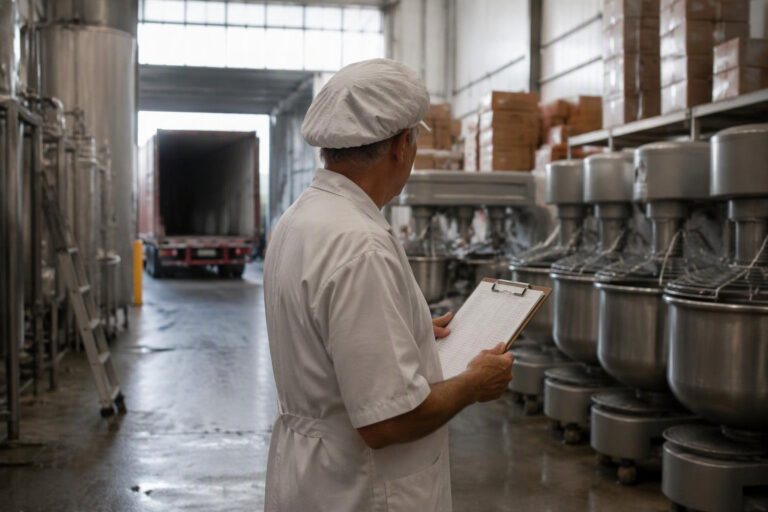
In a sweeping overhaul announced as part of its third-quarter update, Greggs revealed that it will discontinue operations at four of its UK manufacturing facilities. The shutdown will affect roughly 740 employees over the next two-and-a-half years, marking the most significant contraction of the bakery chain’s production network in recent memory.
Locations, timeline and immediate costs
The sites slated for closure are the Enfield plant in Greater London, the North Lakes facility near Penrith in Cumbria, Pettigrews in Kelso, Scotland, and the Seaham factory in County Durham. While the Enfield location will retain its distribution centre, the other three will cease all production activity.
The manufacturing site closures will be staggered, with the full programme expected to be completed by early 2029. Greggs estimates the
Impact on remaining operations
Even as the four plants close, the company will keep production at its Clydesmill (Glasgow), Manchester, Gosforth, Balliol, Leeds and Derby locations, albeit with a narrower product range.
Notably, the production of tinned bread will be discontinued at Gosforth, and the portfolio of baked goods manufactured at Clydesmill and Manchester will be trimmed. The Treforest site in Wales will shift entirely to a distribution role, reinforcing the logistics backbone that supports the expanding retail network.
Strategic rationale and financial outlook
Greggs frames the restructure as a means to free up capital for an ambitious growth agenda. The bakery chain is on track to launch roughly 700 new stores across the United Kingdom, pushing its total estate toward the 3,000-shop milestone. By consolidating production, Greggs expects to generate savings of about £20 million in the 2028 and 2029 financial years, funds that will be redirected into store development, product innovation and digital capabilities.
Financial performance in the quarter to 26 September showed a respectable uplift, with 7 percent year-on-year. Same-store sales grew 3.4 percent buoyed by the opening of 95 new outlets and the closure of 38 under-performing locations, leaving the chain with a total of 2,796 stores. The company highlighted that product launches and more settled weather during August and September helped reinforce the positive trend, even as it warned of potential inflationary pressures ahead.
Leadership comments and union response
Chief executive Roisin Currie stressed that the changes are “difficult, but necessary” to keep the business “strong and sustainable for decades to come”. She added that the manufacturing and logistics network remains a core strength and that the proposed adjustments will “improve efficiency while preserving the quality, value and service our customers expect”.
The Bakers, Food and Allied Workers Union (BFAWU) expressed deep concern over the announcement. General secretary Sarah Woolley warned that the plan puts hundreds of workers and their families at risk, questioning why jobs must be jeopardised when the company is posting solid sales growth and investing heavily in store expansion. She emphasized that the affected staff have contributed significantly to Greggs’ success and should not be treated as “stones” to be discarded.
Greggs has confirmed that a formal consultation process will commence shortly, involving employee representatives and trade unions. While no final decisions are locked in, the company asserts that, should the plan proceed, the manufacturing footprint will be streamlined to six active sites, enabling a more agile supply chain aligned with its aggressive expansion targets.
