

Discover how Edinburgh’s secretive studio fuels the blockbuster GTA series from its historic roots to global partnerships.
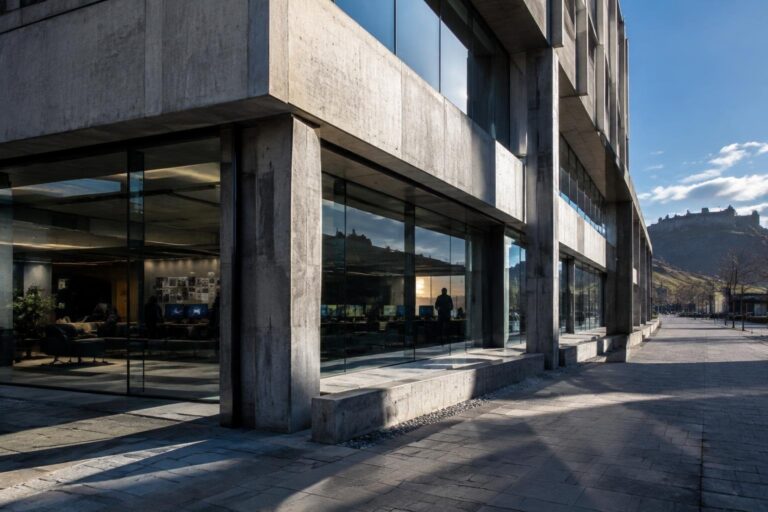
For more than two decades, a stone-wall of concrete and glass on Holyrood Road has housed the creative engine of one of the world’s most lucrative gaming properties. Rockstar North the Edinburgh outpost of Take-Two Interactive’s Rockstar Games, is the primary workshop behind every new installment of the Grand Theft Auto saga, a franchise slated to drop its next entry on 19 November.
The location – Barclay House, a short walk from the Scottish Parliament – blends the bustle of a capital city with the guarded atmosphere typical of a studio that routinely ships titles worth billions.
A day inside the Holyrood office
Hundreds of specialists occupy the building’s floors, ranging from veteran audio programmers to fresh-face animators and seasoned software engineers.
Each team member is tasked with a slice of the massive digital puzzle that becomes an open-world game: building sprawling cityscapes, fine-tuning vehicle physics, scripting AI behavior, and polishing the soundtrack that defines a city’s mood. The studio’s culture prizes secrecy; rooms are often sealed off, and access to the core codebase is tightly regulated, ensuring that leaks remain rare despite the franchise’s massive public appetite.
The creative heartbeat of the studio lies in its ability to imagine entire virtual ecosystems from scratch. Designers draft layouts that span dozens of square kilometres, writers weave intertwined story arcs, and programmers implement the complex rule-sets that allow players to interact with the world in unexpected ways. In short, Rockstar North does not merely “assist” other sites – it originates the core gameplay loops, narrative beats, and visual language that define each new GTA title.
Global collaboration across Rockstar’s network
While the Edinburgh hub sets the vision, the realization of that vision relies on a worldwide web of studios. In the United Kingdom, Rockstar Leeds focuses on translating flagship games to handheld and mobile platforms, whereas Rockstar Lincoln runs exhaustive quality-assurance passes to root out bugs before launch. Across the Atlantic, Rockstar San Diego in California nurtures the proprietary RAGE graphics engine that powers the series’ realistic lighting and physics. North-American partners such as Rockstar Toronto and the Indian studio in Bangalore contribute additional art assets, animation cycles, and technical support, ensuring that the massive worlds built in Edinburgh are populated with the detail players expect.
From a Dundee chip shop to a billion-dollar empire
The story began in 1988 when a group of Dundee hobbyists, led by David Jones opened a modest office above a fish-and-chip shop. Under the name DMA Design the team delivered the puzzle phenomenon Lemmings in 1991, a title that would sell 20 million copies worldwide. By 1997, DMA released the first 2-D Grand Theft Auto for the original PlayStation, a game that evolved from a buggy “cops-and-robbers” prototype into a controversial crime sandbox.
Take-Two Interactive acquired the studio for £9 million in 1999, prompting a relocation to Edinburgh. The move set the stage for GTA III the series’ groundbreaking 3-D entry launched on PlayStation 2 in 2001. The following year the studio was rebadged as Rockstar North. A decade later, in 2004, the team settled into offices on Greenside Row beneath Calton Hill, only to transition to the current Barclay House premises in 2014.
Subsequent releases – Vice CitySan Andreas and the record-shattering GTA V – cemented the franchise’s cultural status, the latter exceeding 200 million copies sold and becoming one of the most profitable entertainment products ever. As of October 2026 the series comprises 16 main entries, spanning core games, expansions, and handheld spin-offs. Leadership today rests with studio director Andrew Semple and co-heads Aaron Garbut and Rob Nelson veterans who joined the firm in 2001, 1996 and 2001 respectively and have overseen its ascent from a regional developer to a global powerhouse.
