

Missile attack on Riyadh's main airport kills 12, injures hundreds, sparking international condemnation.
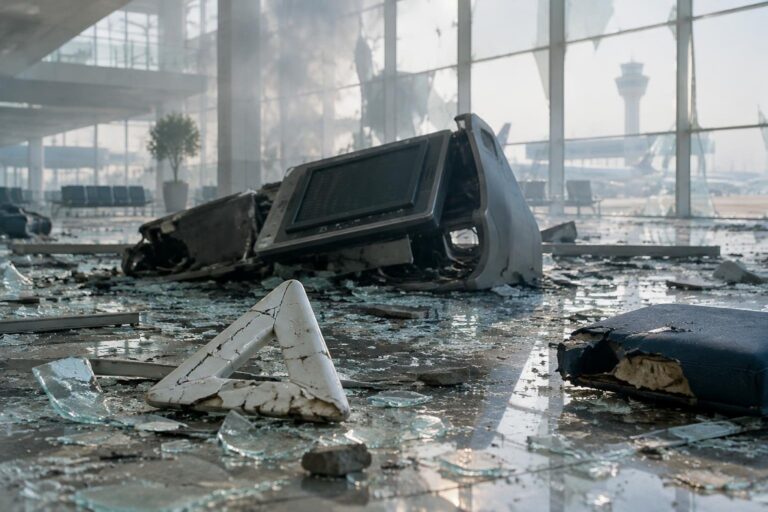
On Saturday morning a projectile struck the King Khalid International Airport in Riyadh, Saudi Arabia, causing a massive blast that ripped through the terminals handling domestic flights. Witnesses reported hearing a deafening explosion near gate 403, after which fragments of glass and steel rained down on waiting passengers.
Emergency crews arrived within minutes, establishing triage zones and transporting the injured to nearby hospitals. Initial estimates from the civil aviation authority confirmed twelve fatalities and more than three hundred people requiring medical care, some of whom remain in critical condition.
The victims represented a diverse mix of nationalities, including four Saudi citizens, two Bangladeshis, a Palestinian, an American, an Egyptian, a Jordanian, a Syrian and a Sudanese. Injuries ranged from severe trauma caused by shattered glass to shock and burns.
Authorities ordered an immediate suspension of all flight operations at the airport and redirected commercial traffic to the alternative hub at King Fahd International Airport in Dammam, which itself experienced a nearby projectile landing.
Who is behind the strike?
The Saudi-led coalition that supports Yemen’s internationally recognised government promptly accused the Iran-backed Houthi rebels of carrying out the attack. The coalition labelled the incident a “war crime” and vowed a decisive response. While the Houthis have not issued an official statement regarding this specific strike, they have repeatedly targeted Saudi infrastructure, including oil facilities and ports, since the truce collapsed earlier this year.
Analysts note that the timing coincides with a renewed ground offensive by Saudi-backed forces aimed at recapturing strategic points along the Bab al-Mandab strait. The rebels have claimed to have repelled several assaults and have warned that any further Saudi advances will be met with intensified missile operations against high-value civilian targets.
International fallout and diplomatic moves
In Washington, President Donald Trump said the United States was reviewing the possibility of joining Saudi air strikes against the Houthi movement, stressing that a decision would be made “very quickly.” Secretary of State Marco Rubio condemned the attack on the airport as “reprehensible,” emphasising that an American citizen was among those killed and urging an immediate halt to the violence.
The United Nations secretary-general expressed deep shock, calling attacks on civilians a violation of international law. The UN special envoy to Yemen warned that the escalation could drag the region closer to broader conflict, especially as the Houthis have recently taken control of parts of the Bab al-Mandab and threatened commercial shipping in the Red Sea. Meanwhile, Saudi Arabia has appealed to allies such as France, Britain, Pakistan and Egypt for additional air-defence support, citing dwindling stocks of missile interceptors.
Schools in Riyadh were ordered to shift to remote learning for at least a week, and numerous countries, including the United Kingdom, Canada, Australia and Germany, issued travel advisories urging citizens to avoid the airport. The incident underscores the fragility of regional security and the expanding reach of the Houthi campaign, which now regularly targets urban centres far beyond Yemen’s borders.
