Yemen’s army pushes into al‑Waziiya as Saudi forces foil a Houthi missile, widening the Red Sea standoff.
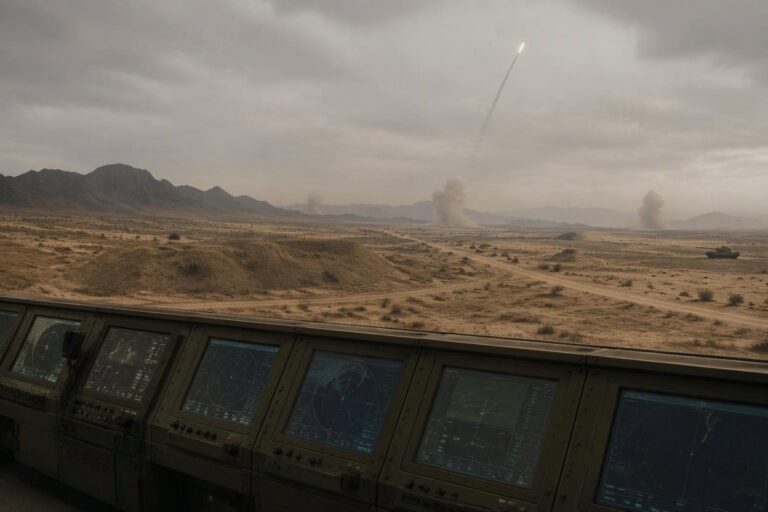
The government-aligned side of Yemen’s civil war opened a fresh assault on the rugged al-Waziiya district of Taiz governorate on Tuesday. The move is part of the broader “Dawn of Yemen” campaign that President Rashad al-Alimi announced on Sunday, with the explicit goal of reclaiming every last parcel of territory still held by the Iran-backed Houthi movement, including the capital, Sanaa, which has been under rebel control since 2014.
According to the Yemeni army’s media centre, the pro-government Homeland Shield Forces initiated a “large-scale operation” to capture al-Waziiya, a mountainous corridor that lies west of Taiz city and directly east of the strategically vital Red Sea port of Mocha.
The statement cited a military source claiming that the forces have already secured key hills overlooking the al-Mansoura area, forcing a “mass retreat” by Houthi fighters. Al-Waziiya’s elevation gives whoever holds it a commanding view of the coastal road that links Taiz with the Bab al-Mandeb Strait, making it a linchpin for any attempt to retake Mocha.
Operation in al-Waziiya and its strategic importance
The seizure of al-Waziiya is seen as a prerequisite for a future push on Mocha. As Al Jazeera’s correspondent Yousef Mawry explained from Sanaa, the mountains were captured by the Houthis before they overran the port, and any successful government offensive toward Mocha must first neutralise the highland stronghold. Control of the district would also allow anti-Houthi forces to disrupt supply routes that the rebels use to ferry weapons and personnel along the Red Sea coastline.
Houthi officials, however, have dismissed the government’s claim, insisting that their militia repelled the advance and remains in firm control of the area. The dispute underscores the fragmented nature of Yemen’s battlefield, where both sides routinely issue contradictory statements to shape the narrative of momentum.
Saudi-led coalition’s missile interception and air-base attacks
Simultaneously, the Saudi-backed coalition announced that it had intercepted and destroyed a ballistic missile launched by the Houthis toward the southwestern Saudi city of Khamis Mushait. Major-General Turki al-Maliki, the coalition’s spokesperson, traced the missile’s origin to Houthi-held Sanaa and the northern governorates of Saada and Amran, reaffirming the coalition’s commitment to “neutralise the threat posed by ballistic and surface-to-surface missiles and to destroy their launch sources.”
Earlier that same day, Saudi Arabia’s General Authority of Civil Aviation reported that Houthi attacks struck King Abdullah bin Abdulaziz Airport in Jazan and Najran Airport near the Yemen border, wounding three people and causing material damage. The coalition, meanwhile, confirmed that about 100 of its fighter jets were providing air support to Yemeni ground forces, underscoring the high level of external involvement in the offensive.
Broader impact on Red Sea shipping and regional dynamics
The renewed fighting around al-Waziiya and the missile intercept come at a time when Houthi gains along the Bab al-Mandeb Strait have heightened concerns for maritime traffic. In September, Houthi forces advanced roughly 150 km along the Red Sea coast, capturing Mocha and securing footholds around the strait, a vital chokepoint for global oil shipments. Their new position affords them greater freedom to monitor and potentially disrupt vessels that are deemed “Saudi-linked.”
While the rebels have temporarily scaled back attacks on commercial shipping, focusing instead on Saudi energy and aviation infrastructure, the risk remains tangible. The coalition’s air defense systems have successfully knocked down multiple incoming missiles, but each interception incurs economic costs and keeps regional ports on high alert. Moreover, Pakistan and Turkey have pledged to activate deterrence measures under their mutual defence pact with Saudi Arabia, signaling an expanding coalition of states ready to counter Houthi aggression.
Analysts warn that the next three months will be decisive. If the Houthis manage to consolidate their coastal gains, they could embed a more permanent surveillance and logistics hub around the Bab al-Mandeb, forcing shipping companies to reassess routes, insurance premiums, and security protocols. Conversely, a coordinated counter-offensive that recaptures al-Waziiya and pushes the rebels back from Mocha could restore a degree of stability to the Red Sea corridor. For now, the intertwined land and maritime operations illustrate how a mountain district in Taiz can influence the flow of oil, the safety of air travel, and the broader balance of power in the Arabian Peninsula.