

Australia’s tipping habit is turning into a social snag as cashless screens push gratuities without clear rules.
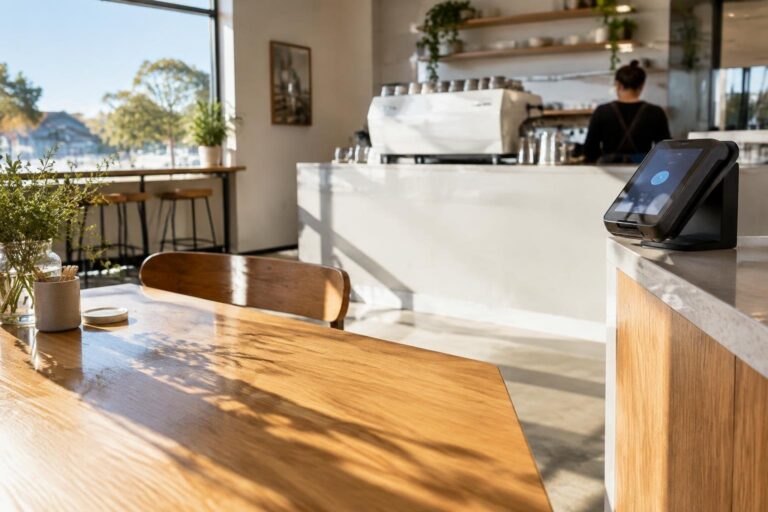
In recent years the simple act of leaving a tip has morphed into a source of unease for many Australians. What once was an occasional, entirely optional gesture is now often displayed on a screen the moment a card is swiped, nudging diners, salon clients and ride-share passengers toward an extra charge.
This shift reflects a broader move toward a cash-less economy, but it also raises questions about fairness, transparency and cultural fit.
Historically, Australia has not embraced the American tradition of tipping. Most workers receive a base wage that, while not lofty, is intended to cover living costs without relying on gratuities.
Yet as electronic payment terminals proliferate, the subtle pressure to add a percentage to a bill is becoming a regular part of everyday transactions.
Digital prompts turn gratuities into a social cost
Platforms such as Square (U.S.-based), Zeller and Tyro embed optional tip buttons directly into the checkout interface.
While the default setting is usually “no tip,” retailers can enable the feature and present customers with preset percentages—often 10 % or 15 %—alongside a free-text field. According to the Reserve Bank of Australia, about 75 % of payments in 2025 were made electronically, meaning that a large share of consumers encounter these prompts regularly.
Professor Angel Zhong of RMIT notes that the visual cue eliminates the need for a server to ask for a tip, shifting the social pressure onto the customer. She explains, “When the screen asks, people feel awkward pressing ‘no tip’ while the staff watch, so they may add a small amount just to avoid embarrassment.” This phenomenon is amplified in settings where staff are visibly present—cafés, hair salons, even farmer’s markets—turning a private decision into a public performance.
How the technology works and its hidden cost
Each time a tip is added through these terminals, the payment processor applies its usual surcharge—typically between 1.2 % and 1.6 %—to the total amount, tip included. A customer who tips 10 % on a $50 bill effectively pays an extra 0.12 % to 0.16 % in fees, a marginal increase that most people do not notice. For businesses, the added fee is absorbed into the
The legal vacuum: where do the tips really go?
Australia’s employment framework provides no explicit rules governing gratuities. The Fair Work Act merely requires that workers receive at least the minimum wage stipulated by the relevant award or agreement; it does not mandate that any tips collected be passed on to staff. As a result, some employers treat tips as part of their revenue, while others distribute them directly. The lack of statutory guidance creates a grey area that can be exploited.
Industry insiders report varied practices. Salon owner Nathanael Hardidge uses a London-based booking system that deducts a 1.59 % transaction fee from every payment, including tips. He must manually allocate the net amount to his team, a process he describes as “a bit of a pain” and one that can lead to rounding errors. Meanwhile, some pubs and restaurants simply add the tip to the till without any formal tracking, making it difficult for employees to verify that they received the full amount.
Workers themselves often assume that any tip shown on the receipt ends up in their pockets. Research analyst Aidan Perkins points out that this misconception fuels resentment when staff discover that a portion of the gratuity was retained by the business or lost to processing fees. In the absence of clear employer policies, employees are left to rely on goodwill rather than legal entitlement.
Public pushback and emerging responses
Consumer sentiment is largely hostile toward the phenomenon. A quick scan of Australian sub-reddits reveals hundreds of comments disparaging tip prompts as an unwanted American import. Many users explicitly select “no tip” to signal resistance, even when the screen makes the option conspicuous. As Joshua Fernandes a data analyst, puts it, “I feel like I’m being asked to pay for my own coffee.”
Some businesses are reacting to the backlash. Hardidge is considering removing the tip button from his booking software after clients described the prompt as “rude.” Others, like rideshare platforms introduced in 2019, continue to forward 100 % of driver tips, but they also display the option prominently, reinforcing the perception that tipping is expected.
Advocates for reform argue that legislation similar to that in the United Kingdom or United States—where tips must be passed directly to staff—would provide clarity and protect both workers and patrons. Until such measures are introduced, the onus remains on individual establishments to be transparent about how gratuities are handled.
For customers who still wish to reward good service, cash remains the most reliable method. Paying a note directly to the person who served you bypasses digital fees and ensures the money reaches its intended recipient.
