

Is President Trump overstepping bounds with his new military directive against drug cartels? Let's dissect the implications!
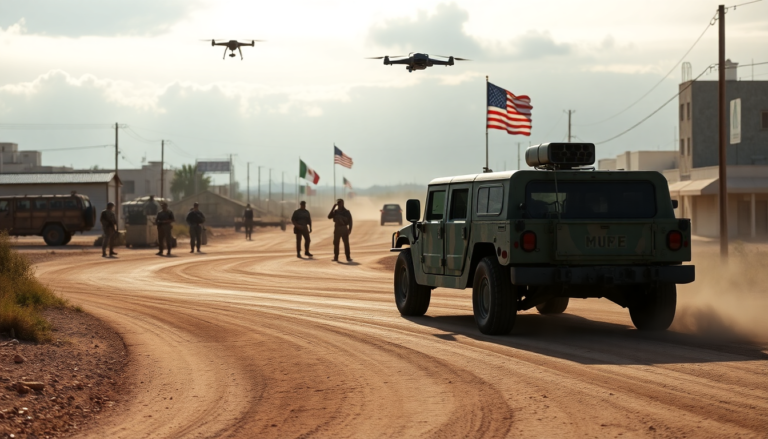
Okay, but can we talk about President Trump shaking things up? 💥 He’s reportedly directing the Pentagon to target drug cartels that he’s labeled as foreign terrorist organizations. Sounds intense, right? This is giving me some serious geopolitical tension vibes! 🕵️♂️ But what does this really mean for the U.S., Mexico, and those cartels? Let’s break it down.
What’s the directive all about?
So, here’s the deal: Trump has signed a directive that opens the door for military operations against specific drug cartels. This comes at a time when there’s already a lot of tension surrounding drug-related violence.
💔 During a recent peace deal signing, he responded to questions about the directive by saying, ‘Well, we are playing a tough game.’ It’s clear he’s diving headfirst into a complex and dangerous arena—not exactly a casual approach!
White House spokesperson Anna Kelly confirmed this bold move, which seems to be part of a broader strategy to expand executive power without much oversight.
This has raised eyebrows, especially among legal experts. Brandon Buck from the Cato Institute pointed out that Trump might be on shaky legal ground here since there’s no clear authorization for military force in Mexico like we’ve seen in the Middle East.
For some context, remember when George H.W. Bush sent troops to Panama to take down Manuel Noriega? This directive echoes that historical moment—an attempt to use military might to tackle drug trafficking head-on. But is this really the right way to go about it? 🤔
What’s the legal landscape?
Now, let’s get into the nitty-gritty of legality. Legal experts are raising red flags about the potential for strikes against these cartels to breach international law, especially if they involve targeting individuals who aren’t an imminent threat at the time. Brian Finucane from the International Crisis Group has expressed concerns that unilateral drone strikes could violate not just international law but also U.S. laws surrounding assassinations. Yikes! ⚖️
And what about the implications for U.S.-Mexico relations? The Mexican government has made it pretty clear: they don’t want U.S. troops on their soil. In fact, President Claudia Sheinbaum Pardo has flat-out rejected the idea, emphasizing that sovereignty cannot be compromised. So, if Trump pushes forward with this directive, it could lead to a diplomatic disaster. Who else thinks this could end badly? 🙈
The bigger picture: drug cartels as terrorist organizations
Designating these cartels as terrorist organizations is a significant move. The State Department has already classified groups like MS-13 and Tren de Aragua as foreign terrorist entities, arguing that these gangs pose a national security threat that goes beyond traditional organized crime. Marco Rubio, the Secretary of State, has voiced that this designation allows the U.S. to utilize all available resources against these groups. But does labeling them as terrorists really change the game in a meaningful way? 🧐
Trump’s administration has already added more cartels to the list, including the notorious Cartel de los Soles, which is linked to the Venezuelan government. The narrative here is that these cartels are not just about drugs—they’re tied to broader issues of governance and corruption that threaten U.S. security. But again, does this justify military action? That’s definitely a hot topic for debate! 🔥
In summary, while Trump’s directive might seem like a decisive action against drug trafficking, it raises complex questions about legality, diplomacy, and effectiveness. It’s a classic case of weighing the risks against the potential benefits. What do you think? Is military intervention the way to go, or should we be looking for other solutions? Let’s chat! 💬✨
