

The recent ban on Palestine Action has sparked massive protests in London, raising crucial questions about freedom of speech and assembly.
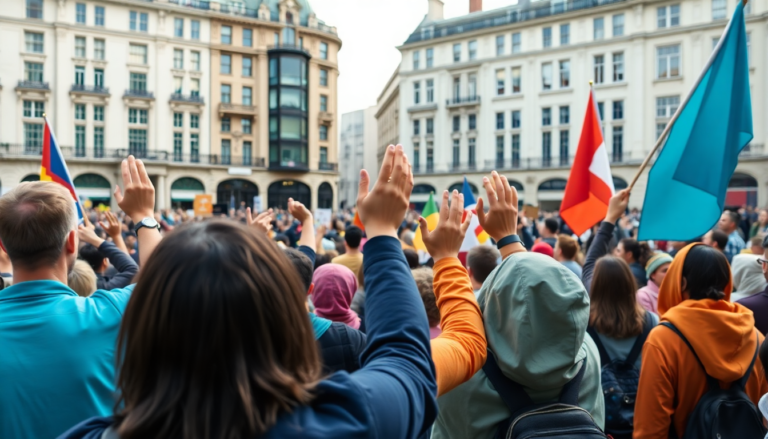
Hey, friends! So, have you heard about the recent protests happening in London over the ban on the activist group Palestine Action? Things are heating up, and it’s all about **freedom of speech** and the **right to protest**. Let’s dive into what’s been going down! 🌍💬
What’s the deal with Palestine Action?
Palestine Action has been in the spotlight lately, especially after the British government labeled it a “terror organization” last month. This classification has serious consequences—supporting or even being a member of this group can lead to a hefty prison sentence of up to **14 years**! 😲 That’s a wild penalty for simply advocating for a cause, right?
On Saturday, police in London reported that at least **200 people** were arrested during a protest in support of Palestine Action.
The demonstration took place in Parliament Square, where demonstrators showed their support for the group despite the looming threat of arrest. It’s a pretty intense situation, considering that just wearing a t-shirt supporting Palestine Action could land you in trouble! Who else thinks that’s a bit over the top? 🤔
Journalist Sonia Gallego from Al Jazeera noted that the fear of arrest hasn’t deterred supporters.
People are still showing up, wearing shirts, holding signs, and making their voices heard. It’s like they’re saying, “We won’t be silenced!” This is giving me serious “stand up for what you believe in” vibes. ✊
Freedom of expression at stake?
Critics of the ban are arguing that it infringes on fundamental rights. More than **350 academics** around the world signed an open letter expressing their concerns about the consequences of this ban. They argue that it stifles free speech and could have a chilling effect on universities across the UK and beyond. **Unpopular opinion:** shouldn’t universities be a safe space for open discussions? 💬
The letter highlights the growing campaign of collective defiance against the ban, showing that this isn’t just a local issue—it’s resonating globally! Notable figures like Israeli historian **Ilan Pappe** and political thinkers such as **Michael Hardt** and **Jaqueline Rose** have joined the chorus of voices opposing the ban. It’s a community coming together for a cause, and I’m here for it!
The impact of the ban and the protests
In addition to the protests, **Amnesty International UK** condemned the arrests of peaceful demonstrators who were simply exercising their right to free expression. They argue that such actions are a violation of international obligations to protect these rights. And just when you thought it couldn’t get more intense, Quakers were also arrested for holding signs that read, “I oppose genocide. I support Palestine Action.” How wild is that? 😱
Palestine Action has been taking action against companies linked to Israel by damaging property and protesting outside their locations, claiming that the UK government is complicit in what they call Israeli war crimes in Gaza. With the ongoing conflict, the stakes feel higher than ever. As a spokesperson for Palestine Action pointed out, the UK’s military involvement is directly tied to the situation in Gaza. It’s a complex web of issues that’s not going away anytime soon.
As the protests continue and tensions rise, it’s clear that this issue touches on deeper themes of **justice**, **human rights**, and the **role of government in activism**. What do you think? Is the ban justified, or is it an overreach? Let’s chat about it! 👇
