

What happens when privilege meets consequence? Unravel the story of Constance Marten, an aristocrat navigating life behind bars. 🏰➡️🚔
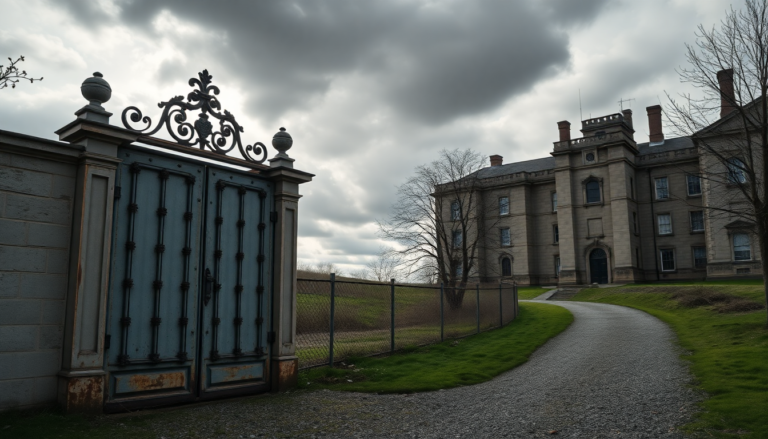
Okay, but can we talk about Constance Marten’s life? It’s taken a wild turn—from living in a stunning 25-room stately home in Dorset to the stark confines of HMP Bronzefield. Talk about a contrast! It’s hard to ignore the whispers of entitlement that seem to follow her even now, as she awaits sentencing for the tragic manslaughter of her newborn daughter.
The Background of Privilege
Raised in an environment that many only dream of, Constance was surrounded by the comforts of wealth and status. But let’s face it—money doesn’t shield you from the harsh realities of life. Her choices led to devastating consequences, and now, as she sits in prison, the difference in her living conditions is a hot topic among inmates and staff alike.
Do you think her privileged upbringing has shaped how she views her current situation?
A prison source shared, ‘She complains as much as any other inmate I’ve seen in my career, and she’s got it a lot easier than most prisoners.’ Isn’t it fascinating to think about how someone so accustomed to luxury copes with the reality of prison life? Does she really think she’s above it all, or is this just a defense mechanism kicking in?
Her complaints about prison food and the company she keeps reveal a deeper struggle.
For someone who once graced the pages of *Tatler*, her grievances about the food seem almost trivial, yet they say so much about her mindset. Is she desperately clinging to the past, or is she genuinely struggling to adapt to her new environment? 🤔
Life in a Women’s Prison
At HMP Bronzefield, where Constance now resides, the atmosphere is charged with tension and complexity. She shares the unit with notorious figures, including Lucy Letby, a neonatal nurse convicted of horrific crimes. The irony of an entitled aristocrat sharing space with convicted criminals raises eyebrows. Is this a case of strange bedfellows, or are they forming a bond over shared experiences of loss and guilt?
Interestingly, while Letby and another inmate have formed a camaraderie, Constance has chosen to isolate herself. Is it pride? Fear? Or maybe a deep-rooted belief that she simply doesn’t belong there? Sources suggest that mixing with her fellow inmates could actually be beneficial for her. ‘Most other prisoners wouldn’t give her the time of day knowing what she’s in for,’ one insider said. Ouch! That must be a hard pill to swallow for someone used to being in the spotlight. 🌟
Her recent behavior, especially her complaints about limited contact with her surviving children, paints a picture of a woman grappling with her new identity. She’s allowed to send just one letter or card to each child per year—sounds pretty restrictive, right? ‘It’s a hard one for staff to wrap their heads around,’ said a source. This raises an intriguing question: Is her desire to maintain contact genuine, or is it just another reflection of her entitlement?
Anticipating the Future
With sentencing looming, the atmosphere at Bronzefield is tense. Sources indicate that staff are apprehensive about how Constance will react to her fate. ‘We reckon she’s in for a rude awakening,’ one remarked. That sense of impending consequence hangs over her like a dark cloud. The challenges she faces in adapting to prison life are significant, but what’s going to happen when she finally hears her sentence?
As she navigates this new chapter, one can’t help but wonder how her past has shaped her present. Will she continue to resist the reality of her situation, or will she find a way to adapt and survive? Her journey is a stark reminder of how quickly life can change and how our choices can lead us down unexpected paths.
What are your thoughts on Constance’s situation? Do you believe her background influences her behavior in prison? Let’s chat about it! 💬✨
