

Amid escalating tensions in Eastern Europe, President Trump initiates a series of discussions with European leaders to potentially pave the way for peace talks between Ukraine, Russia, and the United States.
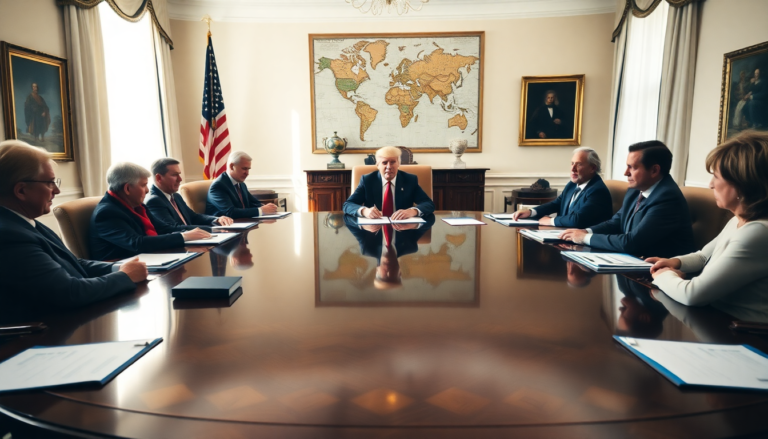
In a bold diplomatic move, US President Donald Trump is stepping up to engage with European leaders in a bid to spark trilateral talks aimed at resolving the ongoing conflict in Ukraine. This initiative is unfolding during a crucial meeting at the White House, where key figures like Ukrainian President Volodymyr Zelensky, UK Prime Minister Sir Keir Starmer, and French President Emmanuel Macron are in attendance.
Meeting Details and Objectives
This pivotal Monday, Trump is hosting a gathering of prominent European leaders, all with a shared goal: to forge a united front in pursuit of peace for Ukraine. Speaking alongside President Zelensky in the Oval Office, Trump expressed a sense of optimism about the potential for these trilateral discussions.
“If everything works out well today, we’ll have a trilat, and I think there will be a reasonable chance of ending the war when we do that,” he stated, underscoring the urgency of the matter.
But what’s the backdrop to this high-stakes meeting? The ongoing conflict in Ukraine has far-reaching implications, not just for the nation itself but for the stability of Europe as a whole.
Trump indicated that after the discussions, he plans to connect with Russian President Vladimir Putin, saying, “We’re going to have a phone call right after these meetings today and we may or may not have a trilat.” This signals a potential shift in diplomatic strategies aimed at finding common ground.
Insights from the Leaders
As the talks progressed, the issue of NATO-like protection for Ukraine emerged. Trump responded with caution, suggesting that significant support could be extended without Ukraine officially joining NATO. “Biggest people in Europe. And they want to give protection, they feel very strongly about it,” he noted, highlighting the necessity of international collaboration in safeguarding Ukraine’s security.
In a notable exchange, Zelensky described the discussions as “really good” and expressed his gratitude for the US support, emphasizing that Ukraine’s security heavily relies on American involvement. He also took a moment to acknowledge First Lady Melania Trump, who recently made a heartfelt appeal to Putin to ensure the protection of children affected by the conflict.
Reactions and Future Steps
Reactions from European leaders have been largely supportive, with Prime Minister Starmer dubbing the potential trilateral talks as a “sensible next step.” He pointed out the widespread consequences of the war, remarking, “There’s not a family or community that hasn’t been affected.” This observation underscores the extensive impact of the conflict, extending beyond Ukraine’s borders and affecting Europe as a whole.
As discussions unfolded, the focus remained on security guarantees for Ukraine, with Starmer stressing the importance of collective efforts to foster a safe environment. He advocated for the formation of a trilateral meeting, viewing it as essential for tackling the pressing issues at hand.
Trump’s earlier remarks also hinted that while a ceasefire would be welcomed, it might not be a prerequisite for achieving a peace agreement. “I believe a peace agreement at the end of all this is something that’s very attainable and it can be done in the near future,” he stated. This perspective indicates a strategic approach that prioritizes a long-term resolution over temporary pauses in hostilities.
