

Have you ever seen a church on the move? Kiruna's iconic church is taking a journey to save its legacy while grappling with the effects of mining expansion.
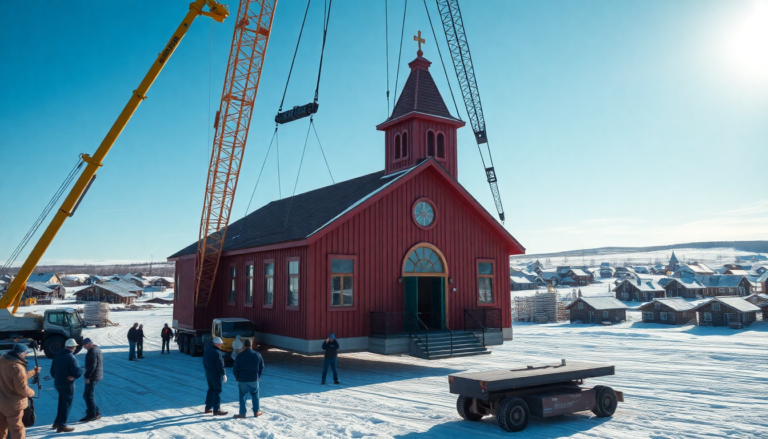
What happens when a 113-year-old church becomes a part of a city’s transformation? In Kiruna, Sweden, this isn’t just a question—it’s a reality. As the town relocates to accommodate the world’s largest underground iron ore mine, the Kiruna Church is embarking on a two-day journey to a new location, ensuring its legacy is preserved and protecting it from ground subsidence.
This fascinating story really highlights the intersection of community, culture, and the pressing demands of industry. 💬
The journey begins
Okay, but can we talk about this: a massive, 600-ton wooden church—one of Sweden’s largest and often hailed as its most beautiful—slowly making its way down an Arctic road? Sounds surreal, right? But that’s exactly what’s happening! Workers have carefully lifted the church from its foundations and placed it on a custom-built trailer.
Over the next few days, it will inch its way 5 kilometers (about 3 miles) to a brand new city center. Can you imagine the sight? 🚚✨
Why the move, you ask? Well, the expansion of the LKAB iron ore mine poses a significant threat to the church’s structural integrity.
Lena Tjarnberg, the vicar of Kiruna, beautifully encapsulates the mix of emotions surrounding this transition: “The church is Kiruna’s soul in some way, and in some way, it’s a safe place. For me, it’s like a day of joy, but I think people also feel sad because we have to leave this place.” Who else can relate to that bittersweet feeling when something you love has to change? 💔
Voices of the community
As we celebrate the church’s relocation, we must also listen to the voices of those who feel the impact of these changes most acutely—the Indigenous Sami community. Lars-Marcus Kuhmunen, chair of the local Gabna Sami community, expresses a deep concern: “This area is traditional Sami land… Fifty years ago, my great-grandfather said the mine is going to eat up our way of life, our reindeer herding. And he was right.” This perspective serves as a poignant reminder of the broader implications of mining expansion and the cultural heritage at stake. 🐾
How do you feel about the balance between development and preservation? It’s a complex issue, right? The church’s move is only one piece of a larger puzzle. With around 3,000 homes and 6,000 people needing to be relocated, numerous public and commercial buildings are either being moved intact or demolished. The effort is monumental, and it begs the question: what does progress really mean for communities? 🤔
The future of Kiruna
As the dust settles on this historic relocation, what’s next for Kiruna? LKAB plans to continue its operations for decades to come, extracting an estimated six billion tonnes of minerals still lying beneath the surface. This includes not just iron ore but also rare earth elements critical for technology and green energy. In fact, the proposed Per Geijer mine has been designated a strategic project by the European Union, emphasizing its importance in reducing dependency on foreign sources. ⚙️
With Kiruna’s new city center taking shape just down the road, the church stands as a symbol of hope and resilience amidst change. Mayor Mats Taaveniku describes it perfectly: “The church is… a statement or a symbol for this city transformation.” Isn’t it incredible how one building can represent so much? As we watch Kiruna evolve, we can’t help but wonder how this transformation will shape its community and culture in the future. 🌍
So, what do you think about this unique blend of preservation and progress? Is it possible to honor our history while moving forward? Share your thoughts below! 💬✨
