

Is the US playing favorites in its sanctions game? Let’s unravel the reasons behind targeting India over China when it comes to Russian oil imports.
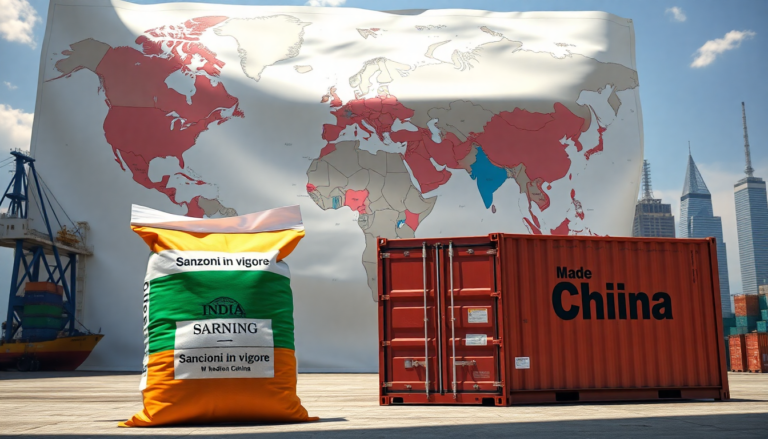
So, here’s the tea: the US is really putting the heat on India for buying Russian oil, but China? Not so much. 🤔 Why the double standard? This situation is more complicated than it seems, and it all boils down to some serious political maneuvering.
Let’s break it down!
The Sanction Strategy: A Closer Look
Okay, but can we talk about President Donald Trump’s plans? He’s been super vocal about imposing new sanctions on Russia, especially targeting countries that are still buying oil from Moscow.
Recently, he slapped a hefty 25% tariff on Indian goods in response to their ongoing imports of Russian crude. But here’s the kicker: China, the biggest buyer of Russian energy, seems to be getting a free pass. Why is that?
Last year, China imported a whopping 109 million tonnes of Russian oil, accounting for nearly 20% of its total energy imports.
In contrast, India imported 88 million tonnes. So, while both countries are engaging in trade with Russia, why is the US taking a firmer stance against India? 🤨
The answer lies in the intricate web of international relations and economic dependencies. Lawmakers in the US are pushing for new legislation—the Sanctioning Russia Act of 2025—that would enable the administration to impose hefty tariffs on any country supporting Russia’s war efforts. But it seems like the focus is on India, where the narrative of “profiteering” is gaining traction. 🤑
China’s Economic Interests vs. Political Pressure
China’s position is a bit more nuanced. According to US Treasury Secretary Scott Bessent, China has diversified its oil imports, making it less reliant on Russian crude compared to its earlier statistics pre-war. While India’s imports skyrocketed from less than 1% before the Ukraine conflict to 42%, China’s share only increased slightly. This distinction allows China to evade the same level of scrutiny that India faces, which has drawn accusations of arbitrage—essentially buying cheap Russian oil and reselling it at a profit. 💰
Interestingly, this isn’t just about oil. The US is also deeply entangled in trade discussions with China regarding rare earth minerals—critical for tech and manufacturing sectors. Trump appears to be treading lightly around China, likely to avoid stirring up trade tensions just as retailers begin stocking up for the holiday season. Who else thinks this is a classic case of prioritizing economic stability over political consistency? 🤷♀️
The Bigger Picture: Long-Term Implications
With all these geopolitical chess moves, one can’t help but wonder about the long-term implications. If the US continues to treat India and China differently, what does that mean for international relations? The messaging is mixed, and as we’ve seen, the situation can change in a heartbeat.
Moreover, the potential for secondary sanctions against China raises questions about global energy prices. US Secretary of State Marco Rubio warned that targeting China could lead to higher costs for consumers worldwide. If China refines Russian oil and sells it into the global market, any sanctions could backfire, causing prices to spike for everyone. 😱
The recent economic slowdown in China, including rising unemployment rates among youth, adds another layer of complexity. As the world’s second-largest economy grapples with these challenges, it’s clear that both the US and China need to navigate these waters carefully. Otherwise, they risk hitting an economic wall that could have repercussions far beyond their borders.
In conclusion, as we watch this international drama unfold, it’s essential to stay informed and engaged. How do you feel about the US’s approach to sanctions? Is it fair, or are we seeing a political game at play? Let’s discuss! 💬✨
