

What happens when military presence meets civic unrest? A look into JD Vance's visit to DC amid significant protests.
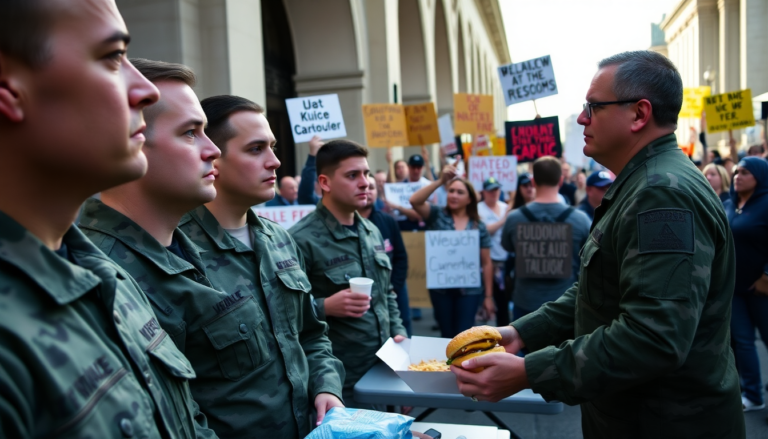
Hey there! So, picture this: JD Vance, our Vice President, is serving burgers to National Guard troops at Union Station while protests erupt around them. Sounds dramatic, right? This scene recently unfolded in Washington, DC, shining a spotlight on the growing tension between military presence and civic freedoms.
Let’s dive into what really went down and what it all means for the city. 💬
The Scene at Union Station
On a bustling day at Union Station, where the sound of trains mingles with the chatter of commuters, JD Vance, along with Defense Secretary Pete Hegseth, decided to drop by and show some appreciation for the National Guard troops stationed in the city.
🥳 Can you imagine the vibe? Vance handed out burgers while protesters were chanting “free DC” in the background. It felt like a scene from a movie where the hero tries to rally support while chaos reigns around him.
Vance asserted, “We brought some law and order back,” amidst the chants that echoed through the station.
This remark raises eyebrows, don’t you think? What does “law and order” even mean in this context? The juxtaposition of military personnel serving food while being shouted at by protesters really illustrates the current political climate. Who else thinks this is a bizarre but telling representation of our times? 🤔
With around 1,900 troops deployed in DC, mostly from Republican-led states, their presence is felt in key areas like the National Mall and downtown. But here’s the kicker: this isn’t just a casual visit; it’s part of a larger initiative by the Trump administration that has become quite the topic of conversation across the country. #MilitaryPresence
Protests and Political Tensions
As we all know, protests are a part of the civic landscape, but what’s happening in DC feels charged. The administration’s decision to ramp up military presence has sparked debates about safety versus civil liberties. Just a few days back, there was an incident where an armored vehicle collided with a civilian car near the Capitol. Yikes! 🚑 The driver had to be rescued, raising questions about the safety protocols in place.
US Attorney General Pam Bondi reported over 550 arrests related to the protests, claiming that they are necessary to restore peace. But does it really feel peaceful? It seems like there’s a constant tug-of-war between the desire for safety and the need for freedom of expression. What do you think? Is this a necessary measure, or is it overkill? 🤷♀️
Even Mayor Muriel Bowser, who’s trying to maintain a balance, noted the changing climate in the city during a back-to-school event. “This is not the same time, is it, that we experienced in opening school last year?” she said, hinting at the broader implications of the current situation on daily life in DC. It’s a complex web of reactions and consequences, and I’m curious how this will play out as schools reopen. #BackToSchool
Crime Rates and Public Safety
Now, let’s talk numbers. The Trump administration argues that military presence is essential to combat crime. They claim a significant decrease in crime rates, but city statistics tell a different story. The overall crime rate is down 7%, but local officials argue that crime was already on the decline before the federal crackdown. This dichotomy raises a crucial question: Are we really safer, or is this just a narrative being pushed? 😟
Moreover, the decision by federal prosecutors to not pursue charges against those violating local gun laws adds another layer to this complex issue. It seems like there’s a shift happening, and many are wondering what it means for our rights and safety moving forward. Unpopular opinion: maybe we need to rethink how we approach crime in urban areas? 🤔 #CrimeDebate
With all this happening, one can’t help but feel that Washington, DC, is at a crossroads. The implications of military presence, civic unrest, and shifting crime policies could redefine the city. As we head into the new school year and beyond, the question remains: will we find a way to foster both safety and freedom? 🌟
