

The annual scything at Highgrove highlights the King's commitment to preserving native flora and fauna.
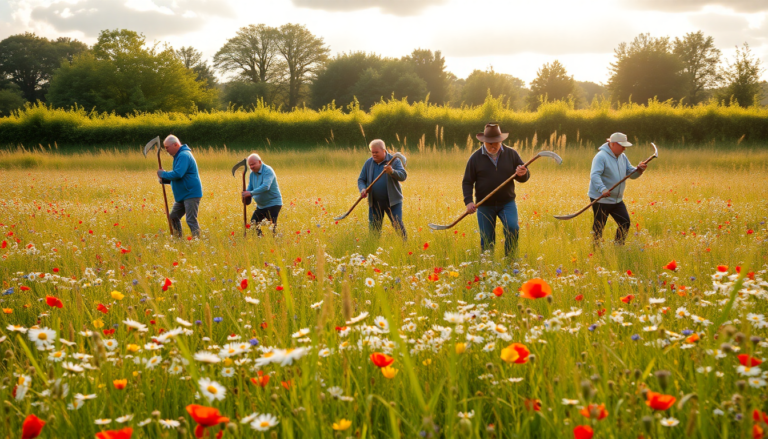
This week, the wildflower meadow at Highgrove, the private estate of King Charles III in Gloucestershire, has undergone its annual scything. Members of the Scythe Association of Britain & Ireland were spotted carefully cutting back the vibrant flora as summer draws to a close.
This traditional practice, which the King actively supports, plays a crucial role in maintaining the ecological balance of the meadow.
How the Scything Works
So, how does scything actually work? It’s done with a traditional tool that features a long, curved blade, allowing for a close cut to the ground.
This method not only promotes better seed germination but also helps maintain biodiversity by providing essential winter fodder for livestock. The meadow, established over 40 years ago, spans four acres and is one of the most picturesque spots at Highgrove House, located near Tetbury.
This annual event is a testament to King Charles’s commitment to sustainable practices. His passion for traditional country crafts shines through here. The meadow was originally developed in 1982 by gardening expert Miriam Rothschild, who used a unique seed mix designed to replicate the rich biodiversity of old meadows that had been lost over time.
The Story Behind This Unique Habitat
When Charles was still the Prince of Wales, he envisioned this experimental meadow as a sanctuary for native flora and fauna, which had been declining due to modern agricultural methods. The original seed mix included 32 varieties of native plants, such as ox-eye daisies and common spotted orchids. Today, these beautiful plants flourish in the meadow, creating a vibrant tapestry of life.
The management of this special area involves summer hay cutting followed by autumn grazing by sheep. This approach not only helps to tread seeds back into the soil but also encourages the growth of various wildflowers. With the presence of yellow rattle, grasses are kept in check, allowing over seven types of orchids to thrive in this carefully maintained habitat.
Experience the Seasonal Beauty
As spring arrives, Highgrove’s wildflower meadow bursts into life with the blooming of Lent lilies and daffodils, followed by a stunning display of colors throughout the summer months. A recent tweet from Highgrove Gardens highlighted the breathtaking view of purple flowers, including Camassia leichtlinii and Camassia quamash, perfectly contrasting with the lush green grass characteristic of the English countryside. Isn’t it amazing how nature transforms with each season?
The meadow holds additional prestige as it was named the first of 60 Coronation Meadows, a project initiated by King Charles ahead of the 60th anniversary of Queen Elizabeth II’s coronation in 2013. Today, it boasts over 70 different varieties of plants, significantly enriching the biodiversity of the area.
Want to see this beauty for yourself? Highgrove is open to the public from April to October, with all proceeds supporting The King’s Foundation, which is dedicated to preserving traditional skills and crafts. It’s a perfect opportunity to connect with nature and support a great cause!
