

A harrowing near miss between a passenger plane and a drone highlights urgent safety concerns in aviation.
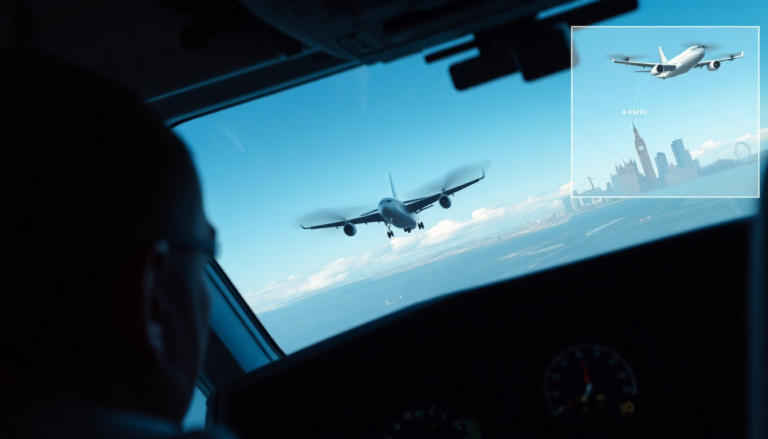
In a shocking incident that highlights growing safety concerns around drone operations near airports, a passenger aircraft narrowly avoided a collision with a drone shortly after taking off from London’s Heathrow Airport. The Airbus A320, climbing to an altitude of 9,000 feet, faced this alarming close call back in May.
An investigation revealed that both the captain and first officer spotted a bright white object zooming dangerously close, filling a significant portion of the cockpit’s windscreen. How close is too close when it comes to drones and commercial flights?
The Incident and Immediate Reactions
The UK Airprox Board, which investigates air proximity incidents, reported that the first officer described the drone as triangular in shape, though the captain only caught a brief glimpse. The drone reportedly flew directly over the aircraft, coming within about 10 meters.
The board concluded that a real risk of collision was present, urging immediate action on drone regulations in busy airspaces. What does this mean for the future of air travel?
Witnessing this incident unfold from the cockpit, the crew voiced their concerns about the lack of vertical or horizontal separation from the drone, underscoring the potential dangers of unmanned aircraft flying too close to commercial flights. The report noted, “Both the Captain and First Officer saw a bright white object pass overhead from the opposite direction,” indicating the drone’s considerable size, estimated at around 2-3 meters.
Previous Incidents and Rising Concerns
This incident isn’t an isolated case. Just a month earlier, a similar event occurred when a drone came within 10 to 20 meters of a Boeing 737 as it descended into Gatwick Airport. The captain of the B737 spotted a black object ahead and emphasized the urgency of the situation, noting there was “no time to take avoiding action.” This close encounter received an A rating, the highest risk category, highlighting the urgent need for stricter drone regulations. Are we prepared to face these challenges in the skies?
Authorities and aviation experts are understandably alarmed by these incidents, which underscore the increasing frequency of drones operating near major airports. The UK’s Airprox Board is actively investigating these occurrences, calling for stricter controls and greater awareness regarding drone operations, especially in areas with heavy air traffic.
Military Solutions to Mitigate Risks
In light of these escalating threats, the military has stepped up to the plate, testing innovative solutions. Recently, the Army successfully trialed a revolutionary ray gun that uses high-frequency radio waves to disable drones. This cutting-edge technology, known as the Radiofrequency Directed Energy Weapon (RF DEW), has demonstrated significant promise in neutralizing unmanned aerial vehicles.
During extensive tests at a firing range in Wales, the military showcased the RF DEW’s ability to track and disable over 100 drones, proving its effectiveness in real-world scenarios. Defence Minister Maria Eagle hailed this technology as a potential game-changer for aerial safety, pointing out that each shot from the weapon costs only 10 pence, making it a practical addition to existing defense systems. Could this be the future of drone control?
With a firing range that extends up to 1 kilometer, this British-made weapon can target multiple drones simultaneously, providing a robust solution to mitigate the risks posed by rogue UAVs in our skies. As near-miss incidents continue to rise, the implementation of such technologies may soon become critical for ensuring the safety of commercial aviation.
