

Did you know that the pills you take may be made from fossil fuels? Let’s dive into the surprising connection and the efforts to create greener alternatives.
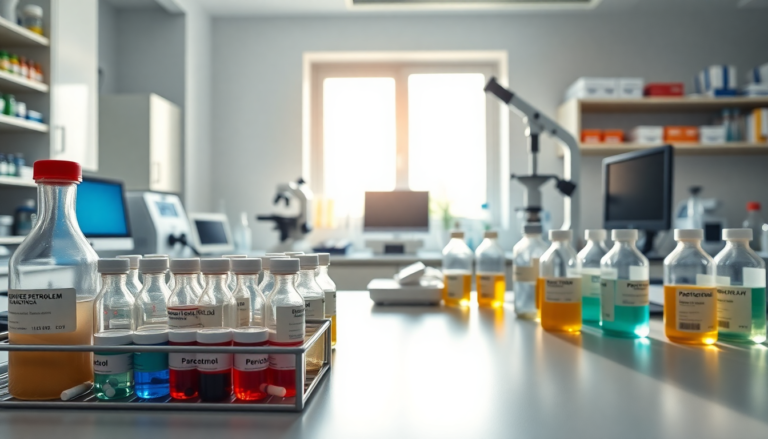
Hey there! 🌍 Have you ever thought about what goes into the medications we pop like candy? Spoiler alert: it’s not as simple as you might think. Each time you take a pill, there’s a solid chance it contains chemicals derived from crude oil.
Yes, you heard that right! From everyday pain relievers like paracetamol to antibiotics such as penicillin, fossil fuels are behind the scenes making it all happen. So, let’s chat about this fascinating and slightly alarming connection! 💊
The Role of Petrochemicals in Medicine
Let’s break it down. When you think of medications, you probably don’t picture oil rigs or crude oil. But according to experts, a ton of pharmaceuticals rely on petrochemicals as their building blocks. Penny Ward, a visiting professor at King’s College London, puts it this way: “There are a huge number of petrochemicals used in the production of medicines.” This means that those painkillers and allergy meds you find in your cabinet come from a complex process that starts with fossil fuels.
Crazy, right?
But wait, it gets more interesting! The pharmaceutical industry is actually contributing to our carbon footprint in a big way. A study from McMaster University revealed that this sector emits 55% more CO2 than the entire automotive industry. Just think about that for a second! 🚗💨 As we’re all trying to do our part for the planet, it’s a little disheartening to find out that our meds are part of the problem.
Innovations in Greener Medicine Production
Now for the plot twist! 🌱 Scientists are on a mission to create greener alternatives to traditional pharmaceutical production methods. Researchers at Edinburgh University are turning everyday plastic waste—think water bottles and food packaging—into paracetamol. Yes, you heard me right! They’re using a genetically modified strain of E. coli bacteria to transform terephthalic acid, a component of PET plastic, into acetaminophen. How wild is that?
And here’s where it gets even cooler: while E. coli has a notorious reputation for causing food poisoning, in this case, it’s doing something pretty remarkable. By adding this bacteria to terephthalic acid, researchers are making a real breakthrough in sustainable medicine production. 🌟
But that’s not all! A team from Bath University found another way to sidestep fossil fuels entirely, using beta-pinene, a compound sourced from pine trees. Instead of relying on crude oil, they figured out that this natural substance could effectively produce paracetamol and ibuprofen. This is giving me major green vibes! 🌲
The Future of Pharmaceuticals: Can We Go Green?
So, what does the future hold? Experts like Dr. Heba Ghazal from Kingston University are optimistic but cautious. She notes that while these developments are exciting, getting rid of petrochemicals from drug production completely is a tall order. “It’s virtually impossible to remove petrochemicals from the drug production chain,” she says. This means that while we might see some greener options popping up, the industry is still heavily reliant on fossil fuels.
And let’s not forget the researchers at the University of Wisconsin-Madison, who are looking into using poplar trees to create paracetamol. Poplar trees are fast-growing and release a compound called p-hydroxybenzoate, which could replace the benzene currently used in drug production. 🌳
So, who else thinks we need more efforts like these to reduce our carbon footprint in the pharmaceutical industry? It’s clear that while we’re making strides toward greener options, there’s still a lot of work to be done. It’s a complex issue, but one that’s definitely worth discussing! Let’s keep the convo going! 💬
