

Could your plate be the key to a healthier brain? Recent studies suggest that the Mediterranean diet might be a powerful ally against Alzheimer’s, especially for those at high genetic risk.
Hey friends! 🌟 Have you ever thought about how our food choices can impact our brain health? Well, buckle up because some exciting new research is shedding light on just that! A team of researchers from Harvard University and Mass General Brigham has found that adopting a Mediterranean diet could dramatically slash the risk of developing Alzheimer’s disease.
And guess what? It’s especially beneficial for those of us with a genetic predisposition. Let’s dive into the details!
The Mediterranean Diet and Your Brain
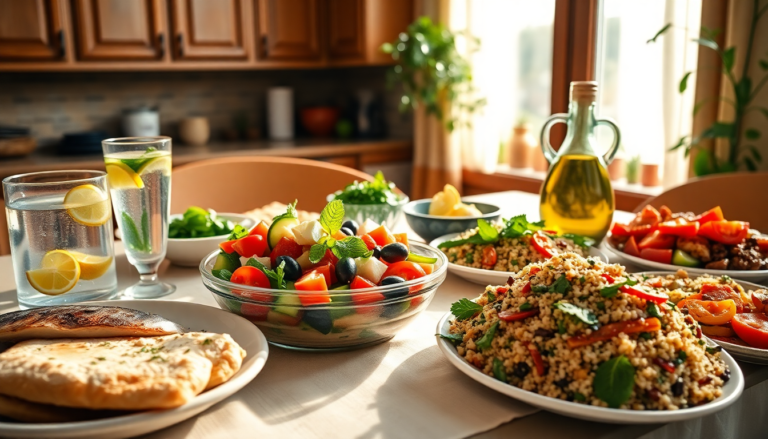
So, what’s this Mediterranean diet all about? Think fresh seafood, vibrant veggies, nuts, and healthy fats like olive oil.
🥗 This diet isn’t just tasty; it’s the only one that’s been proven through rigorous studies to improve brain health and slow cognitive decline. The latest findings suggest that individuals carrying two copies of the APOE4 gene, which significantly heightens their risk of Alzheimer’s, saw the greatest benefits when following this diet.
Can you believe that?
Alzheimer’s and similar forms of dementia are major players in memory loss among older adults, and genetics can account for a whopping 80% of our likelihood of developing these conditions. But here’s where it gets interesting: even if you’re genetically predisposed, a Mediterranean diet can be your shield. Imagine having a protective force in your kitchen! 💪🍽️
In a study involving over 4,200 women tracked for more than 30 years, researchers confirmed that those who embraced this diet reduced their Alzheimer’s risk by approximately 23%. Later, they validated this with a separate group of men, reinforcing the idea that it’s not just a fluke.
How It Works: The Science Behind the Plate
But how does this diet actually work its magic? The researchers discovered that the Mediterranean diet positively altered blood biomarkers, which are indicators of how our bodies respond to food. For those with the APOE4 gene, this means better blood vessel health, reduced inflammation, and even fewer amyloid plaques in the brain, which are linked to Alzheimer’s. It’s like the diet is giving your brain a much-needed detox! 🧠✨
Dr. Yuxi Liu, a key researcher in this study, emphasizes that this dietary pattern has been causally linked to cognitive benefits, making it a game-changer for those at higher genetic risks. Isn’t it fascinating that something as simple as food can influence complex health outcomes?
The study highlighted that the Mediterranean diet works hand-in-hand with other eating patterns, like the DASH diet, which focuses on heart health. By merging these two dietary approaches, participants saw improvements in how their bodies processed sugars and fats, leading to better brain chemistry overall. It’s all about creating a harmonious balance in our diets!
Real-life Impact: A Celebrity Case Study
Speaking of the Mediterranean diet making waves, let’s talk about Chris Hemsworth. The actor recently found out he has two copies of the APOE4 gene and decided to pause his career to focus on his brain health. Can you imagine being in his shoes? With a 90% chance of developing Alzheimer’s, he’s making some serious lifestyle changes. He’s all about prioritizing family time and being selective with his roles. Who else thinks that’s a powerful move? 🙌
With approximately 7 million Americans currently battling Alzheimer’s, the vast majority driven by genetic factors, the stakes are high. This diet offers a beacon of hope for many. And let’s not forget: non-APOE carriers have about a 9% chance of developing the disease, while those with one copy have a 30% risk. Two copies? That’s a staggering 90%. It’s clear that understanding our genetic makeup can be crucial in making informed dietary choices.
As we explore these findings, the takeaway is clear: adopting a Mediterranean diet isn’t just a trendy lifestyle choice; it could be a vital strategy for protecting our brain health, especially for those at risk. So, what do you think? Are you ready to bring more of those Mediterranean vibes into your meals? Let’s chat in the comments! 💬
