

Recent reports indicate a substantial return of Syrian refugees as the conflict dynamics shift, raising hopes for resolution.
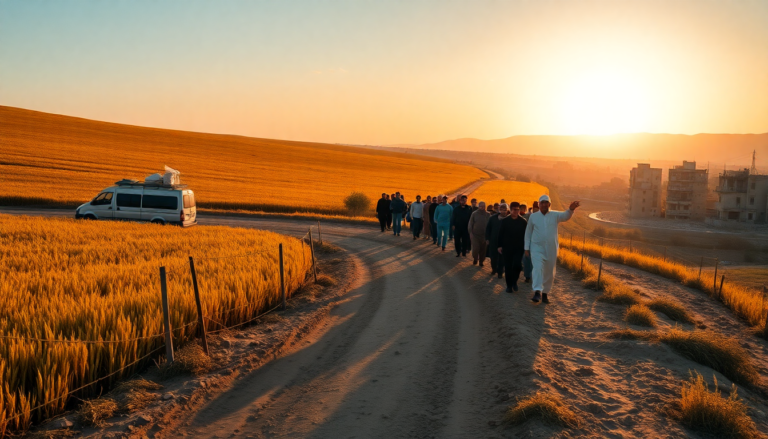
Since the fall of Bashar Assad’s government last December, around 850,000 Syrian refugees have started their journey back home from nearby countries. Experts predict this number could soar to one million in the coming weeks. During her visit to Damascus, Kelly T.
Clements, the Deputy High Commissioner of the UNHCR, confirmed this trend, shedding light on the shifting political and social landscape in Syria.
Current Situation and Refugee Returns
Clements noted that approximately 1.7 million individuals who were internally displaced throughout the 14-year conflict are now making their way back to their communities.
With the interim central government regaining control over substantial areas of the country, a sense of stability is prompting many to return. “It’s a dynamic period,” Clements remarked. “It’s an opportunity where we could see potentially solutions for the largest global displacements that we have seen in the last 14 years.” This influx signifies a crucial turning point in the humanitarian crisis that has plagued Syria since the conflict erupted in March 2011, which has resulted in nearly half a million deaths and the displacement of half the nation’s pre-war population of 23 million.
More than five million Syrians sought refuge in neighboring countries, with Lebanon hosting the highest number of refugees per capita in the world. As Clements observed at a Lebanese border crossing, long lines of trucks and people awaited their return. Previously, Lebanese authorities had allowed exemptions for illegal Syrian residents, urging them to leave by the end of August. This policy has led to a spike in returnees, with Clements emphasizing that “return numbers are exceptionally high.”
Challenges Amid Optimism
Despite these encouraging signs, the situation remains intricate. Many Syrians returned home with high hopes following Assad’s ousting, motivated by insurgent group offensives. Yet, violence and sectarian clashes continue to disrupt the landscape. Clements reported that hundreds have lost their lives in sectarian violence targeting Assad’s Alawite minority in coastal regions and the Druze minority in Sweida province earlier this year. In July alone, around 190,000 people were displaced in southern Syria due to conflicts between pro-government forces and Druze fighters.
The UN has stepped up humanitarian efforts, sending 21 convoys of relief supplies to Sweida. Clements pointed out the reopening of the Damascus-Sweida highway, previously blocked by pro-government gunmen, as a significant advancement. “This is very important because that will allow much more relief to come into the area,” she explained. The steady flow of aid is crucial for supporting the returning population and addressing their urgent needs.
The Road Ahead for Syria
As the situation unfolds, Clements emphasized that each individual returning home has unique motivations. While some are eager to rebuild their lives, others remain cautious, waiting to see how stable their communities will be. The UNHCR is carefully monitoring these developments and working to facilitate safe returns while providing essential support to those impacted by the conflict.
However, the specter of ongoing instability and potential violence looms large over the country. The international community, along with local authorities, must remain vigilant and proactive in tackling the challenges that arise as more Syrians seek to return to their homeland. Will Syria find a path to peace, or will the cycle of conflict continue? Only time will tell.
