

Why are we still hearing ridiculous excuses for violence against journalists in conflict zones? Let's dive into the conversation.
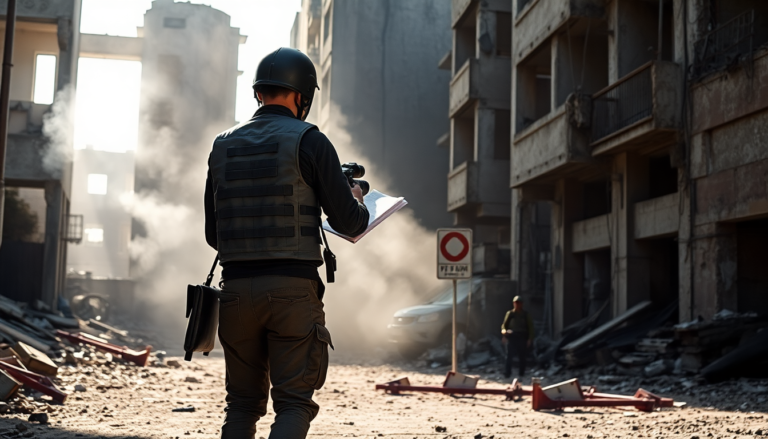
In today’s chaotic world, the safety of journalists often hangs in the balance, especially in conflict zones. Recently, some justifications for violence against reporters have been labeled as ‘ludicrous’ and ‘absurd.’ This raises serious questions about the state of press freedom and the responsibilities of nations in safeguarding journalists.
So, what’s really happening? Let’s dive deeper into this issue and explore its implications for media coverage and democracy.
The Role of Journalists in Conflict Zones
Journalists play a critical role in documenting conflict and providing the public with necessary information.
In places like Israel and Palestine, where tensions are high, the very presence of a journalist can shift the dynamics on the ground. But this exposure often comes at a significant cost. It’s not just about reporting; it’s about risking lives to bring the truth to light.
How many of us really appreciate the courage it takes to report from the front lines? 🤔
Unfortunately, the threats against journalists are on the rise. Attacks are justified under various pretexts, and these justifications are often dismissed as absurd. For instance, when authorities claim that journalists are ‘collaborating’ with enemies or ‘spreading misinformation,’ it’s a thinly veiled excuse for silencing dissenting voices. This is giving me major ‘1984’ vibes—where the truth is manipulated and those who seek it are targeted. Who else feels this way? 📢
The impact of such violence extends far beyond the immediate danger to reporters. When journalists are attacked, it sends a chilling message to others in the field. It implies that speaking truth to power can lead to dire consequences. This not only limits coverage but also affects public perception and understanding of critical events. So, why aren’t we talking about this more? 🤷♀️
The Dangers of Identity Politics
Another layer to this issue is the intersection of identity politics and media narratives. As pro-Palestine protests gain momentum, the political landscape becomes increasingly polarized. Some argue that identity politics have shifted the course of these protests, leading to heightened tensions and, consequently, more aggressive responses against journalists. Is this really a fair assessment? Unpopular opinion: I think it oversimplifies a much more complex situation.
When protests become inflected with identity politics, the stakes are raised. Coverage can become biased, and journalists may find themselves caught in the crossfire. This creates a dangerous environment where the truth can be overshadowed by political agendas. It’s crucial for media outlets to maintain objectivity, but how often does that happen? This is where we need to hold ourselves accountable as consumers of news. Are we demanding quality journalism, or are we just echoing our own beliefs? 🧐
Consequences of the Current Climate
The current climate of hostility towards journalists not only threatens their safety but also undermines the very principles of democracy. A free press is essential for a functioning society, yet when reporters face violence and intimidation, the flow of information is stifled. It’s a frightening scenario, and as citizens, we need to be vocal about our support for media freedom. What are your thoughts on how we can better protect journalists? 💬
As we reflect on these issues, it’s essential to engage in conversations about media safety and the role of journalism in society. The justifications for violence against reporters are not just ‘ludicrous’—they’re a direct threat to democracy itself. Let’s keep this dialogue going. What steps do you think we can take to create a safer environment for those who bring us the news? #JournalismMatters #PressFreedom
