

A Holocaust museum's deleted Instagram post has raised questions about inclusivity and the meaning of genocide.
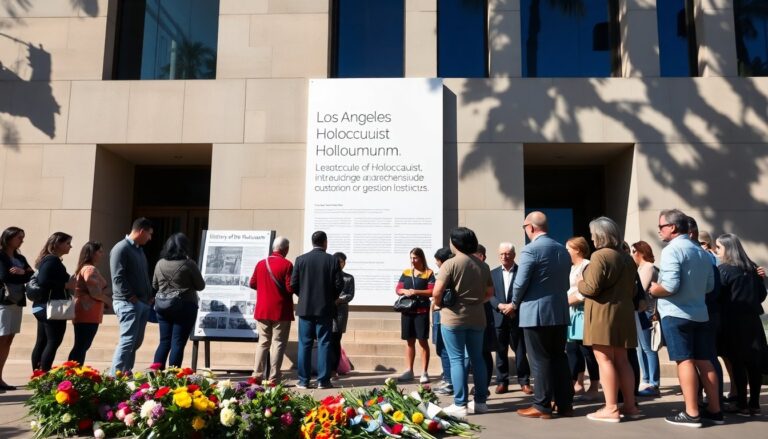
The Holocaust Museum LA has recently faced backlash following a controversial Instagram post. The museum suggested that the phrase “never again” should extend beyond the Jewish community. While the intention was to advocate for inclusivity, the reaction was overwhelmingly negative.
This incident raises important questions about the balance between historical remembrance and contemporary issues.
The Controversial Post
The post, which reached over 24,000 followers, stated: “Never again can’t only mean never again for Jews.” This phrase, rooted in Holocaust remembrance, is often interpreted as a universal commitment against future genocides.
Many interpreted the statement as referencing the suffering of Palestinians amid the ongoing Gaza conflict, which some experts have labeled as genocide. However, this interpretation did not sit well with all audiences.
After the post gained attention, it was promptly deleted.
The museum later clarified its intentions, asserting that the message was misinterpreted and was part of a planned campaign aimed at promoting inclusivity and community. This clarification, however, led to further criticism, prompting many to question the museum’s commitment to its original statement.
Reactions varied widely online. Some praised the museum’s original intent, while others condemned the institution for seemingly succumbing to pressure from pro-Israel supporters. Yasmine Taeb, a human rights lawyer, described the museum’s retraction as “absolutely disgusting,” arguing that it undermined their educational mission regarding genocide. For her, acknowledging the situation in Gaza is crucial, especially for an institution dedicated to educating others about historical atrocities.
The Fallout
The decision to delete the post not only sparked conversation but intensified it. Activists and commentators expressed their frustration across various platforms. Palestinian American comedian Amer Zahr highlighted the irony of a Holocaust museum needing to apologize for recognizing Palestinian suffering. He stated, “If that does not illustrate the historic dehumanization that Arab Americans have had to endure, I don’t know what does.”
Another researcher noted, “Palestinians are so dehumanized that they’re excluded from ‘never again’; apparently, their genocide is the exception.” This raises critical questions: What does “never again” truly signify if it does not include all victims of genocide?
Political commentator Hasan Piker also weighed in, lamenting the backlash against what he regarded as a benign, universally anti-genocide message. This incident underscores a broader societal challenge where even straightforward expressions of solidarity can ignite intense debate.
Looking Ahead
As the Holocaust Museum LA navigates the fallout, they have committed to ensuring that future posts are more thoughtfully considered. This incident prompts reflection on how institutions address sensitive topics, such as genocide. It highlights the complex interplay between inclusivity and historical remembrance.
What are your thoughts? Should museums and cultural institutions engage with contemporary issues, or remain neutral? This is a challenging question, but it is essential to continue the conversation.
