

Investigate the complexities surrounding U.S. military actions aimed at drug trafficking vessels and their consequences.
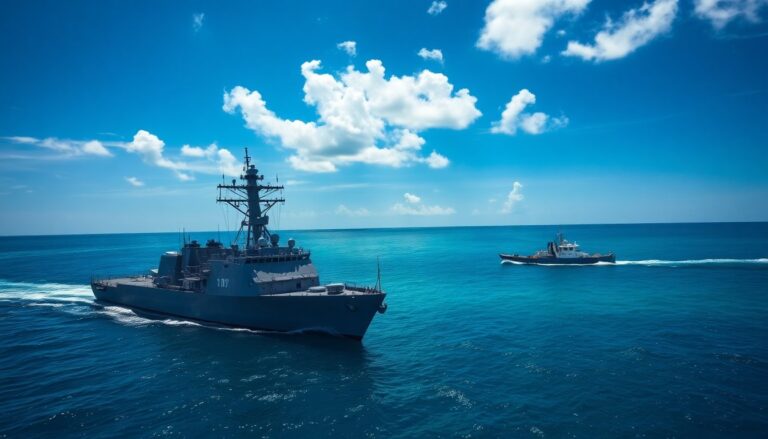
The recent military actions taken by the United States against suspected drug trafficking vessels in the Caribbean have stirred significant debate. These operations, primarily aimed at Venezuelan boats, were justified by President Donald Trump on the grounds of drug trafficking.
However, the statistics and the legal framework surrounding these strikes reveal a complicated narrative.
Military actions and their justifications
In a striking series of military strikes, the U.S. targeted eight vessels believed to be involved in drug trafficking, particularly from Venezuela.
President Trump claimed that these actions were necessary to combat the flow of drugs into the United States. However, Republican Senator Rand Paul challenged this assertion, highlighting that according to the U.S. Coast Guard, around 27 percent of maritime drug searches yield no illegal substances.
Statistics on drug interceptions
The 2025 Coast Guard report revealed that while the Coast Guard successfully intercepted drugs in approximately 73 percent of cases, the remaining 27 percent resulted in empty searches. Senator Paul emphasized that if the military’s new approach is to destroy every suspected vessel, it could lead to a disturbing scenario where innocent parties are harmed. He articulated that traditional maritime law enforcement practices typically involve a boarding procedure that announces the intent to search for contraband.
The complexities of drug trafficking statistics
Experts in the field of drug policy have raised questions about the definitions used by the Coast Guard when reporting interceptions. For instance, if an intercepted vessel has a known trafficker onboard but no drugs are found, does this count as a successful interception? Drug disruptions may not always clearly reflect the actual flow of illicit substances. Jonathan Caulkins, a researcher at Carnegie Mellon University, pointed out these ambiguities in the Coast Guard’s reporting methodology.
Furthermore, the Coast Guard’s interception rates have fluctuated over the years, with a reported increase from 59 percent in 2025 to 73 percent in 2025. This upward trend indicates improvements in operational efficiency, yet it also highlights the challenges of capturing the complete picture of drug trafficking activities.
Intelligence and the recent strikes
When analyzing the recent military strikes, it is essential to consider the intelligence that may have informed these actions. Experts suggest that the operations could have relied on specific intelligence regarding the vessels involved, which may not apply universally across all maritime interdictions. The Coast Guard’s data collection process still remains somewhat opaque, as attempts to inquire about their methodology have gone unanswered.
Alternative approaches to combating drug trafficking
Interestingly, while military strikes have garnered attention, the U.S. Coast Guard has been actively engaged in operations like Operation Pacific Viper. This initiative has demonstrated significant success, with over 100,000 pounds of cocaine seized in the eastern Pacific since its launch. The operation emphasizes coordinated efforts with international partners to intercept drug shipments effectively.
In a recent press conference, President Trump dismissed the Coast Guard’s past efforts, labeling them as ineffective against the sophisticated speedboats used by traffickers. However, the Coast Guard’s continued success in the eastern Pacific suggests that effective interdiction strategies exist, raising questions about the rationale behind the military’s destructive approach in the Caribbean.
Legal and ethical implications
The ongoing debate over the legality of military strikes against drug trafficking vessels is further complicated by the designation of these traffickers as Foreign Terrorist Organizations. This classification allows for the use of military force, but it has prompted concerns about the implications for traditional law enforcement and the potential for escalating violence in the region. Lawmakers, including Senator Mark Kelly, have expressed reservations about the legality of military actions that seem to stray from established law enforcement protocols.
As the U.S. navigates its drug policy and military strategies, the balance between effective enforcement and adherence to legal standards remains a critical issue. The lack of clarity around operational intelligence and the contrasting approaches taken in the Caribbean and eastern Pacific create a multifaceted situation that warrants closer examination.
