

Tensions flare as an Israeli airstrike in southern Lebanon threatens the fragile peace with Hezbollah, resulting in casualties and calls for military readiness.
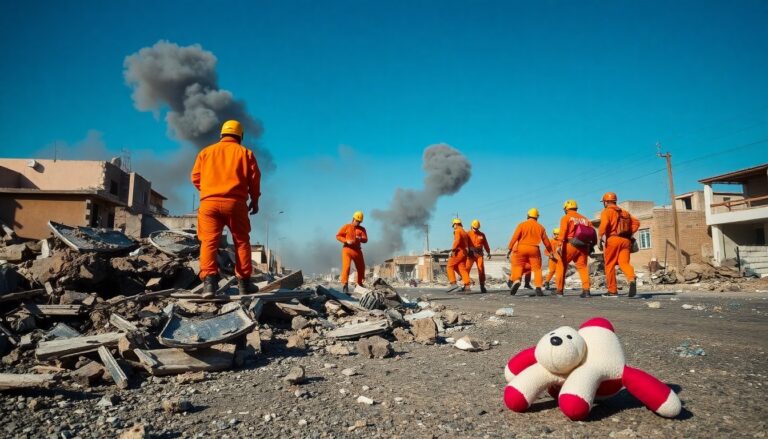
In a significant escalation of hostilities, an Israeli airstrike in southern Lebanon has reportedly killed four individuals, casting doubt on the sustainability of a fragile ceasefire established with Hezbollah nearly a year ago. The attack, which occurred in the town of Kfarsir within the Nabatieh district, also left three others injured, according to the Lebanese Ministry of Public Health.
This incident highlights the ongoing volatility in the region, where tensions between Israel and Hezbollah continue to simmer despite previous agreements aimed at reducing violence.
Context of the conflict
The recent airstrike is a reminder of the ongoing conflict that reignited in, when Hezbollah commenced attacks on Israeli territory in solidarity with Palestinians following the October 7 assaults orchestrated by Hamas in southern Israel.
After a prolonged period of fighting, both parties reached a tentative ceasefire in November. However, the situation remains precarious, with reports indicating that Israel has maintained military presence in multiple locations within southern Lebanon and conducted air raids almost daily, leading to a series of violations against the ceasefire.
Casualties and violations
Despite the ceasefire, civilian casualties have continued to mount. The United Nations has documented at least 111 civilian deaths in Lebanon attributed to Israeli military actions since the truce began. This alarming statistic underscores the devastating impact of ongoing military operations in the region, where both military personnel and innocent civilians are caught in the crossfire. The Israeli government justifies these strikes as necessary measures against Hezbollah, but the consequences for local populations are dire.
Political tensions and military readiness
Lebanese President Joseph Aoun has voiced strong criticism of Israel’s military actions, accusing it of escalating attacks in response to his recent proposals for negotiations aimed at achieving a lasting peace. Aoun’s administration has called for a more robust military response, instructing the Lebanese Armed Forces to confront any Israeli incursions into southern Lebanon. This directive comes in the wake of an Israeli operation in the border town of Blida, which resulted in the death of a municipal worker, further inflaming tensions.
Hezbollah’s stance on disarmament
Hezbollah has firmly rejected calls for disarmament, asserting that its military capabilities are essential for Lebanon’s national defense against Israeli aggression. The group’s leadership, particularly Naim Qassem, has expressed unwavering support for the notion that Hezbollah’s arms contribute to the strength of the Lebanese state. This position complicates the political landscape, as the Lebanese government seeks to balance internal security and external pressures.
Implications for future negotiations
The path to a stable resolution remains fraught with challenges. President Aoun has indicated that Lebanon is open to negotiations aimed at ending Israeli occupation, but he emphasizes that such talks must be reciprocal and not one-sided. The conditions, timing, and locations for these discussions remain to be determined, highlighting the complexities involved in navigating peace initiatives in the region.
This delicate balance of power is further complicated by Hezbollah’s ongoing military rebuilding efforts, which are reportedly being supported by Iran. Intelligence sources indicate that Hezbollah is replenishing its arsenal, raising concerns about the potential for future conflicts. As the Lebanese government grapples with these multifaceted issues, the need for a strategic approach to peace and security becomes increasingly evident.
The situation demands urgent attention from international stakeholders, as both Israel and Lebanon face the prospect of renewed hostilities. The need for dialogue and understanding is paramount to prevent further bloodshed and to establish a path toward lasting peace.
