

Analysis of U.S. Military Intentions in Venezuela: Insights from President Trump's Statements Recent statements made by President Trump have sparked significant discussion regarding the United States' military objectives in Venezuela. As tensions in the region escalate, it is crucial to examine the implications of these remarks and the potential impact on U.S. foreign policy. This analysis will explore the motivations behind the U.S. stance and the strategic considerations at play in the...
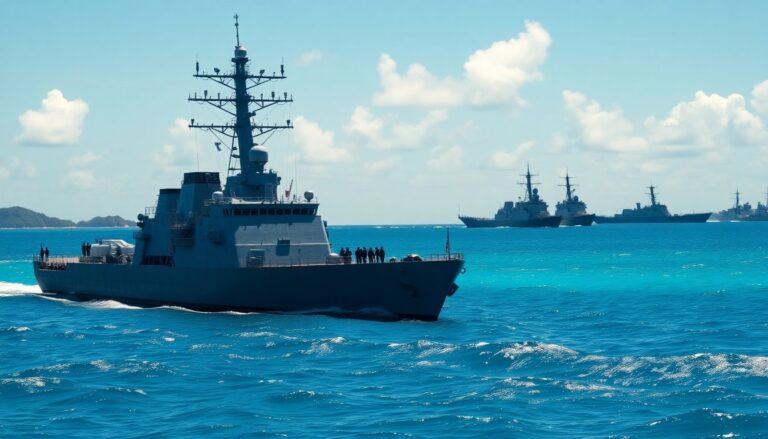
In a recent interview with CBS, President Donald Trump discussed the possibility of U.S. military intervention in Venezuela. He dismissed the idea of a full-scale war but stated that President Nicolas Maduro’s hold on power is diminishing. This statement coincides with a notable increase in U.S.
military presence in the Caribbean, prompting speculation about the underlying motives of these actions.
Addressing the military strikes aimed at alleged drug trafficking vessels, Trump asserted that, while he does not anticipate a war with Venezuela, he believes Maduro’s regime is approaching its end.
This mixed messaging underscores the complexities of U.S. foreign policy and the ongoing narrative surrounding the drug war.
The evidence
Reports reveal that the U.S. has executed multiple strikes targeting boats accused of narcotics smuggling, particularly in the Caribbean and Pacific regions.
Defense Secretary Pete Hegseth stated that these operations aim to disrupt the flow of illicit drugs into the United States. Recently, 14 individuals were reported killed in strikes against four vessels identified as drug carriers. This escalation has raised concerns among affected countries and U.S. lawmakers who question the legality and justification of such military actions.
International reactions
The military strikes have garnered significant criticism from various Latin American governments. Mexico’s President Claudia Sheinbaum condemned the attacks, asserting they violate international treaties. She has called for a meeting between her foreign minister and the U.S. ambassador to further discuss the issue. This response reflects a wider unease among regional leaders regarding U.S. military activities and their implications for national sovereignty.
Additionally, human rights advocates and international law experts have voiced concerns that these military actions constitute extrajudicial killings. The United Nations human rights chief, Volker Turk, indicated that the attacks lack legal justification under international law, stressing that even suspected traffickers are entitled to due process.
The implications
As tensions escalate between the U.S. and Venezuela, Maduro has accused Washington of leveraging the drug war as a pretext for regime change. He asserts that the U.S. aims to control Venezuela’s vast natural resources, particularly oil. In response to the military posturing from New York, the Venezuelan government has intensified its rhetoric against the U.S., suggesting that Trump’s administration seeks to destabilize the region.
Concerns from U.S. lawmakers
Within the United States, both Democratic and Republican lawmakers have expressed concerns regarding the president’s authority to carry out such military actions without congressional approval. They argue that these strikes may infringe upon constitutional mandates related to military engagement. Trump hinted at pursuing congressional approval for more extensive military operations, particularly if they expand to land-based targets in Venezuela.
Experts have noted that the military buildup in the Caribbean, which includes the deployment of warships and aircraft, appears excessive for merely addressing drug trafficking. This has led to speculation that the U.S. may harbor broader geopolitical objectives, particularly concerning Colombia and Venezuela.
As the situation unfolds, it remains unclear how these military actions will influence U.S.-Latin America relations. The potential for a broader conflict looms, especially if the U.S. continues to escalate its military presence and operations in the region. The narrative surrounding drug trafficking, while significant, may also serve as a convenient justification for deeper political interventions.
