

Understanding the Importance of Priority Habitat Inventory Maps in Supporting England's Biodiversity Discover how priority habitat inventory maps play a vital role in identifying and preserving crucial ecosystems that are essential for maintaining and enhancing biodiversity across England.
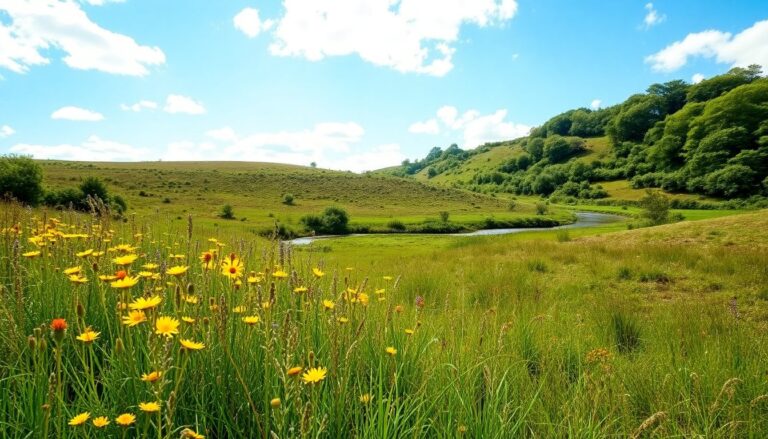
The Priority Habitat Inventory (PHI) is an essential resource for mapping and monitoring ecosystems crucial for conserving biodiversity in England. Established under the UK Biodiversity Action Plan, this dataset highlights areas of significant importance as specified in Section 41 of the Natural Environment and Rural Communities Act (2006).
By providing regular updates, the PHI plays a key role in enhancing our understanding and protection of England’s varied habitats.
Key features of the priority habitat inventory
The priority habitat inventory (PHI) is updated every six months, utilizing advanced mapping techniques that rely on Ordnance Survey MasterMap.
This method ensures that different habitats are accurately depicted as polygons, allowing for adjustments to create cohesive habitat patches through merging or splitting as needed. The inventory encompasses 27 terrestrial and freshwater priority habitats across England.
Priority habitats
Several habitats have been identified as critical for conservation efforts.
Key examples include:
- Blanket bog (BLBOG)
- Coastal saltmarsh (SALTM)
- Deciduous woodland (DWOOD)
- Lowland heathland (LHEAT)
- Upland flushes, fens & swamps (UFFSW)
These habitats are essential for supporting local wildlife and maintaining ecological balance. The Priority Habitat Inventory (PHI) not only identifies these areas but also emphasizes their importance for ongoing conservation efforts.
Additional habitat classes and their importance
Beyond the priority habitats, the PHI identifies four additional habitat classes that, while not designated as priorities, are significant for biodiversity conservation. These classes include:
- Fragmented heath (FHEAT)
- Good quality semi-improved grassland (GQSIG)
- Grass moorland (GMOOR)
- No main habitat (NMHAB)
Recognizing these areas contributes to a broader understanding of the landscape, highlighting regions that may support priority habitats or have potential for restoration. Furthermore, the existence of unmapped or fragmented priority habitats may correlate with these classifications.
Detailed habitat features
The PHI offers valuable insights into specific habitats by providing detailed descriptions and corresponding codes. For example, it includes various types of ponds and lakes, such as oligotrophic lakes (OLIGO) and dystrophic lakes (DYSTR), along with classifications of different woodlands. A clear understanding of these features is essential for effective habitat management and conservation strategies.
Collaborative efforts for environmental protection
Organizations like Natural England play a crucial role in the ongoing efforts to protect and enhance these vital habitats. Through partnerships with local authorities and environmental groups, Natural England ensures the ecological integrity of these areas is maintained. This collaboration becomes increasingly important in addressing challenges such as climate change and urban development.
The role of local nature reserves
Local authorities have the ability to designate areas as Local Nature Reserves (LNRs) to protect wildlife and habitats. These reserves also offer educational and recreational opportunities for the community. The designation process involves a formal declaration that requires consultation with Natural England. By engaging the public and promoting access to these reserves, local councils can enhance appreciation for nature and its critical role in supporting biodiversity.
The Priority Habitat Inventory is essential for conserving England’s biodiversity. This inventory maps vital habitats and encourages collaborative management efforts, thereby helping to protect the ecological health of the region for future generations.
