

Explore the transformation of Stockport: A Journey from Historic Origins to Contemporary Revival.
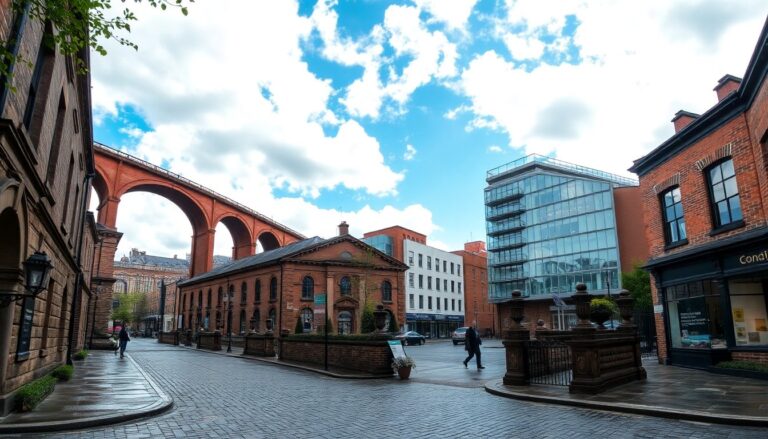
Located just a stone’s throw from Manchester, Stockport is a town rich in history and community spirit. Its roots trace back to the 16th century, evolving from a modest settlement into a bustling urban center. This article explores the town’s vibrant past, industrial heritage, and current developments that promise a bright future.
The historical evolution of Stockport
Stockport, situated in Greater Manchester, England, is known for its unique geographical position where the rivers Goyt and Tame converge to form the River Mersey. Historically, the town predominantly lay within the old county of Cheshire, with parts extending into Lancashire.
The town’s name, which has transformed through various forms such as ‘Stokeport,’ reflects its origins as a marketplace in a small hamlet.
Industrial growth and transformation
In the 16th century, Stockport gained recognition for its hemp cultivation and rope-making industries.
However, the 18th century marked a significant turning point with the establishment of one of the first mechanized silk factories in the British Isles. As the 19th century unfolded, Stockport became a pivotal player in the cotton industry, with its hatting sector flourishing, exporting millions of hats annually until the last factory closed in 1997. This industrial boom not only transformed Stockport’s economy but also shaped its identity, leading to the affectionate nickname for its football club, Stockport County, as ‘The Hatters.’
Modern Stockport: A community in transition
Entering the 20th century, Stockport began to diversify its industrial base. The decline of traditional industries prompted a shift towards revitalizing the town’s economic landscape. Today, Stockport embraces modernity while preserving its historical charm, offering a rich tapestry of heritage attractions.
Regeneration initiatives and community engagement
Recently, the Stockport Metropolitan Borough Council launched an ambitious regeneration program known as Future Stockport. This initiative aims to enhance the residential and commercial sectors, drawing inspiration from successful transformations seen in nearby Manchester. The plan seeks to introduce over 3,000 residents into the town center, revitalizing previously industrial spaces into vibrant mixed-use developments.
Stockport’s commitment to community engagement is evident through its diverse cultural initiatives. The town boasts a unique array of historical sites, including a national museum dedicated to hatting, celebrating its rich industrial past. Additionally, the town’s medieval architecture provides a picturesque backdrop for both residents and visitors alike.
Sporting culture and local pride
Sport plays a vital role in Stockport’s community spirit. The local football club, Stockport County, serves as a beacon of sporting excellence, fostering local pride and unity among its supporters. The club’s matches are celebrated community events, drawing fans from all walks of life to rally behind their team.
Moreover, local parks and sports facilities offer residents ample opportunities to engage in physical activities, promoting a healthy lifestyle and community cohesion. As Stockport continues to develop, its commitment to sports and recreation remains a key aspect of its identity.
A bright future ahead
Stockport’s journey from historical roots to modern-day charm illustrates its resilience and adaptability. As the town embraces new challenges and opportunities, it remains steadfast in preserving its rich heritage while paving the way for a vibrant future. With ongoing regeneration efforts and a strong sense of community, Stockport is poised to thrive, inviting both residents and visitors to experience its unique blend of history and modernity.
