

Legal Analysis: Ongoing Dispute Regarding National Guard Deployment in Washington D.C. The legal conflict concerning the National Guard's presence in Washington D.C. has escalated following a recent shooting incident. This development raises critical questions about the role and authority of the National Guard in urban environments, particularly in response to public safety concerns. Legal experts are closely monitoring the situation as it unfolds, assessing the implications for both state...
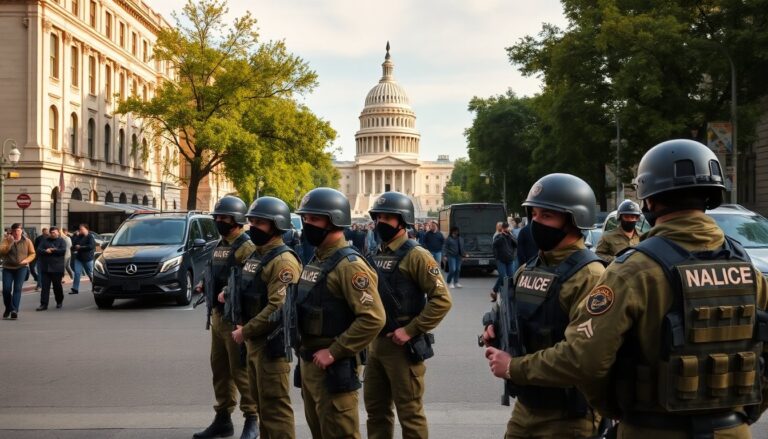
The deployment of the National Guard in Washington D.C. has led to significant legal and political disputes. President Donald Trump is striving to maintain troop presence amid escalating crime concerns. Recently, an appeals court intervened, issuing a temporary stay on a lower court’s ruling that required the withdrawal of National Guard troops, underscoring the administration’s ongoing challenge to justify their presence.
This legal issue began when District Judge Jia Cobb ruled that the deployment of over 2,000 National Guard members was illegal. The judge asserted that utilizing military forces for non-military purposes, such as crime deterrence, contravenes federal law.
However, the recent court ruling allows the administration to retain control of these troops for now as they consider their next steps.
Background of the deployment
To combat crime in the capital, Trump deployed the National Guard as part of a broader initiative he described as both an anti-crime measure and a beautification project for Washington D.C.
This initiative has faced legal challenges, particularly from civil rights organizations like the American Civil Liberties Union (ACLU), which argue that the deployment violates the Posse Comitatus Act. This law restricts military involvement in domestic law enforcement.
In November, Judge Cobb emphasized that the deployment was legally questionable and executed without a formal request from local authorities. The court’s decision highlighted that the National Guard’s role must comply with the law and local governance.
Recent developments and legal challenges
Days after the judge’s order, a tragic shooting incident resulted in the death of a National Guard member and left another in critical condition. This incident heightened debates regarding the National Guard’s presence in the city, prompting Trump to announce an additional deployment of 500 troops to ensure security. The administration framed this as a necessary response to violence against service members and a demonstration of their commitment to public safety.
As the administration moves forward with its appeal against the judge’s ruling, it faces increasing scrutiny from legal experts and the public regarding the use of military forces in domestic affairs. Critics argue that Trump’s reliance on military power to address local crime issues undermines the principles of civil governance.
Implications for national security and local governance
The implications of this ongoing conflict extend beyond legal interpretations, challenging the balance of power between federal and local authorities. The National Guard’s presence in D.C. raises questions about the extent of federal control and the potential erosion of local governance rights. Following the judge’s initial ruling, the Trump administration asserted that federal law grants the President significant authority to deploy troops in situations deemed necessary.
The administration’s argument relies on the interpretation of the Home Rule Act of 1973, which provides a framework for D.C.’s governance. This act limits federal intervention in local matters, complicating the ongoing legal struggle. As state and federal powers collide, the outcome of this case could set a significant precedent regarding military involvement in civilian law enforcement.
Future outlook
As court deliberations continue, the future of the National Guard’s presence in Washington D.C. remains uncertain. With the appeals court’s stay in effect, the administration has some flexibility to maintain troop levels while pursuing legal arguments. However, the deadline for the lower court’s order approaches, and the Trump administration must navigate a complex legal landscape involving both the courts and public opinion.
As D.C. confronts rising crime rates and political tensions, the administration’s actions will likely face heightened scrutiny from various stakeholders. The situation remains fluid, with potential ramifications for law enforcement practices and the broader discussion on the military’s role in domestic issues. The administration’s ability to justify its deployments amid legal challenges will be crucial in shaping future policy and governance in the capital.
